Things to Do in Fes Medina for First Timers: The Complete Guide
Key Takeaways
- Fes el Bali is the world’s largest car-free urban medina, a UNESCO World Heritage Site founded in the 9th century
- Hire a licensed guide for your first visit — it is genuinely the single best investment you will make
- Start at Bab Bou Jeloud (the Blue Gate) and work your way deeper into the medina from there
- The Chouara Tannery is unmissable, but go in the morning for the most vivid colors and activity
- Fes is less touristy than Marrakech — and that is exactly what makes it special
- Dress modestly, carry cash in dirhams, wear flat shoes, and bring your sense of wonder
- Avoid visiting the main souks on Friday afternoons, when much of the medina quiets for prayer
Introduction: The City That Time Forgot
Close your eyes for a moment. Imagine the warm scent of fresh cedar wood shavings drifting out of a dark workshop doorway. The rhythmic hammering of copper artisans echoing off 1,000-year-old stone walls. The call to prayer bouncing between minarets while a donkey loaded with mint squeezes past you in a lane barely wide enough for two people to walk side by side.
That is Fes.
While Marrakech draws the Instagram crowds and Chefchaouen gets the blue-wall selfies, Fes remains the soul of Morocco — raw, unfiltered, and utterly unlike anywhere else on Earth.
The short version? Fes Medina is the closest thing to a living medieval city you will ever walk through. It has 9,000+ alleys, the world’s oldest functioning university, tanneries still operating exactly as they did in the 11th century, and a culinary scene that locals consider far superior to any other Moroccan city. You need at minimum one full day here, ideally two.
A Quick Note Before You Enter the Gates
Fes Medina — officially Fes el Bali (“Old Fes”) — covers around 540 acres and contains approximately 9,000 interconnected streets and alleys. It is the largest car-free urban area in the world. Even Google Maps struggles here.
This is not a criticism. This is the point.
Getting a little lost is not a failure — it is the whole experience. But for your first visit, a licensed local guide will transform a bewildering maze into a rich, layered story. We will come back to that.
The Essential Things to Do in Fes Medina for First Timers
1. Enter Through Bab Bou Jeloud — The Blue Gate
Every visit to the Fes Medina should begin at Bab Bou Jeloud, the ornate main gateway rebuilt in 1913. The exterior is tiled in vivid blue (the color associated with Fes), while the inner side is green, symbolizing Islam.
Standing in front of it, with the sound of the medina humming behind the arch, is one of those rare travel moments that stops you mid-thought.
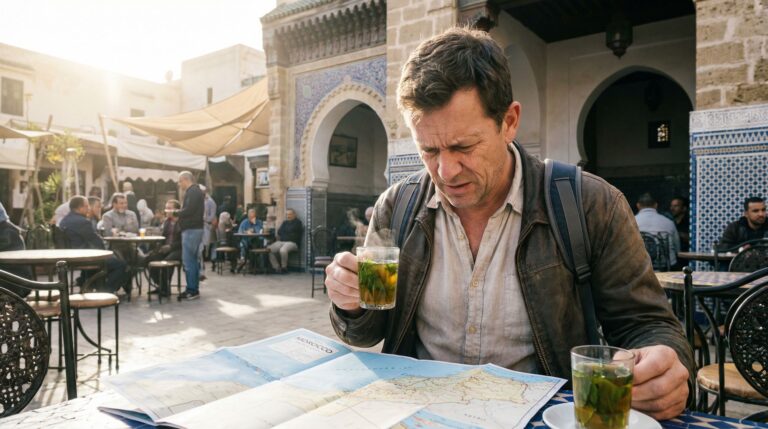
The area around the gate is lined with cafés and small restaurants. Grab a mint tea, get your bearings, and watch the daily rhythm of Fassi life flow in and out of the gate before you step inside.

Local tip: Avoid the café directly at the gate entrance — it is aimed squarely at tourists. Walk 50 meters inside and look for a local spot where you see Moroccans sitting. The tea will be half the price and twice as good.
2. Walk Talaa Kebira — The Medina’s Main Artery
Once through the Blue Gate, you will naturally funnel onto Talaa Kebira, the main downhill street that bisects the medina. This is your central axis — everything branches off from here.
As you walk, you will pass spice vendors, small bakeries selling still-warm msemen flatbreads, leather goods stalls, and the kind of everyday life that feels completely indifferent to your presence as a tourist. That is a compliment.
Follow it downhill and it leads you directly to the heart of the old city — the Al Quaraouiyine mosque and the surrounding souk district.
Navigation trick: The medina is shaped like a natural bowl. If you feel completely disoriented, start walking uphill. You will eventually reach the walls or a familiar landmark.
3. Visit the Bou Inania Madrasa — Architecture That Defies Words
This is the most accessible and important historic site in the medina for non-Muslim visitors. Built in the 14th century under the Marinid dynasty, the Bou Inania Madrasa is one of the few religious sites in Morocco that welcomes visitors of all faiths.
Every surface inside — and there are a lot of surfaces — is covered in intricate zellige tilework, hand-carved cedarwood panels, and ornate stucco plasterwork. The central courtyard, with its marble fountain and towering wooden screens, is one of the most photographed spaces in all of Morocco.
Entrance fee: approximately 20 MAD (around £1.60 / $2). Arguably the best value you will spend in Morocco.

What most visitors miss: Look up at the carved wooden ceilings. The geometric precision is extraordinary, especially knowing it was all done by hand — no power tools, no machines, just centuries of passed-down craft knowledge.
4. Stand at the Chouara Tannery — An 11th-Century Sight Still in Action
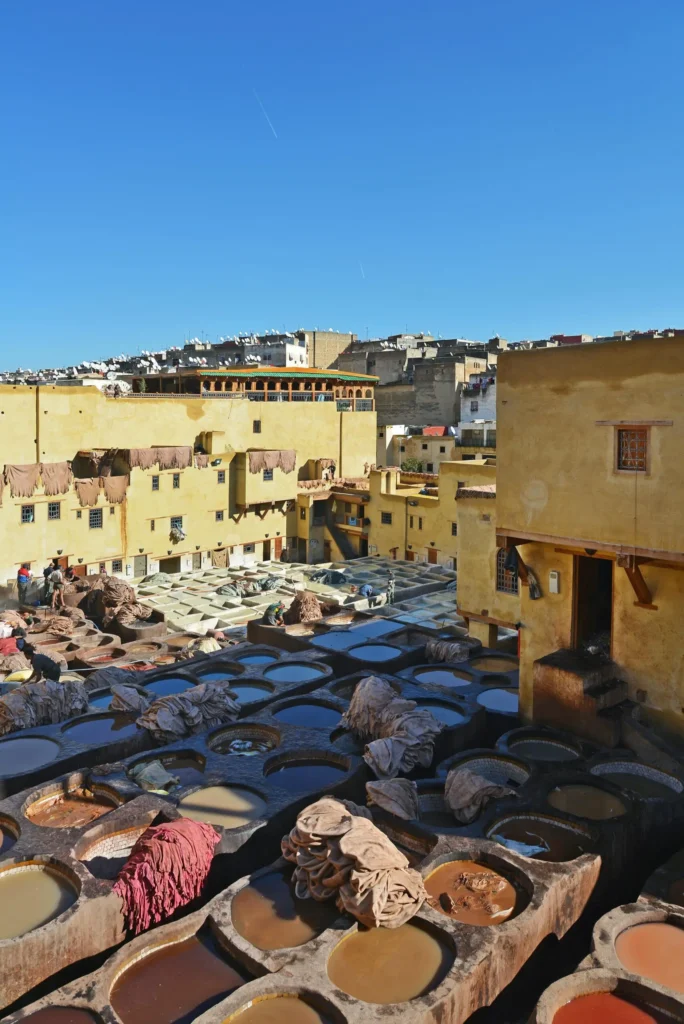
No visit to Fes Medina is complete without the tanneries. The Chouara Tannery is the oldest and largest in the city, and the workers here process leather in the same open stone vats, using the same natural dyes — saffron, poppy, indigo, mint — that their ancestors used a thousand years ago.
You view it from the terraces of surrounding leather shops, which is free if you are browsing or buying. Most shops will offer you a sprig of fresh mint as you arrive — accept it. The smell of the tanning process (which involves pigeon droppings and ammonia) is pungent. The mint helps.
Best time to visit: Early morning (before 10am) when the workers are most active and the colors in the vats are at their most vibrant. By afternoon, activity slows considerably.
What competitors’ guides do not tell you: There is a smaller tannery called Ain Azliten (sometimes called the Corner Tannery) just a short walk away. Far fewer tourists visit, the workers go about their craft without any audience pressure, and you get a more intimate experience. Ask your guide to take you there after Chouara.
5. Admire Al Quaraouiyine — The World’s Oldest University
Founded in 859 AD by Fatima al-Fihri — a woman, notably — the University of Al Quaraouiyine is recognized as the oldest continuously operating degree-granting university on Earth. That alone deserves a moment of reflection as you stand outside it.

Non-Muslims cannot enter the mosque-university complex, but you can stand at the entrance gates and peer into the serene, arched interior courtyard. The building is still an active place of scholarship and worship, which somehow makes it even more meaningful.
Take a moment here. Do not rush past for a photo and move on. The history condensed into this single building is genuinely extraordinary.
6. Al Attarine Madrasa — The Hidden Architectural Gem
Just a short walk from Al Quaraouiyine, the Al Attarine Madrasa sits tucked behind the spice souk (Al Attarine means “perfumers”). Completed in 1325, it is smaller than Bou Inania but considered by many architects and historians to be the more refined of the two.
The tile work, the stucco, and especially the carved Quranic calligraphy woven into the geometric patterns — if you look closely, you realize the decorations are not just patterns. They are scripture, rendered as art.
Entrance fee: approximately 20 MAD.
Pro tip: Visit Al Attarine just before lunchtime, when the tour groups have moved on. You may well have the courtyard largely to yourself.
7. The Nejjarine Museum — A Rooftop View Worth Every Dirham
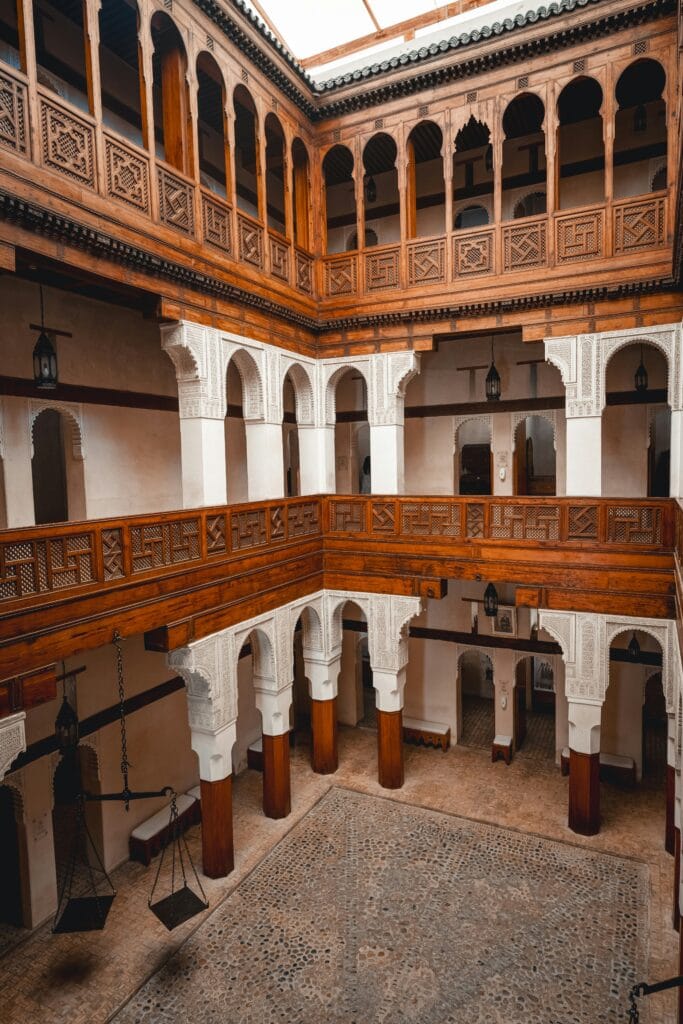
Housed in a beautifully restored 18th-century caravanserai (merchants’ inn), the Nejjarine Museum of Wooden Arts and Crafts does not get nearly the attention it deserves.
The museum traces the history of Fassi woodworking across multiple floors — intricate doors, painted ceilings, antique tools, decorative furniture. But the real reward is the rooftop terrace, which offers one of the most sweeping panoramic views over the medina available for a modest entrance fee.
The building was historically a hub of commercial activity — “al-Najjarin” means carpenters, a reference to the nearby carpenters’ souk that still operates today.
Entrance: approximately 20 MAD.
8. Explore the Souk Districts — Each One Tells a Trade Story
The souks of Fes are not one market. They are dozens of specialized markets, each one dedicated to a specific craft or trade, organized the same way they were in the medieval period. This is a functional system — not a tourist performance.
| Souk Name | What You’ll Find |
|---|---|
| Souk Al Attarine | Spices, perfumes — great for photography |
| Souk Serrajine | Traditional babouche slippers |
| Souk Mejjadliene | Handwoven belts and textile work |
| Souk Tillisse | Handmade rugs and kilims |
| Souk Jeld | The finest leather goods in Fes |
| Boujloud Souk | Fresh produce, local street food |
| R’cif Square | Local food stalls, less touristy atmosphere |
Shopping reality check: Opening prices in the medina are typically 40–60% higher than what a local would pay. Friendly, relaxed negotiation is completely expected and culturally normal. Never agree to the first price, never appear desperate, and always be willing to walk away with a smile.
9. Discover the Mellah — Fes’s Historic Jewish Quarter
Most first-time visitors to Fes focus entirely on Fes el Bali and miss the Mellah — the historic Jewish quarter established in the 15th century, located near the Royal Palace in Fes el Jdid.
The architecture here is immediately different from the rest of the medina. Buildings have balconies overlooking the street — a distinctly non-Moroccan style, reflecting the unique cultural identity of the Jewish community that once thrived here. Many of Morocco’s Jewish families emigrated to Israel, France, and Canada in the 20th century, but their presence is woven into the city’s identity.
The Ibn Danan Synagogue is one of the oldest in Morocco and is open to visitors. The small Jewish cemetery nearby is a peaceful, contemplative spot that most tourists walk straight past.
10. Escape to Jnan Sbil Gardens — The Medina’s Only Park
After the sensory intensity of the souks, the Jnan Sbil Gardens (also called Bou Jeloud Gardens) are genuinely restorative. Located at the boundary between Fes el Bali and Fes el Jdid, these landscaped public gardens feature fountains, palm-lined walkways, and a pond where locals feed turtles.
This is where Fassi families come in the late afternoon. Children run around, elderly men play cards in the shade, teenagers sit on benches. It is an entirely unpretentious slice of real local life.
Open Tuesday to Sunday, 8am to 7:30pm. Free entry.
11. Dar Batha Museum — For the Craft Lover
Recently renovated and reopened in early 2025, the Dar Batha Museum was originally a summer palace built by Sultan Hassan I in the late 19th century. Today it houses one of Morocco’s finest collections of traditional Fassi arts and crafts — pottery, carpets, embroidery, woodwork, and metalwork.
If you have spent a day watching artisans work in the souks, Dar Batha gives you the refined, museum-quality context to understand what you have been seeing. Many visitors skip it; that is a mistake.
Entrance: approximately 10 MAD.
Local Secret: The Copper Souk at Seffarine Square
Most travel guides send you straight to Chouara Tannery and call it a day. But long-term visitors to Fes know that Seffarine Square — the copper and brass workers’ souk — is one of the most raw and authentic experiences the medina offers.
The noise reaches you before you see it: the rhythmic, overlapping clang of hammers on copper, reverberating off the walls of the small square. Artisans sit cross-legged on the ground, shaping enormous cooking pots, lamps, and decorative platters. They are not performing for you. This is their livelihood.
It is free to visit, never crowded with tourists, and genuinely one of the most memorable 20 minutes you can spend in the medina.
Practical Guide: What You Need to Know Before You Go
Getting Around the Medina
The entire medina is car-free — only donkeys, hand carts, and foot traffic. This means everything is on foot. Fes is built on hills, so expect your legs to feel it by the end of the day.
Navigation in Fes el-Bali is helped by a color-coded signpost system: green for palaces and Andalusian gardens, orange for the walls and ramparts, brown for souks and monuments, blue for knowledge-themed routes, red for artisanal craft routes, and purple for Fes el Jdid. These signs are genuinely useful — though shop owners sometimes obscure them unintentionally.
Important: Some of the medina gates close after 7pm. If your riad is inside the walls, make sure you know which gate to use for your return.
What to do in Fes: Should You Hire a Guide?
Yes. Especially on your first visit.
A licensed official guide costs around 250–500 MAD for a half or full day. The difference between experiencing the medina alone and with a knowledgeable local guide is the difference between looking at a painting and having someone explain what it means.
An experienced guide will navigate you past tourist traps, introduce you to genuine artisans, explain the history behind every building, and — perhaps most valuably — keep pushy commission-based shopkeepers at bay.
Many travelers find the peace of mind of booking through an established tour agency, rather than negotiating with guides at the gate, removes a significant source of stress. Our private tours from Fes include knowledgeable, English-speaking local guides who are vetted and certified.
Dress Code and Cultural Etiquette
| Situation | What to Wear / Do |
|---|---|
| General medina walking | Shoulders and knees covered |
| Entering a madrasa | Remove shoes if asked, speak quietly |
| Near mosques / shrines | Particularly conservative dress, no loud voices |
| Tanneries | You are on private business terraces — buy or genuinely browse |
| Bargaining in souks | Stay calm, smile, never show frustration |
- Do not photograph people without asking permission
- Avoid visiting the main souk area on Friday between 12pm and 2pm — it is the main prayer time and many businesses close
- Tipping guides and restaurant staff is customary: 10–20 MAD for a meal, 20–50 MAD for a guide assistance
What to Eat in the Fes Medina
Fes has a justified reputation as Morocco’s culinary capital. Local dishes you must try:
- Bastilla — a flaky pastry filled with pigeon (or chicken), almonds, and warming spices. Fes is its birthplace.
- Harira soup — thick, tomato-based, with lentils and chickpeas. Eat it with a sfenj (fried doughnut) for the full experience.
- Tagine with preserved lemon and olives — the Fassi version is lighter and more aromatic than what you will find in Marrakech.
- Halwat Moulay Idriss — a nougat-like candy sold around the Moulay Idriss shrine. Buy a bag. It is a local tradition going back centuries.
Honest restaurant tips: Café Clock on Derb el Magana offers a creative menu, a stunning riad setting, and gluten-free options. For traditional Moroccan food in a family setting, look for the small neighborhood restaurants around R’cif Square — no English menus, plastic chairs, and absolutely outstanding food.
How to Structure Your First Day in the Fes Medina
If you only have one day, here is a realistic itinerary:
| Time | Activity |
|---|---|
| 8:30am | Arrive at Bab Bou Jeloud, mint tea nearby |
| 9:00am | Bou Inania Madrasa |
| 9:45am | Walk Talaa Kebira toward the heart of the medina |
| 10:00am | Chouara Tannery (morning — most active) |
| 10:45am | Al Attarine Madrasa |
| 11:15am | Al Quaraouiyine (exterior + moment of reflection) |
| 11:45am | Seffarine Square — copper workers |
| 12:30pm | Lunch — harira and bastilla in the medina |
| 2:00pm | Nejjarine Museum + rooftop view |
| 3:00pm | Free wandering + souk shopping |
| 4:30pm | Jnan Sbil Gardens — decompress |
| 5:30pm | Sunset tea at a rooftop café near the Blue Gate |
For a second day, add the Mellah, Dar Batha Museum, and consider a cooking class or a hammam experience.
Fes as Part of Your Wider Morocco Journey
Fes makes a superb base for exploring northern Morocco. Day trips to Chefchaouen (the famous blue village, roughly 3 hours by road), Volubilis (Roman ruins), and Meknes (Morocco’s most underrated imperial city) are all very manageable.
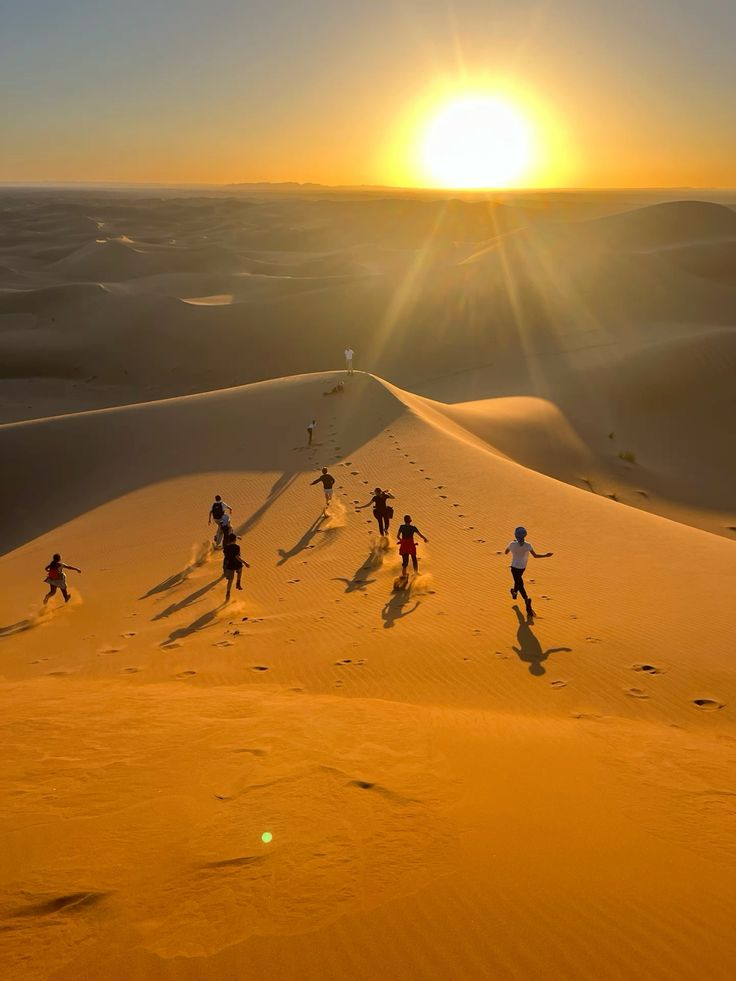
Many travelers combine Fes with a desert tour to Merzouga and the Sahara, looping back through the Middle Atlas — a route that offers perhaps the most complete picture of Morocco available in a single journey. If this interests you, take a look at our 3-day Sahara Desert tour from Fes or our 7-day Morocco itinerary from Fes, which covers the full route with private transport and accommodation.
Planning from further afield? We also cover everything you need to know about traveling to Morocco from the USA and traveling to Morocco from the UK and Europe.
Conclusion: Activities to do in Fes Will Stay With You
Of Morocco’s four imperial cities, Fes is the one that lingers longest after you leave. It does not perform for visitors. It does not smooth its edges for tourism. It simply continues, as it has for over 1,200 years — madrasas, tanneries, souks, and all.
First timers to the Fes Medina sometimes feel overwhelmed in the first hour. By the end of the day, they never want to leave.
Whether you are planning your first Morocco trip or adding Fes to a longer itinerary, the key is to go with enough time, enough curiosity, and — ideally — a guide who genuinely loves this city.
Ready to experience Fes with the benefit of local expertise? Contact our team at Morocco Service Tours for a fully customized itinerary — whether you want two days in Fes or a two-week journey through the whole country. Our local guides and private drivers handle everything, so you can simply be present.
Last updated: April 2026 — Morocco Service Tours
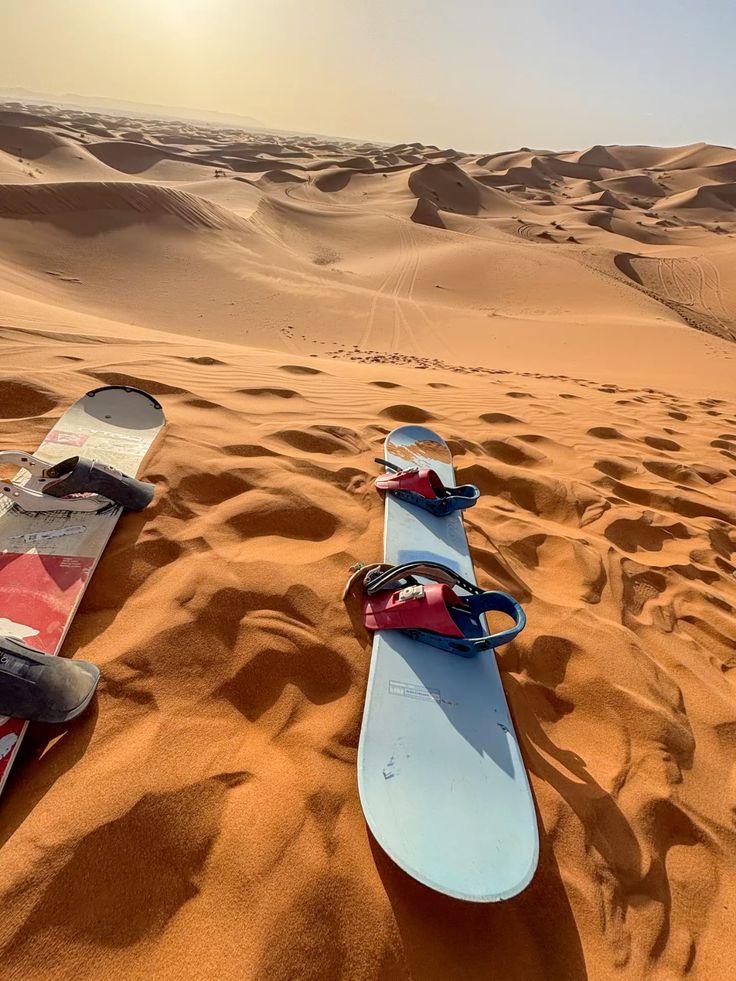
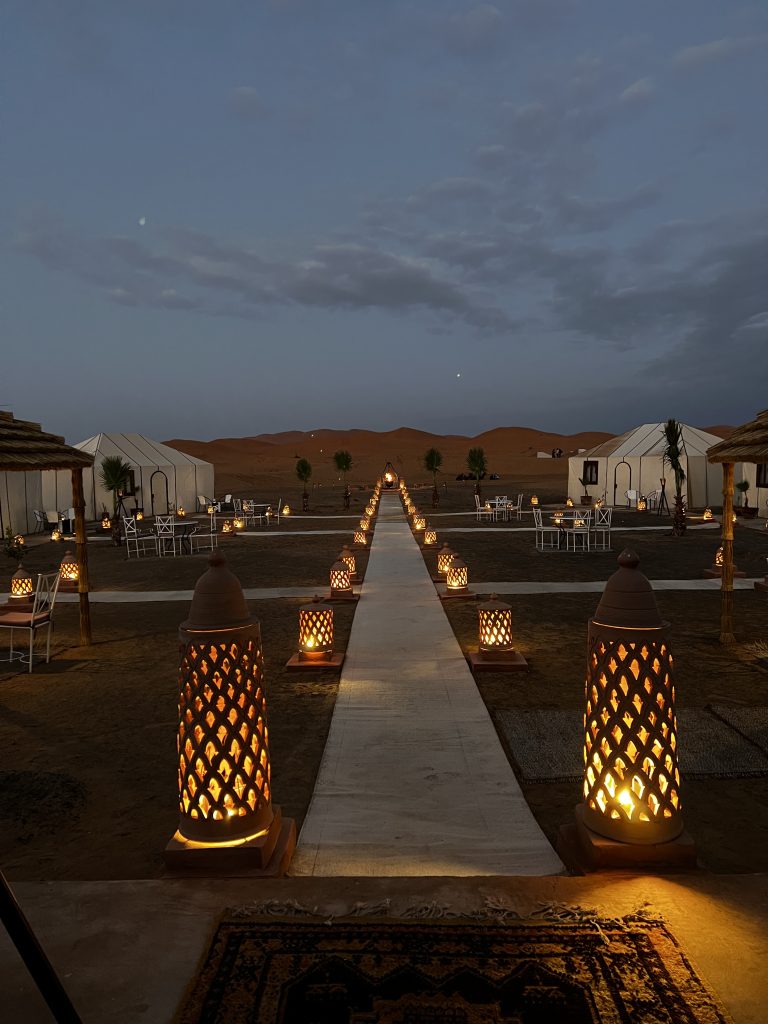
Your Sahara Journey Awaits
Your decision between Khamlia village or Merzouga desert isn’t about right or wrong, it’s about matching method to your personality and priorities.
Ready to book? Contact our team for personalized recommendations matching your travel style, budget, and dates. We’ll help you design the perfect balance of independence and support for your unforgettable Sahara adventure.
Share your desert adventures with us on Pinterest or instagram and inspire fellow travelers!
Because the question isn’t really “Khamlia vs Merzouga”—it’s “How do I experience the Sahara in a way I’ll remember forever?” Let us show you.
FAQs: Things to Do in Fes Medina for First Timers
-
How many days do I need in the Fes Medina?
A minimum of one full day is needed to cover the major highlights. Two days is strongly recommended for first timers — it allows you to explore at a relaxed pace, revisit areas you loved, and experience the medina at different times of day.
-
Is Fes Medina safe for tourists?
Yes. Fes is generally safe for tourists, including solo female travelers. The main concerns are petty scams (unofficial “guides” at the gate, commission-based shopkeepers) rather than any serious safety issues. A licensed guide eliminates most of these. For more detail, read our full guide on Is Morocco Safe for Tourists.
-
Do I need a guide in the Fes Medina, or can I explore alone?
You can explore alone, especially with the color-coded signpost system. However, for a first visit, a licensed guide will significantly deepen your experience, help you avoid tourist traps, and ensure you see the best of the medina in limited time. After a guided morning, many travelers spend the afternoon wandering freely — that combination works well.
-
What is the best time of year to visit Fes?
Spring (March–May) and autumn (September–November) offer the best conditions — mild temperatures, comfortable for walking, and beautiful light. Summer in Fes can be very hot (35°C+), while January and February are cool but perfectly pleasant for sightseeing. For a detailed breakdown, see our guide on traveling to Morocco in January.
-
Can I visit the tanneries for free?
Yes. The Chouara Tannery is viewed from the terraces of surrounding leather shops. Entry to the terrace is free if you are browsing or considering a purchase. No one will force you to buy anything — a polite “just looking, thank you” is all you need.
-
Can I book accommodation and desert camps when I arrive, or should I reserve in advance?

During high season (October-April, especially December-January), advance booking is essential—the best accommodations and camps fill up weeks ahead. In low season (May-September), you can find availability on arrival, but you’ll have limited choice and may not get your preferred options. For peace of mind and better rates, I recommend booking at least 2-4 weeks in advance, or working with a local agency who can secure quality options at fair pric
-
How do I get to Fes from Marrakech?
The overnight train from Marrakech to Fes is comfortable, affordable, and an experience in itself (roughly 7–8 hours). Private transfers are also available if you prefer a door-to-door service with flexibility to stop along the way. Our 4-day Marrakech to Fes Desert Tour combines both cities with a Sahara stop in between.