7 Day Morocco Itinerary from Fes: The Ultimate 2026
What Does This 7-Day Morocco Tour from Fes Cover?
7 Days/ 6 Nights
Starting in Fes and ending in Marrakech or Casablanca, this 7-day Morocco itinerary gives you the country’s most iconic combination in one seamless route.
Table of Contents
ToggleHere’s what’s included at a glance:
- Day 1: Fes medina guided tour — tanneries, ancient madrasas, souks
- Day 2: Middle Atlas mountains → Ziz Valley → Merzouga Sahara camel trek
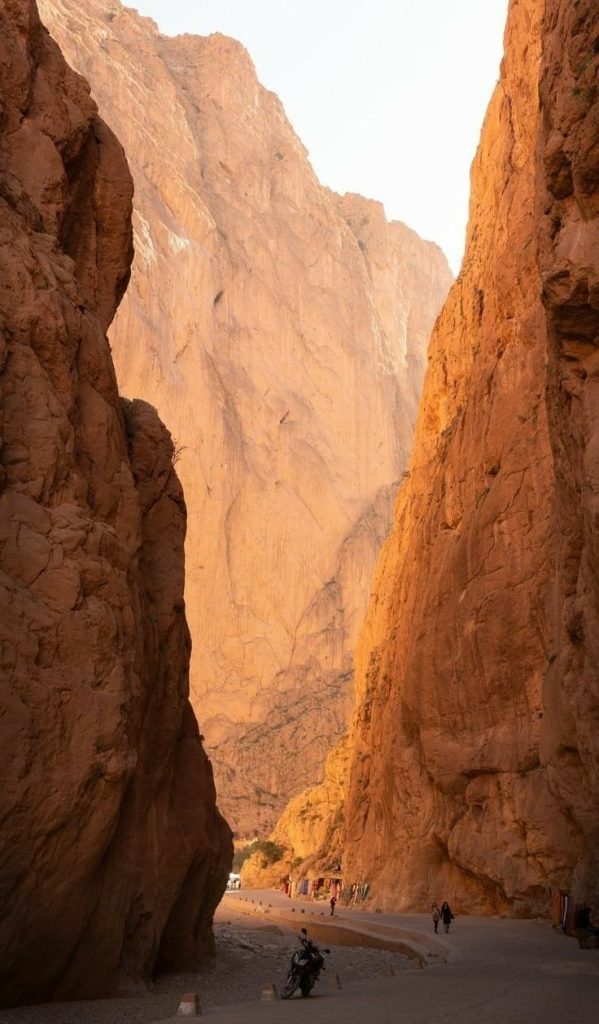
- Day 3: Sahara sunrise → Todra Gorge → Rose Valley → Ouarzazate
- Day 4: Ait Ben Haddou (UNESCO) → Taroudant → Agadir
- Day 5: Essaouira coastal town → Marrakech arrival
- Day 6: Marrakech full guided tour
- Day 7: Transfer to airport (Casablanca or Marrakech)
Cost range: €450–€950 per person depending on group size and accommodation level Best time to go: March–May or September–November Tour type: Private, fully guided, air-conditioned transport throughout
Browse all our Morocco tour packages here and customise this route to match your travel style.
Your Full 7 Day Morocco Itinerary from Fes: Day by Day
Day 1: Fes Medina Guided Tour
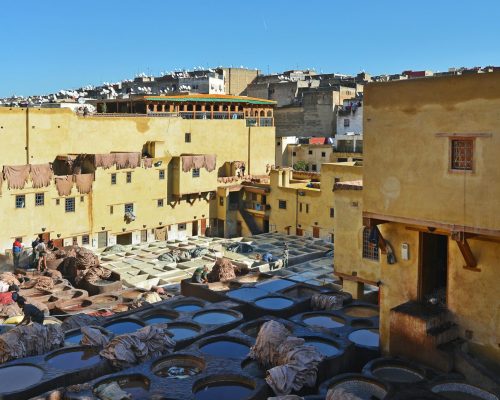
Fes el-Bali is the world’s largest living medieval city — 9,000 streets, most of which have not changed since the 12th century. Without a guide, you will get lost. With one, you’ll see layers of Moroccan history that most travelers miss entirely.
Morning highlights:
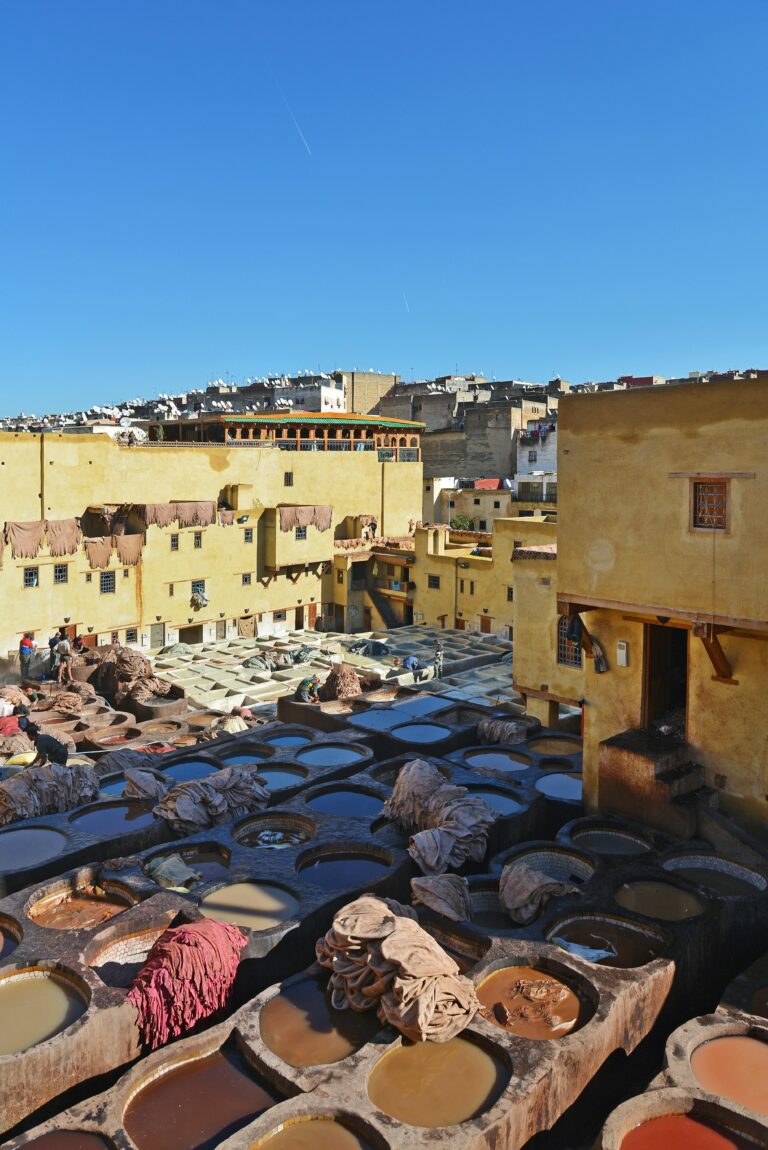
- Chouara Tannery — arrive early, before 10am, when the light is best and the dye vats are most active. Stand on the leather shop terraces above for the iconic aerial view
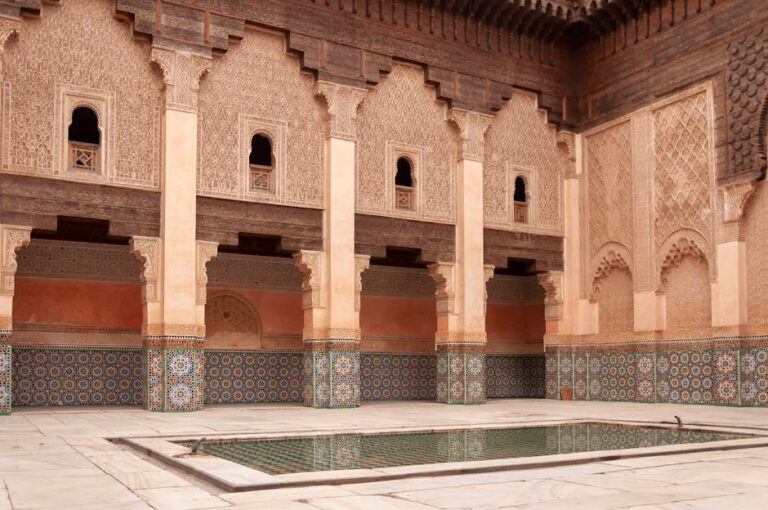
- Bou Inania Madrasa — the most beautifully decorated religious school in Morocco, with carved cedar ceilings and intricate zellige tilework
- Al-Attarine Madrasa — smaller, quieter, equally stunning
Afternoon highlights:
- Al-Qarawiyyin University — founded in 859 AD, recognised as the oldest continuously operating university in the world
- Bab Boujloud (Blue Gate) — the most photographed entrance in Fes; iconic for a reason
- Nejjarine Museum of Wood Arts — an underrated gem that most tours rush past. Take your time here
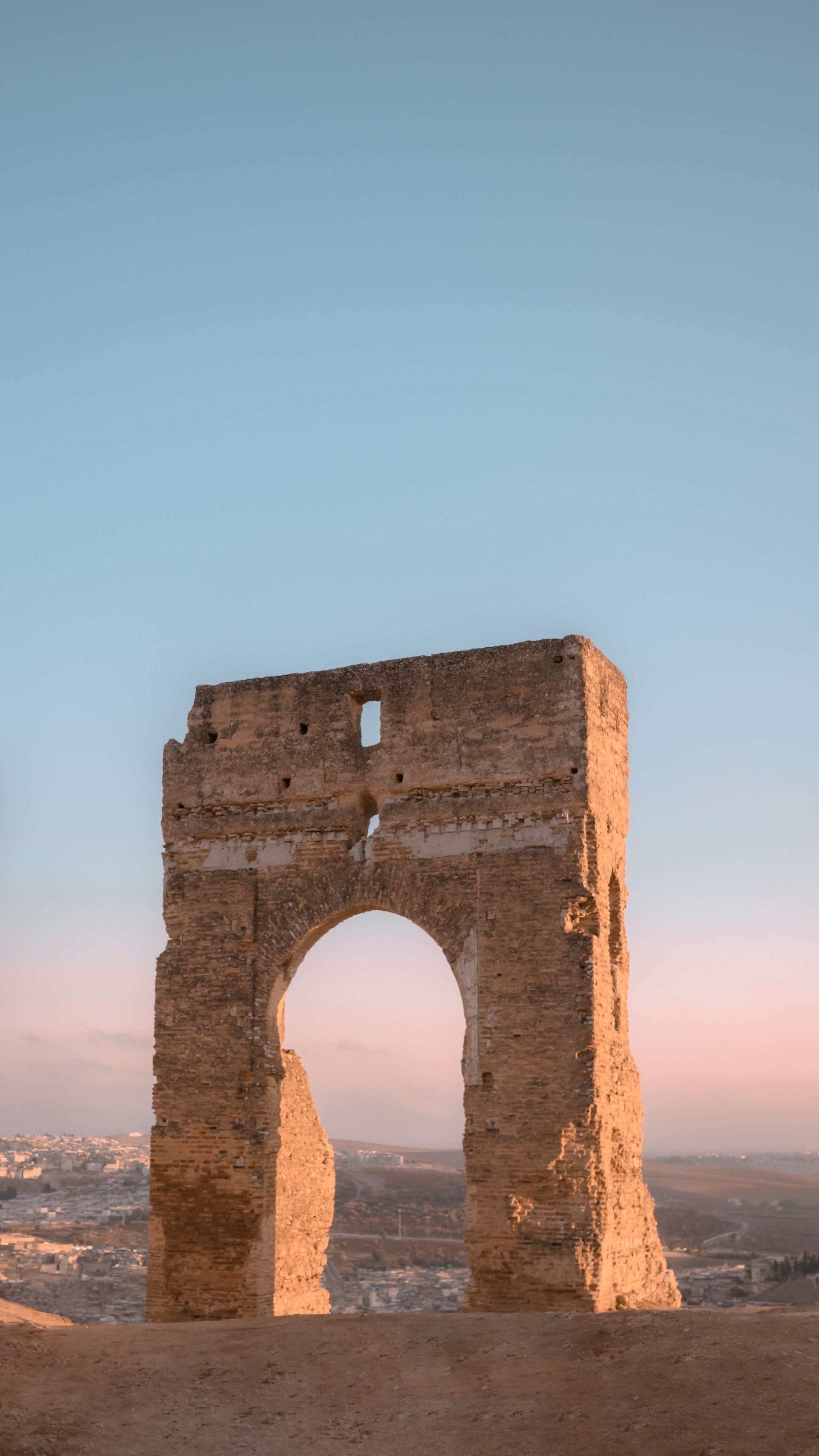
- Marinid Tombs viewpoint — climb up at sunset for a panoramic view of the entire medina spread below you
Where to stay: A riad inside the medina. This is not negotiable for night one. The experience of waking up inside Fes el-Bali cannot be replicated from a modern hotel on the outskirts.
Most guides skip this detail: Book your Fes guide at least 48 hours in advance in 2026. Licensed medina guides are in high demand and the good ones fill up fast, especially April through June.
Day 2: Fes → Middle Atlas → Ziz Valley → Merzouga (Sahara)
This is one of the most varied driving days in all of Morocco — roughly 8 hours total, but broken up by stops that make it genuinely enjoyable rather than a chore.
Morning — Middle Atlas:
- Ifrane: This town will surprise you. Swiss-style chalet architecture, clean streets, a famous stone lion sculpture, and temperatures cool enough that locals call it the Switzerland of Morocco. A 20-minute stop is plenty.
- Azrou Cedar Forest: Walk among ancient cedar trees and meet the Barbary macaques — wild apes that are completely habituated to humans. Children love this stop. Adults do too.
Midday — Midelt: Stop for lunch in this relaxed mountain town. Local restaurants serve solid Moroccan stews and tagines at very reasonable prices. Midelt sits at 1,500 metres — enjoy the cooler air before the desert heat ahead.
Afternoon — Ziz Valley and Erfoud: The road descends through the Ziz Valley, a dramatic gorge lined with thousands of date palms and mud-brick villages. This is the kind of scenery you came to Morocco for. Slow down, photograph it, take it in.
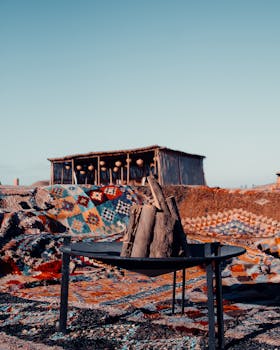
Evening — Merzouga Sahara: Arrive in Merzouga as the sun drops lower. Your camel guide will be waiting. The camel trek to the desert camp takes approximately 45 minutes and brings you deep into the Erg Chebbi dunes — the most spectacular sand sea in Morocco, with dunes reaching up to 160 metres.
Dinner is served around the campfire. Traditional Berber music follows. Sleep under a sky so full of stars it looks artificial.
Day 3: Sahara Sunrise → Todra Gorge → Rose Valley → Ouarzazate
Set your alarm. Sunrise over Erg Chebbi is the single most photographed moment of the entire trip — soft orange light, long shadows across the dunes, complete silence. Do not sleep through it.
After breakfast at the camp, camels carry you back to Merzouga. Then the route heads west through a series of spectacular stops.
Rissani traditional market: One of the most authentic souks in the south — livestock, dates, spices, pottery, and an atmosphere unchanged for centuries. Unlike the tourist-facing markets in Marrakech, Rissani operates primarily for locals.
Tinghir and Todra Gorge: A narrow canyon with sheer rock walls rising 300 metres on both sides. Walk through the gorge floor with the river running beside you. It takes about 30 minutes and the scale is genuinely impressive.
Dades Valley and Rose Valley: The Dades Valley — also called the Valley of a Thousand Kasbahs — runs between dramatic rock formations and mud-brick villages. In late April and early May, the Rose Valley blooms, and the air smells faintly of rose petals. The region produces most of Morocco’s rose oil and rose water.
Ouarzazate: Arrive by evening. This city deserves more attention than most tours give it. Known as the “Hollywood of Morocco”, Ouarzazate has hosted productions including Gladiator, Lawrence of Arabia, and Game of Thrones.
Day 4: Ouarzazate → Ait Ben Haddou → Taroudant → Agadir
Ait Ben Haddou is a UNESCO World Heritage Site and one of the most visually striking places in Morocco. This fortified mud-brick village has appeared in more films than almost any other location on earth — you’ll recognize it immediately.
Allow 1.5 to 2 hours here. Cross the river on foot, climb to the top of the ksar for views across the Draa Valley, and take your time photographing the architecture. The light is best in the morning.
Tiliouine — Saffron Capital of Morocco: Most tours drive straight past this town. We stop at the saffron cooperative, where you can learn how Morocco produces some of the world’s finest saffron, taste it, and buy directly from the producers at fair prices. A short stop, but a memorable one.
Taroudant — “Little Marrakech”: Taroudant is what Marrakech was 40 years ago — walled, unhurried, and largely free of tourist crowds. Walk the ramparts, explore the souks, and have a proper lunch before continuing to Agadir.
Agadir: A modern coastal city. Relax by the sea tonight — you’ve earned it.
Day 5: Agadir → Essaouira → Marrakech
Essaouira is unlike anywhere else in Morocco. A Portuguese-fortified Atlantic coast town with white-washed walls, blue doors, and a constant ocean breeze. It’s calm, artsy, and genuinely beautiful.
En route, stop at an Argan oil cooperative. Watch how the oil is extracted by hand — this is not a tourist performance, it’s a genuine small business run by local women. Try the fresh argan oil on bread. Buy a jar if you like it; the prices are fair and the quality is excellent.
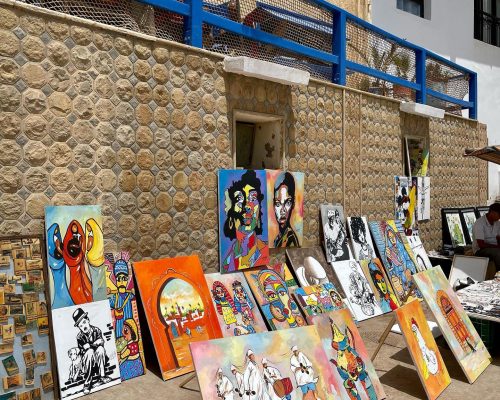
In Essaouira, walk the ramparts facing the ocean, explore the Medina of Mogador, and browse the art galleries and woodcraft shops. Unlike Marrakech or Fes, the atmosphere here is relaxed. Vendors are friendly without being pushy.
Then it’s on to Marrakech for the night.
Day 6: Marrakech Full Guided Tour
Marrakech rewards those who slow down inside it and move fast past the surface.
Morning:
- Jardin Majorelle — the famous electric-blue garden designed by Jacques Majorelle and later restored by Yves Saint Laurent. Go at opening time (9am) before the crowds build.
- Saadian Tombs — the royal necropolis discovered hidden behind a wall in 1917. Exquisite tilework, small, and uncrowded compared to most Marrakech attractions.
Midday:
- Bahia Palace — 19th-century palace with vast painted ceilings, intricate mosaics, and peaceful garden courtyards
- Koutoubia Mosque — the most important mosque in Marrakech; non-Muslims cannot enter but the exterior and gardens are worth seeing
- Mellah (Jewish Quarter) — a frequently overlooked district with a fascinating and complex history
Evening:
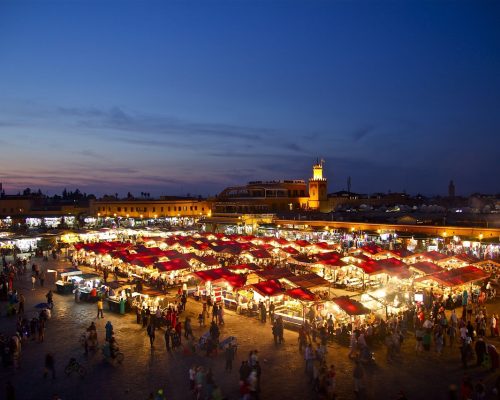
- Jemaa el-Fna Square at sunset and into the night. This is where Marrakech becomes a spectacle — snake charmers, storytellers, musicians, food stalls, acrobats. Chaotic and completely mesmerising. Stay for dinner from one of the food stalls.
Day 7: Transfer to Airport
After breakfast, we transfer you to the airport of your choice — Marrakech (RAK) or Casablanca (CMN), depending on your departure flight.
If transferring to Casablanca, we include a stop at the Hassan II Mosque — the third-largest mosque in the world, built partially over the Atlantic Ocean. Non-Muslims can visit on guided tours. It’s one of the most architecturally extraordinary buildings in Africa and the perfect final image of your Morocco trip.
Included :
* Accommodation
* Service of pickup and drop-off
* Breakfast and dinner
*English/Spanish/ french speaking driver
* Medina's official guide
* Camel trip and overnight in the Desert Camp(per Person)
Excluded :
*Monument admission costs.
* Lunches and beverages
What to Pack for This 7-Day Morocco trip
Most guides give a generic packing list. This one is specific to the route:
- Desert night: Warm layer — even in summer, Merzouga drops to 18–22°C after dark
- Fes medina: Comfortable walking shoes, not sandals — the cobblestones are uneven
- Essaouira: A windbreaker — the Atlantic wind is constant and strong
- General: Modest clothing for mosques and medinas (shoulders and knees covered), sun protection for the Sahara, and a reusable water bottle
For a full detailed list, read our guide: What to Pack for Your Trip to Morocco →
Frequently Asked Questions
Is 7 days enough to see Morocco? Seven days is enough to experience Morocco’s most essential combination — an imperial city, the Sahara desert, and Marrakech. It’s a full week with real depth. For a broader trip covering Chefchaouen, Casablanca, and more, consider a 10-day Sahara tour or a 12-day adventure itinerary.
Is this tour suitable for first-time visitors? Yes — this is one of our most popular routes for first-timers. The private transport, included guide in Fes, and camp setup in Merzouga remove all the logistical friction, so you spend your time experiencing Morocco rather than figuring it out.
Can I do this tour solo? Absolutely. Solo travellers join as a private group of one and receive the same private transport and experience. Pricing for solo travellers is adjusted — contact us for a custom solo quote.
What’s the best time of year for this itinerary? March to May and September to November are ideal. Spring brings wildflowers in the Rose Valley and comfortable Sahara temperatures. Autumn delivers clear skies and warm, dry days throughout. Avoid July and August in the desert — daytime temperatures can exceed 45°C.
Is Morocco safe for tourists in 2026? Yes. Morocco is one of the safest countries in North Africa for international travellers. It has a stable government, active tourist police in major cities, and a long history of welcoming visitors. Read our detailed guide: Is Morocco Safe for Tourists? →
Can we modify the itinerary? Always. Every tour we run is treated as a starting point, not a fixed schedule. Tell us your interests, your pace, and your priorities — we’ll reshape the route around you. Start that conversation here →
Tour's Map
Contact Us
Get In Touch
Talk To Us
moroccoservicetours@gmail.com
PHONE NUMBER
Tél:0661503108- 0662496367
ADDRESS
LOT Merzouga N311,
Arfoud, 52200