4 Days Tour from Fes to Marrakech: The Complete 2026 Desert Itinerary
Quick Answer: What Is the 4-Day Fes to Marrakech Tour?
4 Days/ 3 Nights
Best for: Couples, families, and solo travelers wanting to cross Morocco with a Sahara stop — without rushing.
What’s included: Middle Atlas Mountains → Sahara Desert dunes (Erg Chebbi/Merzouga) → Todra Gorges → Dades Valley → Ait Ben Haddou → High Atlas → Marrakech.
Price range: €180–€650 per person, depending on group size and accommodation level.
3-step action plan:
- Step 1: Choose private (flexible, any date) vs. shared (budget-friendly, fixed dates)
- Step 2: Pick your accommodation tier: standard kasbah, mid-range riad, or luxury desert camp
- Step 3: Book at least 3–4 weeks in advance for peak season (March–May, September–November)
At Morocco Service Tours, we’ve guided hundreds of travelers along this exact route.
Why the 4-Day Fes to Marrakech Tour Is Morocco’s Best Road Trip in 2026
It’s the Only Route That Does Everything
Most Morocco tours focus on one thing — the Sahara or the kasbahs or the mountains. This 4-day itinerary threads all three together in a logical, unhurried flow.
You start in Fes, Morocco’s most medieval city. You end in Marrakech, its most vibrant. Between them? Cedar forests, golden dunes, jaw-dropping gorges, and a UNESCO World Heritage kasbah that Hollywood keeps coming back to.
Unlike a day trip or a rushed 3-day sprint, four days gives you breathing room. You actually spend a full night in the Sahara rather than arriving after dark and leaving before sunrise.
2026 Traveler Trends Favor This Route
Demand for private desert tours in Morocco has surged significantly post-2023, with travelers increasingly choosing immersive overland experiences over city-hopping. The Fes–Merzouga–Marrakech corridor is now among the most-searched Morocco itineraries globally — and for good reason.
Day-by-Day Itinerary: 4 Days Tour from Fes to Marrakech
Day 1: Fes → Middle Atlas → Merzouga (~7–8 hours driving with stops)
Your journey begins early — pickup from your riad or hotel in Fes around 7:30–8:00 AM.
The first stop is Ifrane, a town so unexpected it stops travelers in their tracks. Red-tiled roofs, manicured lawns, clean mountain air — it looks like it was lifted from the Swiss Alps and dropped into Morocco. Most guides rush through here. We don’t.
From Ifrane, the road winds through the Azrou Cedar Forest, one of the few places in Morocco where you can spot wild Barbary macaques — North Africa’s only free-roaming primates. Bring snacks, but don’t feed them directly; they get aggressive.
Lunch in Midelt, a quiet town between the Middle and High Atlas known for its fossil markets and apple orchards. Order the harira soup — it’s exceptional here.
The afternoon drive descends through the Ziz Valley, a ribbon of palm groves winding through red canyon walls. Stop at the panoramic viewpoint above Errachidia — it’s one of the most photographed landscapes on this entire route, and most generic tour blogs don’t even mention it.
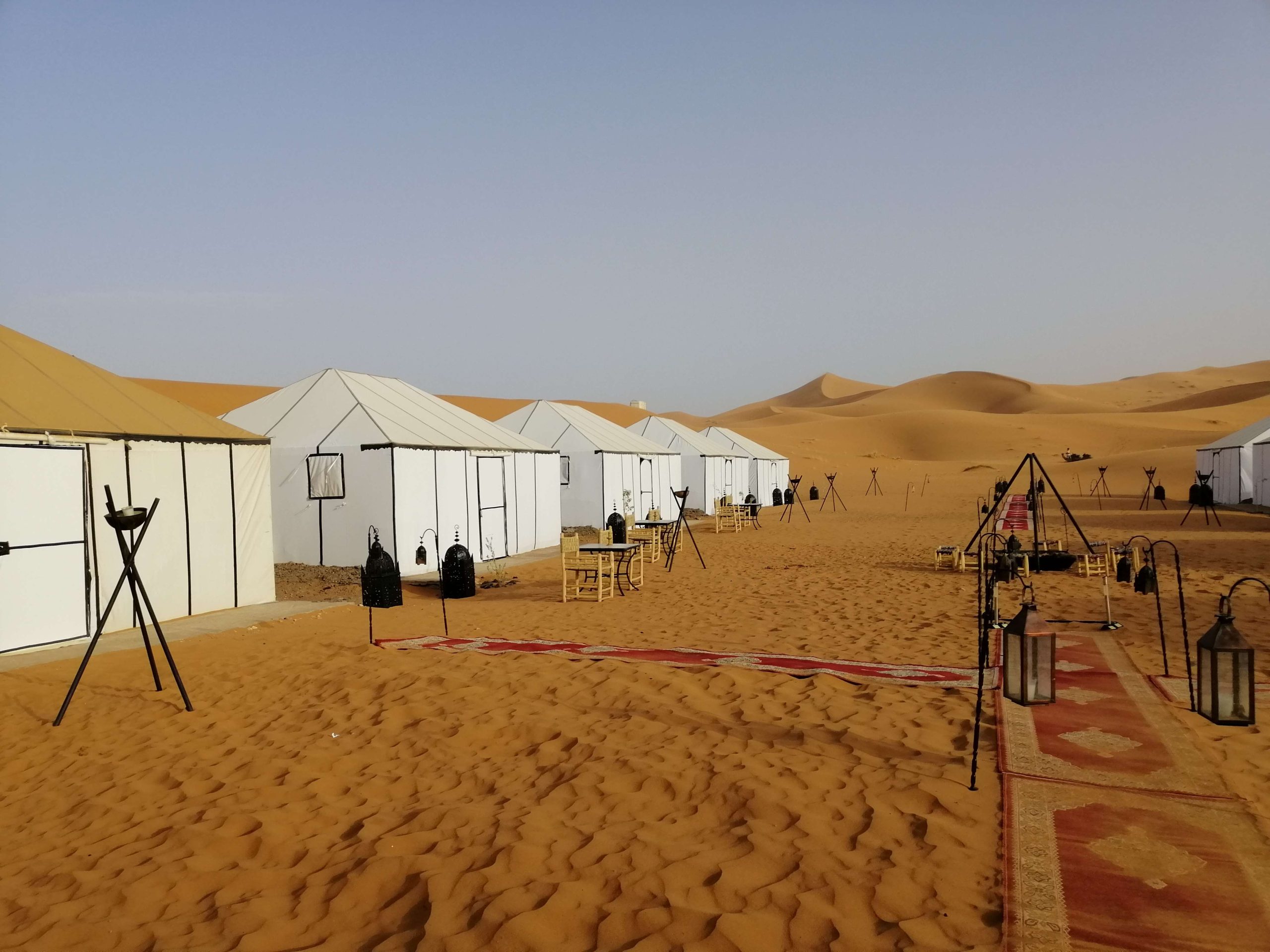
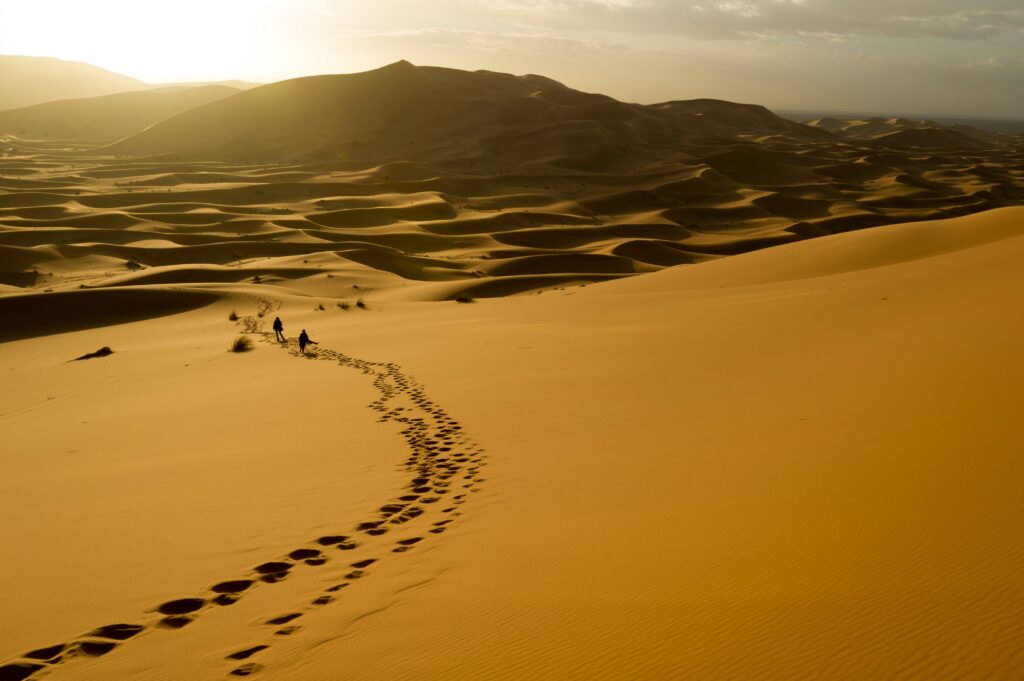
Arrive in Merzouga by late afternoon. Check into your kasbah or desert camp, then head out for a sunset camel trek into the Erg Chebbi dunes. Dinner is traditional Moroccan tagine around a campfire, followed by Gnawa music and the most spectacular stargazing of your life — zero light pollution, thousands of stars.
Overnight: Desert camp or kasbah hotel in Merzouga
Day 2: Merzouga Desert Day — Dunes, Nomads & 4×4 Adventure
This is the day most tours sacrifice by rushing to the next destination. We keep it full.
Wake up before sunrise for a dawn walk on the dunes — the light is extraordinary and the desert is completely silent. After breakfast, your guide leads you on a 4×4 desert excursion to places tourists almost never see:
- Khamlia village, home to the Gnawa community descended from sub-Saharan Africa — their music is hypnotic and deeply moving. (Read our guide on Gnawa music in Morocco to understand what you’re hearing before you arrive.)
- Nomad family visit — a genuine encounter, not a staged experience. Mint tea, handmade crafts, and real conversation about desert life.
- Fossil and mineral markets in Erfoud, where trilobites and ammonites 350 million years old are sold like fruit.
Overnight: Desert camp or guesthouse in Merzouga (second night in the Sahara — a detail most 4-day competitors cut)
Day 3: Merzouga → Todra Gorges → Dades Valley (~4–5 hours driving)
Leaving the desert behind, Day 3 is about dramatic geology.
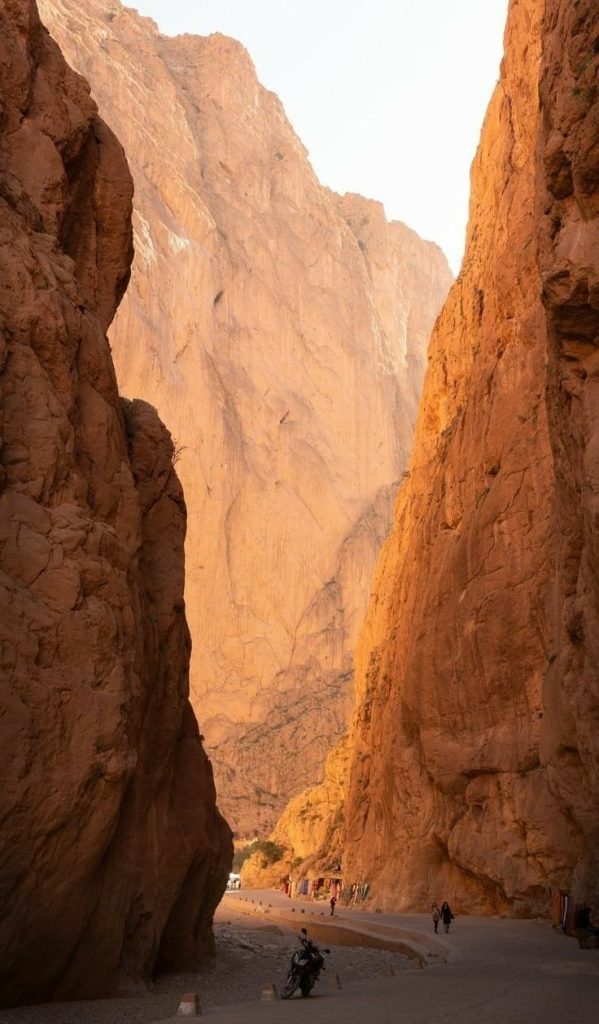
The Todra Gorges (Gorges du Todra) are a slot canyon where the walls rise 300 meters on either side of a narrow river passage. Arrive mid-morning before the tour buses and you’ll have it almost to yourself. A short 30-minute walk through the gorge floor is enough to feel genuinely dwarfed by the rock.
Continue into the Dades Valley — called the Valley of Roses because every spring, the hillsides erupt in pink Damask roses used to make argan and rose products. The landscape here is unlike anything else in Morocco: strange volcanic formations, ancient ksars (fortified villages), and winding mountain roads that photographers obsess over.
The Dades Gorge switchbacks — a series of hairpin turns carved into the cliff face — are one of Morocco’s most dramatic drives. Stop, get out, and look back. You’ll understand why.
Overnight: Guesthouse or kasbah in Dades Valley/Boumalne Dades
Day 4: Dades → Ait Ben Haddou → High Atlas → Marrakech (~5–6 hours)
The final day follows the legendary Route of a Thousand Kasbahs — a string of fortified mud-brick citadels that once guarded the ancient caravan routes between the Sahara and the Mediterranean.
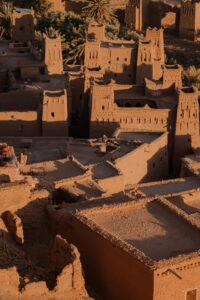
Ait Ben Haddou is the crown jewel. This UNESCO World Heritage Site is a 10th-century ksar — a fortified village rising above a dry riverbed — that has appeared in Gladiator, Game of Thrones, Lawrence of Arabia, and dozens of other films. Spend 60–90 minutes here. Climb to the top granary for views over the valley.
Just down the road: Ouarzazate, Morocco’s film capital. The Atlas Film Studios here are the largest film studios in the world by area — and largely unknown to first-time visitors. You can walk through sets from Kingdom of Heaven, Prince of Persia, and more. It’s a genuinely surreal experience: standing in a fake Egyptian temple in the middle of Morocco.
The afternoon drive crosses the Tizi n’Tichka Pass (2,260m), the highest paved road in Morocco. The views are breathtaking — but note: this pass closes in heavy snow, which is why we do not recommend this tour in January or February without checking conditions first. This is a practical detail almost no competitor blog mentions.
Arrive in Marrakech by late afternoon or evening. Drop-off at your riad or hotel.
Comparison Table: 4-Day Fes to Marrakech Tour Options
| Option | Price/Person | Best For | Accommodation | Flexibility |
|---|---|---|---|---|
| Shared group tour | €180–€280 | Solo travelers, budget | Standard hotels + camp | Fixed dates |
| Private standard | €280–€420 | Couples, families | Mid-range riads + camp | Fully flexible |
| Private mid-range | €420–€550 | Comfort seekers | Superior riads + luxury camp | Fully flexible |
| Private luxury | €550–€700+ | Honeymoons, special occasions | 4★ riads + premium camp | Fully flexible |
Prices based on 2 people sharing, 2026 season. Larger groups (4+) reduce cost per person significantly.
Packing Smart for This Route
The Fes to Marrakech route crosses four distinct climate zones in four days. Pack accordingly:
- Layers: Mountain mornings hit 5–10°C even in spring. Desert afternoons reach 35°C+
- Closed shoes: Essential for dune walking (sand gets everywhere in sandals)
- Light scarf: Desert wind is dusty; also useful for modesty in villages
- Power bank: Desert camps often have limited electricity
- Cash in dirhams: Many stops along the route have no card payment
Check out our full Morocco packing guide before you go — it covers exactly what to bring for desert conditions.
Best Time to Do the 4-Day Fes to Marrakech Tour
| Season | Months | Conditions | Recommendation |
|---|---|---|---|
| Spring | March–May | Perfect temps, green landscapes | |
| Autumn | September–November | Warm days, cool nights | |
| Summer | June–August | Desert temps 40–45°C | |
| Winter | December–February | Tichka Pass may close in snow |
Private vs. Shared Tour: Which Should You Choose?
This is the question most tour pages don’t answer clearly.
Choose a shared tour if:
- You’re solo or traveling on a tight budget
- You don’t mind fixed departure dates
- You enjoy meeting other travelers
Choose a private tour if:
- You’re traveling with family, a partner, or a small group
- You want to control the pace — linger longer at Ait Ben Haddou, skip what doesn’t interest you
- You have specific dietary needs or mobility considerations
- You’re celebrating something special
The honest math: For two or more people, private tours often cost the same per person as shared — but give you 100% flexibility. For solo travelers, shared tours are the smarter financial choice.
Explore all our custom Morocco tours and private tour options to compare.
FAQ: 4 Days Tour from Fes to Marrakech
Q: Is 4 days enough to do justice to this route? Yes — and it’s the sweet spot. Three days feels rushed (you lose the full Sahara day). Five days is ideal if you want to add Volubilis or Meknes, but four days covers all the iconic highlights without exhaustion.
Q: How much driving is involved each day?
- Day 1 (Fes → Merzouga): 7–8 hours with stops — the longest day
- Day 2 (Merzouga): Mostly local 4×4 exploration, minimal road driving
- Day 3 (Merzouga → Dades): 4–5 hours with scenic stops
- Day 4 (Dades → Marrakech): 5–6 hours with stops at Ait Ben Haddou and Ouarzazate
Q: Is this tour suitable for children? Absolutely. The route is well-paced and children love the camel trek, the desert camp, and the macaque monkeys in Azrou. For families specifically, see our Sahara desert tour with kids guide.
Q: Can I do this tour in reverse — Marrakech to Fes? Yes, and it works equally well. The itinerary is fully reversible. Some travelers prefer to start in Marrakech and fly home from Fes, or vice versa. See our 4 Days Tour from Marrakech to Fes page for the reverse option.
Q: Will the Tizi n’Tichka Pass be open for my trip? In spring, summer, and autumn: almost certainly yes. In December–February, there’s a real chance of snow closures. If you’re traveling in winter, ask your operator to monitor conditions and have an alternative route via Taroudant confirmed in advance. This is something few tour companies proactively tell you.
Q: What is the cancellation policy? With Morocco Service Tours, we offer flexible rebooking up to 7 days before departure for private tours. Check our booking terms or contact us directly via WhatsApp for specifics.
→ View Full Tour Details & Book Now
Or browse related itineraries to extend your adventure:
Included :
* Accommodation
* Service of pickup and drop-off
* Breakfast and dinner
*English/Spanish/ french speaking driver
* Medina's official guide
* Camel trip and overnight in the Desert Camp(per Person)
Excluded :
*Monument admission costs.
* Lunches and beverages
Tour's Map
Contact Us
Get In Touch
Talk To Us
PHONE NUMBER
Tél:0661503108- 0662496367
ADDRESS
LOT Merzouga N311,
Arfoud, 52200