3 Days Tour from Fes to Marrakech: The Complete 2026 Desert Itinerary
Quick Answer: Is 3 Days Enough to Go from Fes to Marrakech via the Desert?
3 Days/ 2 Nights
Quick Answer: Is 3 Days Enough to Go from Fes to Marrakech via the Desert?
Yes — if you plan it correctly. The 3-day Fes to Marrakech desert tour is Morocco’s most popular short-form road trip for a reason. You cover the Middle Atlas Mountains, the Sahara dunes of Erg Chebbi, the Todra Gorges, Dades Valley, Ait Ben Haddou, and the High Atlas — all in a logical, flowing route between two of Morocco’s greatest cities.
Table of Contents
ToggleWhat’s included: Ifrane → Azrou Cedar Forest → Merzouga Sahara (overnight in desert camp) → Todra Gorges → Dades Valley → Ait Ben Haddou → Tizi n’Tichka → Marrakech
Price range: €135–€500 per person (shared group to private luxury)
3 steps to get started:
- Step 1: Decide direction — Fes to Marrakech or reverse (this actually matters — more below)
- Step 2: Choose private or shared, and your accommodation level
- Step 3: Book at least 2–3 weeks in advance; daily departures available year-round
At Morocco Service Tours, we run this route every single day. Here’s everything you need to know before you book — including the details other guides consistently skip.
Why the 3-Day Fes–Marrakech Route Works So Well
Three days sounds short. And it is. But this particular corridor is designed by geography to be done efficiently — each day naturally leads into the next, and the highlights stack up without feeling forced.
What makes it work is the directionality of the route. Traveling Fes to Marrakech means your longest drive (Day 1, roughly 7–8 hours to Merzouga) happens when you’re freshest. Days 2 and 3 are progressively shorter. You arrive in Marrakech with energy left to explore. Traveling the reverse — Marrakech to Fes — frontloads the easier days and puts the longest drive at the end, when fatigue is highest. Most competitors don’t explain this distinction at all. We think it matters.
That said, if your flights dictate the reverse direction, it works perfectly well. Just factor in a slower Day 3 pace.
Day-by-Day: 3-Day Desert Tour from Fes to Marrakech
Day 1: Fes → Middle Atlas → Merzouga (~7–8 hours with stops)
Pickup at 7:00 AM in winter, 8:00 AM in summer. This is a detail almost no competitor blog mentions — and it matters. In winter months, the days are shorter, and you need the extra hour to reach Merzouga in time to catch the sunset camel trek. Don’t sleep in on Day 1.
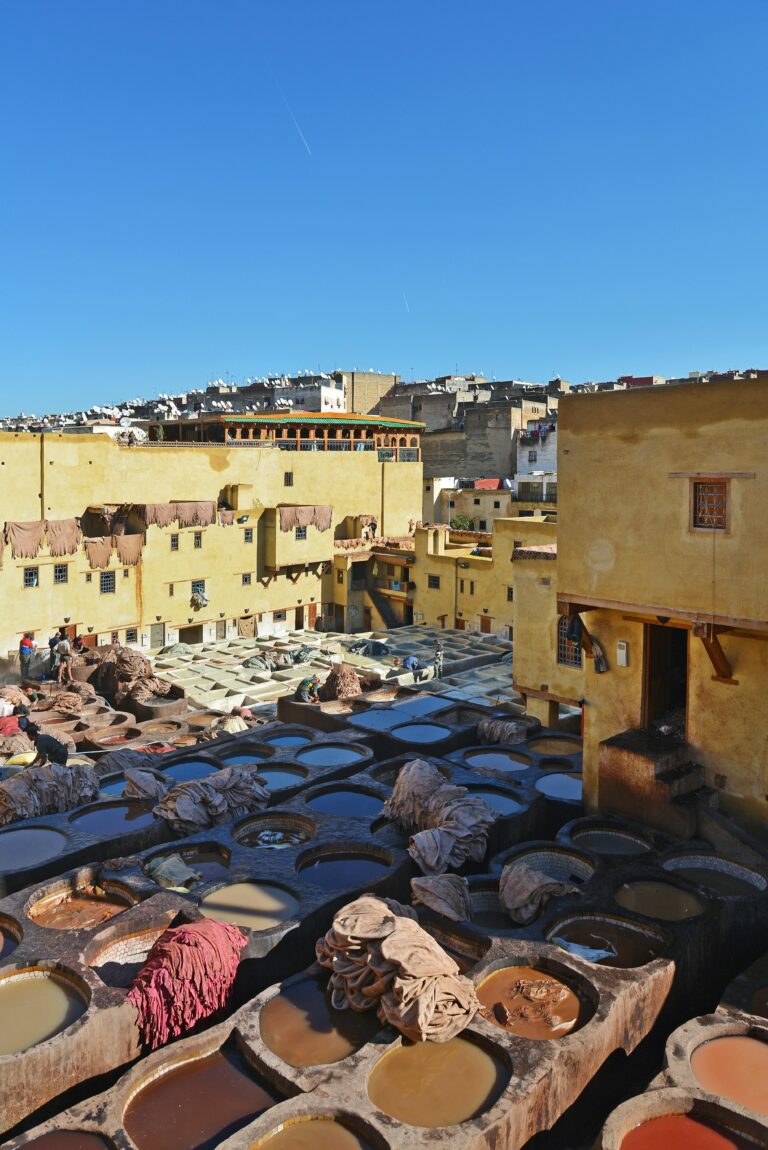
A note most guides overlook: If your riad in Fes is in the old medina, it may not be car-accessible. Your driver will arrange a meeting point at the nearest accessible road — confirm this when booking, not on the morning of departure.
The route climbs into the Middle Atlas Mountains almost immediately. First stop: Ifrane — Morocco’s improbably Swiss-looking alpine town, with red-tiled rooftops, manicured parks, and mountain air so clean it feels foreign after Fes. Take 20 minutes here. It resets the senses.
Then comes the Azrou Cedar Forest — ancient trees, dappled light, and the Barbary macaques that live in them. These are wild primates, not performing animals. They’ll approach confidently, climb on cars, and steal unguarded snacks. Keep windows up near the roadside groups; find a quieter spot deeper into the forest for a more relaxed encounter.
Lunch in Midelt — the Apple Capital of Morocco, sitting between the Middle and High Atlas ranges. The town’s fossils markets are worth a 10-minute browse if you’re interested. The roadside restaurants serve excellent harira.
The afternoon crosses into a different Morocco entirely. The Ziz Valley unfolds below you as the road descends: a dramatic river of palm trees threading through canyon walls of red rock. Stop at the panoramic viewpoint. Take the photo. Then push on toward the desert.
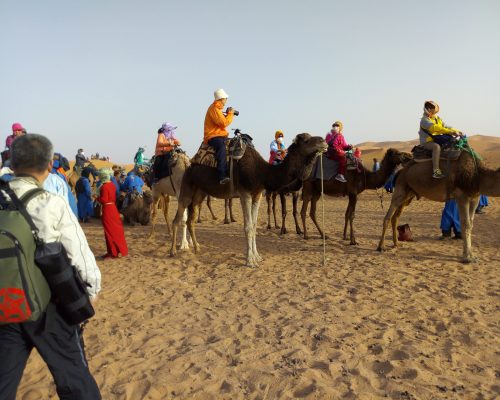
Merzouga announces itself suddenly — the great orange wall of Erg Chebbi, the largest sand dunes in Morocco at up to 150 meters high, rising from flat scrubland with no transition at all. Check in to your camp or kasbah hotel, then head straight out for the sunset camel trek.
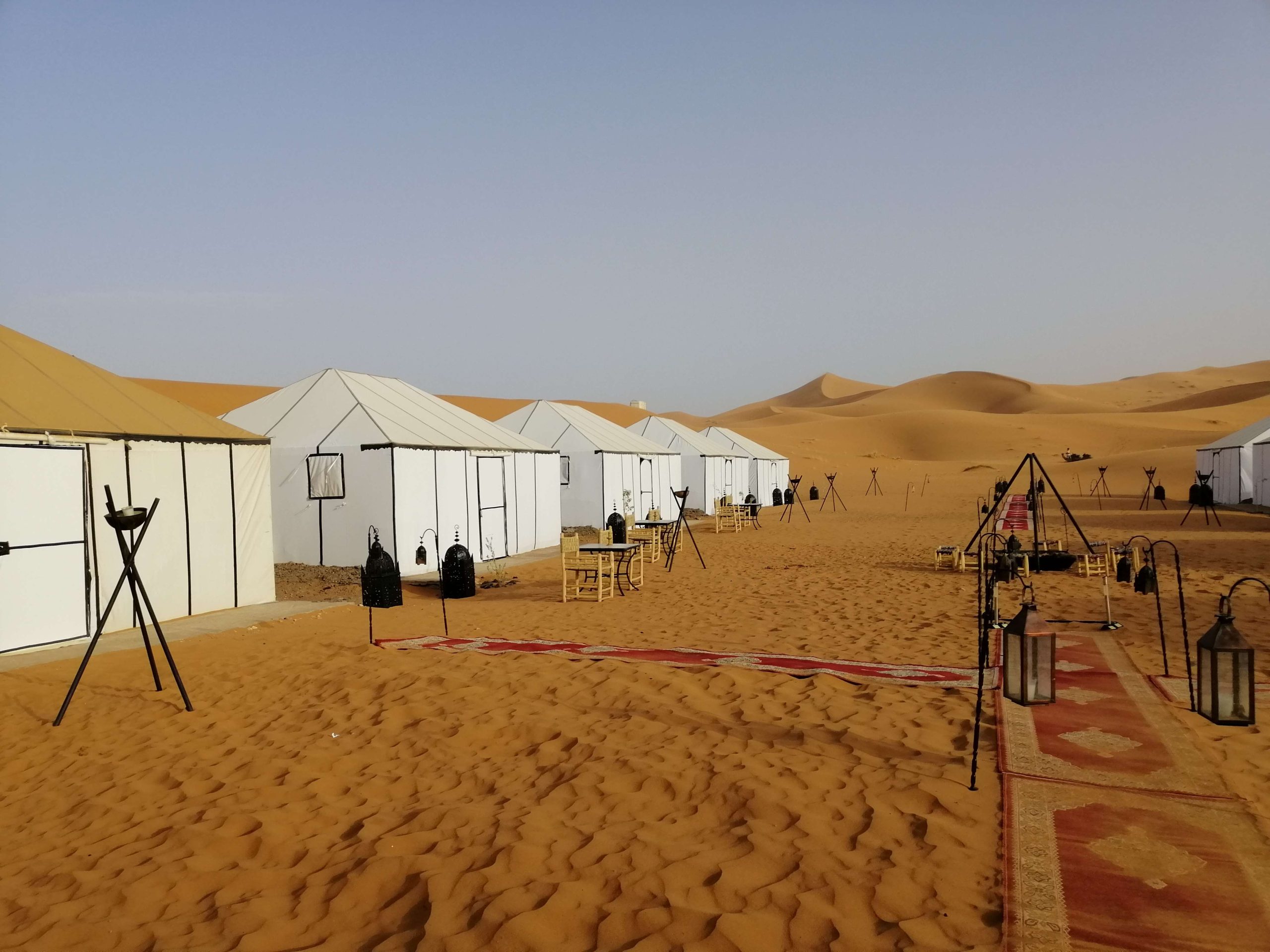
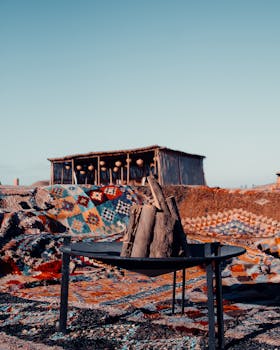
The camel trek takes 45–60 minutes each way. Your guide leads you over the first ridge of dunes to your desert camp — traditional Berber tents, proper beds, a shared bathroom (private in luxury options), and a dinner of tagine cooked over a fire. After dinner, Berber drums. After that, silence and more stars than most people have ever seen in one sky.
Overnight: Desert camp or kasbah hotel in Merzouga
Day 2: Merzouga → Todra Gorges → Dades Valley (~4–5 hours)
Wake before dawn. Your guide will knock. Climb the dune behind camp in darkness and watch the sunrise from the crest — the sky moves through violet, pink, and gold in about 20 minutes. It’s the quiet highlight of the entire tour for most travelers.
Breakfast back at camp. Then you pack, mount the camels for the return trek, and the driving day begins.
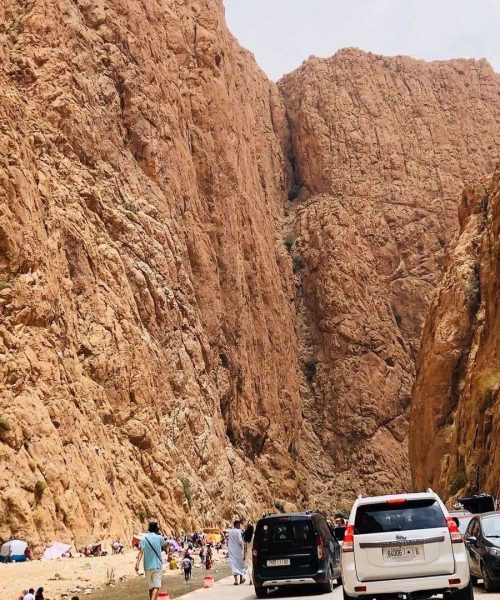
The morning stop is Todra Gorges — a canyon where 300-meter limestone walls close in on either side of a cold, shallow river. Walk 15–20 minutes into the gorge. Look straight up. Photographers, bring your widest lens — the geometry here is extraordinary.
A word of practical advice that travel blogs consistently miss: the gorge can be very windy in winter, particularly from December through February. A windbreaker is not optional. In summer, the canyon walls provide shade that makes this one of the coolest stops on the entire route.
The afternoon drive follows the Dades Valley — famous for its bizarre volcanic rock formations, ancient mud-brick ksars, and the legendary Dades Gorge hairpin bends: a series of switchbacks carved into the cliff face that make for some of the most dramatic road photography in Morocco. Stop, get out, walk 50 meters back down the road, and look up at the road above you on the rock face. You’ll understand why this image appears on every Morocco travel poster.
If you’re looking to understand more about the spectacular landscapes that define southern Morocco’s desert route, our guide on things to do in Morocco’s Sahara Desert covers every worthwhile stop in the region with the detail it deserves.
Overnight: Guesthouse or kasbah in Boumalne Dades/Dades Valley
Day 3: Dades → Ait Ben Haddou → High Atlas → Marrakech (~5–6 hours)
The final day follows the Road of a Thousand Kasbahs — an ancient caravan route lined with fortified mud-brick citadels that once connected the Sahara to the Mediterranean. The scenery shifts from red canyon to rose valley to dramatic mountain pass in a single day.
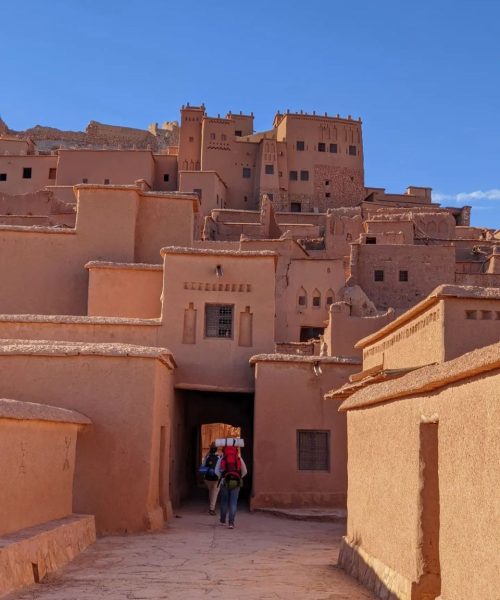
The essential stop is Ait Ben Haddou — a 10th-century UNESCO World Heritage ksar that has appeared in Gladiator, Game of Thrones, The Mummy, Lawrence of Arabia, and more than 20 other major productions. Spend 60–90 minutes here. Cross the dry riverbed on foot, climb the narrow alleys to the top granary, and look back over the valley. Allow your local guide (available on-site, ~€5 contribution) to show you the sections that independent visitors always miss.
Just down the road: Ouarzazate, the Hollywood of Africa. If time allows, the Atlas Film Studios are worth a stop — the largest in the world by area, with standing sets from major productions that you can walk through. Most 3-day itineraries skip this to save time; ask your driver if it’s feasible based on your pace.
The afternoon crosses the Tizi n’Tichka Pass at 2,260 meters — Morocco’s highest paved road. The views are extraordinary. Berber villages cling to ridgelines. The road drops through a dozen hairpin turns. And then, almost suddenly, the landscape flattens and the horizon turns orange-pink with city lights.
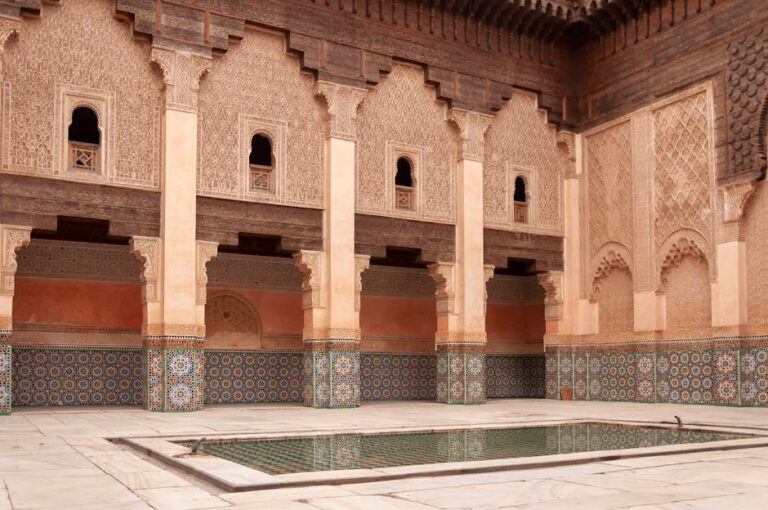
Marrakech. You arrive in the late afternoon or early evening. Your driver drops you at your riad or hotel. The 3-day tour ends here — but Marrakech is just beginning. Head to Djemaa el-Fna before 8 PM and watch the square transform into its nightly theatre of storytellers, acrobats, and food smoke. After three days of mountains and desert, it’s an overwhelming, joyful contrast.
To make the most of your time in the city, our Top Things to Do in Marrakech guide has everything you need — from medina must-sees to the best rooftop cafés with views of the square.
At a Glance: Daily Driving Times
| Day | Route | Drive Time | Key Stops |
|---|---|---|---|
| Day 1 | Fes → Merzouga | 7–8 hrs (with stops) | Ifrane, Azrou, Midelt, Ziz Valley |
| Day 2 | Merzouga → Dades | 4–5 hrs (with stops) | Todra Gorges, Dades Gorge |
| Day 3 | Dades → Marrakech | 5–6 hrs (with stops) | Ait Ben Haddou, Tizi n’Tichka |
Shared vs. Private: Which Tour Is Right for You?
This is the most common decision travelers wrestle with. Here’s the honest breakdown.
Shared group tour (max 10 people):
- Starts from €135–€180 per person
- Fixed departure dates and itinerary
- Great for solo travelers and budget-focused travelers
- You meet other travelers — many people count this as a bonus
- Private tent in the desert camp, shared vehicle on the road
Private tour:
- Starts from €280–€500 per person depending on group size
- Departs any day, adjusts pace to you
- Stop longer at Ait Ben Haddou, skip what doesn’t interest you
- For 2+ people, the price difference narrows significantly
- Better for families, couples, and anyone with specific interests or dietary needs
The honest math: For two people traveling together, private tours often cost only €30–€50 more per person than shared — and the flexibility is substantial. For solo travelers, shared is almost always the smarter financial choice, and the social aspect is genuinely enjoyable on a multi-day tour.
Explore our full range of Morocco private tours and custom Morocco tour options to compare.
Is This Tour Suitable for Solo Female Travelers?
Yes — and it’s worth saying directly, because it’s one of the most-asked questions in tour reviews and almost no competitor article addresses it specifically in the 3-day context.
The Fes to Marrakech desert route is a well-established, frequently run corridor with professional operators. Private tours give solo women full control over pace and comfort. Shared tours mean traveling with a vetted group of other international tourists.
The desert camp experience is safe and communal — private tents, shared common areas, always with a guide present. Ait Ben Haddou and the gorge stops are public sites with plenty of other visitors around.
For everything you need to know about safety, dress, and preparation, read our dedicated guide on traveling to Morocco as a woman before you book.
Best Time of Year for the 3-Day Tour
| Season | Months | Experience |
|---|---|---|
| Spring | March–May | ⭐⭐⭐⭐⭐ Ideal — mild temps, green Atlas, roses in bloom |
| Autumn | Sep–Nov | ⭐⭐⭐⭐⭐ Excellent — dry, warm, quieter than spring |
| Summer | Jun–Aug | ⭐⭐ Desert midday hits 42°C+ — start early, pace carefully |
| Winter | Dec–Feb | ⭐⭐⭐ Cold nights (5°C in desert), Tichka Pass may snow — always confirm conditions |
If you’re thinking about a January departure, our travel to Morocco in January guide walks you through exactly what to expect — including what winter does to the desert light (spectacular) and the mountain roads (variable).
Should You Add Days? How the 3-Day Tour Compares
The 3-day tour is the minimum to do this route properly. But if your schedule allows more time, the experience deepens significantly.
The extra day in the 4-Day Tour from Fes to Marrakech gives you a full second day in Merzouga — meaning a 4×4 excursion into the deep desert, a visit to the Gnawa village of Khamlia, and the Rissani weekly market. The difference between one night and two nights in the Sahara is hard to overstate.
The 5-Day Desert Excursion from Fes goes further still — adding the Skoura palm oasis, the Amridil Kasbah, and a proper first evening in Marrakech. If you have the time, it’s the format we recommend most.
And if you want to explore Morocco more broadly before or after this tour, our Complete Morocco Travel Itinerary 2026 maps out how to combine this desert route with Chefchaouen, Casablanca, and the Atlantic coast.
FAQ: 3 Days Tour from Fes to Marrakech
Q: Can this tour be done in reverse — Marrakech to Fes? Yes, and it’s equally popular. However, the Fes → Marrakech direction is slightly better sequenced: your longest driving day (Day 1) happens when you’re freshest, and you arrive in Marrakech — the more complex city to navigate independently — with afternoon energy. That said, your flight schedule should drive this decision above all else.
Q: What if my riad in Fes isn’t accessible by car? The old medina of Fes is largely pedestrianized. Your driver will confirm a meeting point nearby — usually a gate or landmark within a 5-minute walk of your riad. Confirm this the evening before, not on the morning of departure.
Q: Is the camel trek long? I’m not sure I can do it. The standard trek is 45–60 minutes each way at a walking pace. It’s very manageable for most fitness levels. If camels aren’t for you, a 4×4 transfer to the camp is available as an alternative — ask when booking.
Q: Can I extend the tour and add days? Absolutely. The 3-day itinerary can become 4 or 5 days simply by adding time in Merzouga or an extra night in Ouarzazate. Tell us your dates and we’ll build the extension around your schedule.
Q: What should I pack specifically for this 3-day route? Layers are essential — the temperature swings from 5°C in the mountains to 35°C+ in the desert, often in the same day. Closed shoes for the dunes, a light scarf (dust and desert wind), a power bank (camps have limited charging), and cash in dirhams. Our complete Morocco packing guide covers everything by zone and season.
Included :
* Accommodation
* Service of pickup and drop-off
* Breakfast and dinner
*English/Spanish/ french speaking driver
* Medina's official guide
* Camel trip and overnight in the Desert Camp(per Person)
Excluded :
*Monument admission costs.
* Lunches and beverages
Tour's Map
Contact Us
Get In Touch
Talk To Us
moroccoservicetours@gmail.com
PHONE NUMBER
Tél:0661503108- 0662496367
ADDRESS
LOT Merzouga N311,
Arfoud, 52200