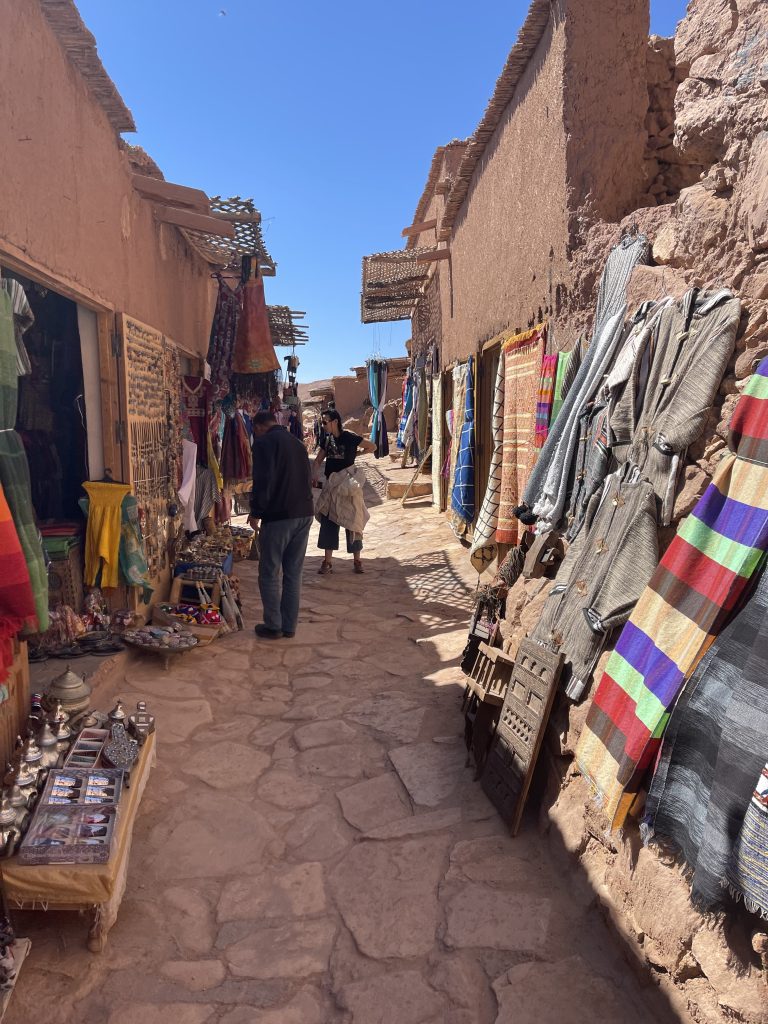
The Best Souks in Morocco, City by City
Marrakech — Largest and Most Spectacular
Marrakech’s medina holds over 3,000 shops and stalls radiating outward from Jemaa el-Fna square. It is North Africa’s largest traditional marketplace and has been a trading hub since the 11th century. The scale is staggering the first time you see it.
Key souks to know:
| Souk Name | Specialty | Insider Tip |
|---|---|---|
| Souk Semmarine | Textiles, bags, clothing, ceramics | Main artery — start here, then explore the branches |
| Souk Smata | Traditional babouche slippers | Best leather quality here, not Semmarine |
| Souk Haddadine | Blacksmiths, metal lanterns | Watch artisans work — prices are negotiable |
| Rahba Kedima | Spices, herbs, medicinal plants, kohl | Old auction square — atmospheric and authentic |
| Souk Chouari | Wood crafts, baskets, games | Underrated — fewer tourists, better prices |
| Souk El Bijoutiers | Silver and gold jewelry | Go later in the day when vendors are more flexible |
Pro tip most Guides skip: Prices in Marrakech run 20–40% higher than in Fes or Meknes simply because of tourist volume. The deeper you push past the main entrances, the lower prices drop — and the more genuine the goods become. Walk two alleys past Souk Semmarine’s main entrance and you’ll find workshops where artisans are actively creating pieces, not just selling pre-made imports.
There is also a Bab El Khemis flea market held every Thursday evening — a wildly disorganized but fascinating spot loved by locals. Carved doors, brass knockers, old furniture, and kitchen items pile up on the pavement. No other guide covers this, but it’s one of Marrakech’s most authentic market experiences.
 Looking to combine your souk visit with a broader Marrakech experience? See our top things to do in Marrakech guide.
Fes el-Bali — The Most Authentic Souk in Morocco
If Marrakech is theatrical, Fes is timeless.
Fes el-Bali — a UNESCO World Heritage Site — contains craft districts that have operated continuously for over 1,000 years. The famous Chouara Tannery is visible from above, its stone vats filled with natural dyes, surrounded by the pungent smell of leather being processed by hand, exactly as it was in the 9th century.
What makes Fes different:
- Fewer tourists per square meter than Marrakech
- Lower prices across the board
- Artisans are more deeply embedded in the souks — many still live above their workshops
- The blue pottery of Fes is iconic and genuinely distinctive — look for pieces from certified cooperatives
Fes is where you’ll find the best Berber carpet prices in Morocco, the most serious spice merchants, and brass metalwork of a quality that simply isn’t replicated elsewhere.
Chefchaouen — The Relaxed, Blue-Walled Market
Chefchaouen’s souk is quieter, smaller, and more relaxed than Marrakech or Fes. The blue-washed walls create a photogenic backdrop unlike anywhere else in Morocco. Specialties here include:
- Woven Berber blankets and shawls in earthy mountain tones
- Blue-tinted ceramics unique to the city
- Hemp products — the Rif Mountains region has a long tradition of this craft
- Handmade wool djellabas at prices that would shock you in Marrakech
Chefchaouen is ideal for relaxed browsing without pressure. Vendors are noticeably less aggressive than in the big cities.
Essaouira — The Coastal Artisan’s Market
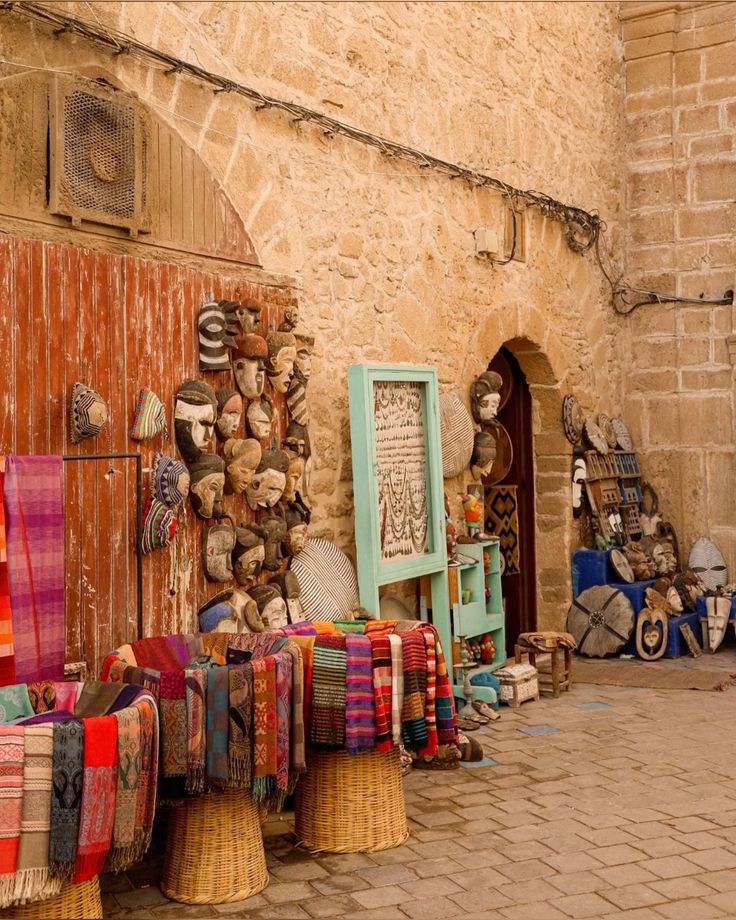
Essaouira’s souks specialize in thuya wood — a rare, aromatic hardwood unique to the Atlantic coast of Morocco. Artisans carve it into jewelry boxes, chess sets, picture frames, and decorative items that make stunning gifts. You won’t find this quality or price elsewhere.
Also look for:
- Blue and white pottery with a coastal influence
- Gnawa musical instruments — Essaouira is the home of Gnawa culture
- Antique jewelry and silver from Saharan trading routes
Curious about Gnawa culture and its roots? Read our dedicated Gnawa music in Morocco guide.
Tangier — Antiques, Andalusian Crafts & Hidden Gems
Tangier’s souk character is unlike any other Moroccan city. Its Grand Socco is an open-air square where the medina meets the modern city. The smaller Petit Socco — once a haunt of Beat Generation writers — leads deeper into the medina’s leather and textile alleys.
Tangier specializes in antiques, vintage items, and Andalusian-Moroccan fusion crafts you simply won’t find elsewhere in the country. It’s still largely undiscovered by mass tourism, which keeps prices honest.
What to Buy in Moroccan Souks: The Honest Guide
Most articles tell you what to buy. They rarely tell you what to avoid or how to spot real quality from mass-produced tourist goods.
| Item | What to Look For | Red Flag |
|---|---|---|
| Argan oil | Cold-pressed, sold at a cooperative with certificates | Suspiciously cheap, unclear origin |
| Saffron | Deep red threads, strong aroma | Bright orange or yellow = dyed imitation |
| Berber carpets | Hand-knotted irregularities, natural dye variations | Perfect uniformity = machine-made |
| Leather goods | Supple feel, natural smell, visible stitching | Stiff, synthetic smell = faux leather |
| Ceramics | Slight glaze imperfections = handmade | Perfect uniformity = factory-made import |
| Silver jewelry | Slight weight, hallmarked | Very light, tarnishes immediately |
The key rule: If a vendor won’t let you examine an item up close, or rushes you — walk away.
How to Haggle in Moroccan Souks: A Step-by-Step Guide
Haggling isn’t optional — it’s cultural. Refusing to negotiate is actually considered impolite. Here is how to do it correctly:
- Show genuine interest, but not desperation. Pick up the item, examine it, set it down.
- Ask the price. Listen without reacting.
- Counter at 40–50% of the asking price. Say it calmly with a smile.
- Expect a counter-offer. This is normal. Meet somewhere in the middle.
- Use the walk-away technique. Begin to leave. In most cases, the vendor will call you back with a better offer.
- Agree with warmth. Once you settle on a price, complete the purchase — backing out after agreeing is considered disrespectful.
- Pay in cash (MAD). Most vendors don’t take cards. Carry small bills.
Phrase that works: “La, shukran” (“No, thank you”) — firm but polite, used when declining persistent vendors.
The Rural Weekly Souks: Morocco’s Best-Kept Secret
Almost no travel article covers this. Rural weekly souks are where Moroccans from surrounding villages and farms come to trade, buy supplies, and catch up with neighbors. They are raw, unfiltered, and completely untouched by tourist marketing.
| Day | Location | What to Expect |
|---|---|---|
| Monday | Ourika Valley (near Marrakech) | Fresh produce, Berber crafts, livestock |
| Saturday | Asni (Atlas foothills) | Mountain crafts, wool, local food |
| Thursday | Rissani (near Merzouga) | Saharan goods, dates, camels, pottery |
| Sunday | Ait Ben Haddou area | Traditional goods, fossils, jewelry |
If your itinerary allows even one rural souk visit, prioritize it. The experience is completely different from anything in the city medinas.
Souk Safety and Practical Tips for 2026
Here is the complete, honest breakdown:
- Unofficial “guides”: Young men who offer to show you around and then take you to shops where they earn commission. Politely decline all unsolicited guides.
- Fake antiques: Many vendors claim items are “100 years old.” Almost nothing in the main tourist souks is genuinely antique.
- Spice sellers who insist on measuring your “free gift”: Once weighed, you’ll be expected to pay.
- Carpet showrooms: You’ll be invited for “mint tea with no obligation.” There is always an obligation.
- Pickpocketing: Keep bags zipped and in front of you. Phone pockets are common targets in crowded alleys.
The single best safety tip: Book a licensed local guide for your first souk visit. They neutralize 90% of the above issues, get you better prices, and know which artisans are genuinely producing quality work.
Concerned about safety more broadly? Read our is Morocco safe for tourists guide.
Souk Hours and Best Times to Visit
| Time | Experience |
|---|---|
| 10:00 AM – 12:00 PM | Best: cooler, less crowded, vendors fresh |
| 12:00 PM – 3:00 PM | Hot and busy; some vendors take a break |
| 3:00 PM – 6:00 PM | Lively and atmospheric; some crowding |
| Evening | Near Jemaa el-Fna, stalls stay open until 11:30 PM |
| Friday | Many shops close midday for prayer |
| Ramadan | Hours shift; evening souks become exceptionally atmospheric |
Peak season pricing note: During October–April (peak tourist months), prices in the main tourist souks run 10–20% higher than off-season. If you’re visiting in summer, your negotiating position is stronger.
FAQ: Moroccan Souks
What is a souk in Morocco? A souk (from the Arabic suq, meaning market) is a traditional marketplace organized by trade guilds inside a city’s medina. In Morocco, souks are permanent urban markets open daily, or weekly rural markets held on specific days. They are centers of commerce, craft, and community life — not just tourist shopping destinations.
Which city has the best souks in Morocco? Marrakech has the largest and most varied souks, with over 3,000 stalls inside the medina. Fes offers the most authentic and historically intact souk experience. Chefchaouen is best for a relaxed, pressure-free browsing experience. Essaouira specializes in unique thuya wood crafts you won’t find elsewhere.
Is haggling required in Moroccan souks? Yes. Haggling is both expected and culturally appropriate in almost every souk. Fixed-price shops are rare exceptions and will usually display a sign indicating this. Start your counter-offer at 40–50% of the asking price and negotiate from there.
What should I not buy in Moroccan souks? Avoid anything claiming to be a “genuine antique” without provenance. Be cautious of extremely cheap argan oil (likely diluted) and bright orange saffron (likely dyed safflower). Mass-produced ceramics sold as handmade are also common — look for slight imperfections that indicate genuine hand-craftsmanship.
Why don’t other tours mention rural weekly souks? Most Morocco tours focus on city medinas because they’re easier to schedule and market. Rural weekly souks require knowing local market calendars and transport logistics. At Morocco Service Tours, we can build these into your itinerary — they’re often the memory travelers talk about most when they return home.
Can I visit Moroccan souks without a guide? Yes, but it’s rarely relaxing on a first visit. The layout is intentionally labyrinthine, prices are inflated for solo tourists, and pressure tactics can be overwhelming. A licensed local guide removes these friction points, gets you local-rate pricing, and transforms a stressful experience into an enjoyable one.
Ready to Explore Morocco’s Souks? Here’s Your Next Step.
The souks of Morocco are not something you can fully prepare for — but you can visit them smartly.
Whether you want to lose yourself in Marrakech’s medina maze, find the blue pottery workshops of Fes, or discover a rural weekly market most tourists never see, Morocco Service Tours builds itineraries around what you actually care about.
Browse our Morocco private tours and let us build a souk experience around your schedule, interests, and budget.
View our custom Morocco tours — including guided medina walks with licensed local experts.
Combine your souk visit with the Sahara, the Atlas Mountains, and Morocco’s imperial cities. See our complete Morocco travel itinerary for inspiration.
 Find us on Google Maps |
  Read our TripAdvisor reviews
Related Articles to Read Next
- Our moroccan street food recommendation, see more
- Authentic Moroccan Cuisine — A Local’s Guide to Food Culture
- Morocco Shopping Guide — Beyond the Souks
- Best Photography Spots in Morocco — Including Souk Shots
- Morocco With Locals — How to Experience the Real Morocco
Last updated: April 2026 | Written by the Morocco Service Tours team — local experts guiding travelers through Morocco’s medinas since 2010.