Last updated: April 2026 — Morocco Service Tours
Khamlia Village Shopping Guide: How to Buy Authentic Sahara Souvenirs
In short: Khamlia is a small Gnawa community near Merzouga that offers some of the most authentic, low-pressure shopping in Morocco’s Saharan southeast. You won’t find mass-produced plastic camels here. What you will find are handmade objects with real cultural roots — pieces that carry the identity of a community whose ancestors were brought to Morocco centuries ago from sub-Saharan Africa.
In this Khamlia Village shopping guide, you’ll learn exactly what to buy, where to find the best pieces, how to negotiate respectfully, what to avoid, and how to make the most of your Sahara Desert visit — including the hidden gem that most tourists miss entirely.
Key Takeaways
- Khamlia is a small Gnawa village 8 km from Merzouga — and one of the most genuine, unhurried places to shop in the entire Saharan region
- The village is famous for handmade jewellery, woven Berber textiles, Gnawa instruments, and natural indigo-dyed fabrics
- Prices are negotiable, but aggressive haggling is considered disrespectful here — a calm, friendly exchange is the local way
- Avoid shopping on Friday mornings, when many villagers attend prayers and shops are quieter or closed
- The best souvenirs from Khamlia are small, story-rich, and impossible to find in Marrakech’s crowded souks
- A guided visit to Khamlia combines shopping with a live Gnawa music performance , a cultural experience that makes the purchase mean something
Khamlia sells more than Souvenirs
Before we get to the shopping, a little context makes everything you buy richer.
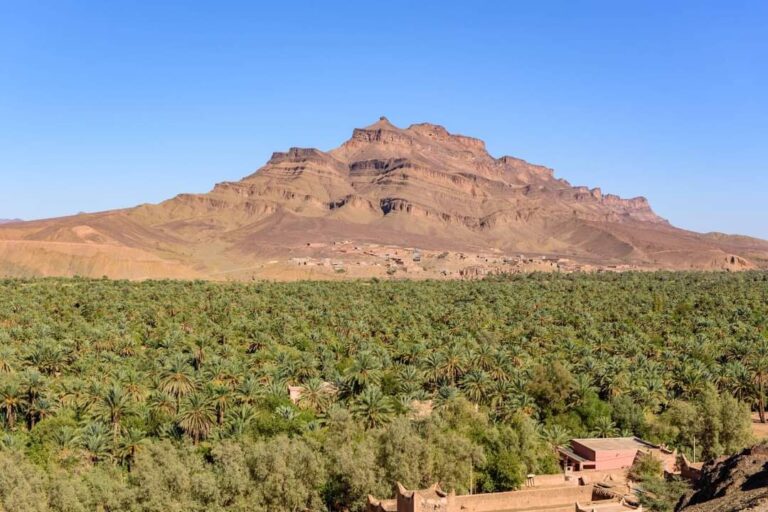
Khamlia sits about 8 kilometres south of Merzouga, not far from the towering dunes of Erg Chebbi. It’s home to a community of Gnawa people — descendants of sub-Saharan Africans whose spiritual music tradition, called Lila or Derdeba, blends trance, healing ritual, and deep ancestral memory. In 2019, UNESCO inscribed the Gnawa music of Morocco on its list of Intangible Cultural Heritage of Humanity. That’s not a small thing.
When you buy a handmade kerkeba (metal castanet) or a piece of indigo-dyed cloth from Khamlia, you’re not buying a trinket. You’re buying a fragment of one of Africa’s most remarkable living cultural traditions.
That context — and that respect — is the foundation of what to buy in the Sahara.
What to Buy in Khamlia: The Essential Shopping Guide
Let me apply the standard criteria travel experts use to identify genuine tourist traps:
Gnawa Musical Instruments
- Kerkeba the iron castanet-like clappers used in Gnawa rhythms — make excellent, lightweight souvenirs. A good pair runs 50–120 MAD and fits easily in carry-on luggage.
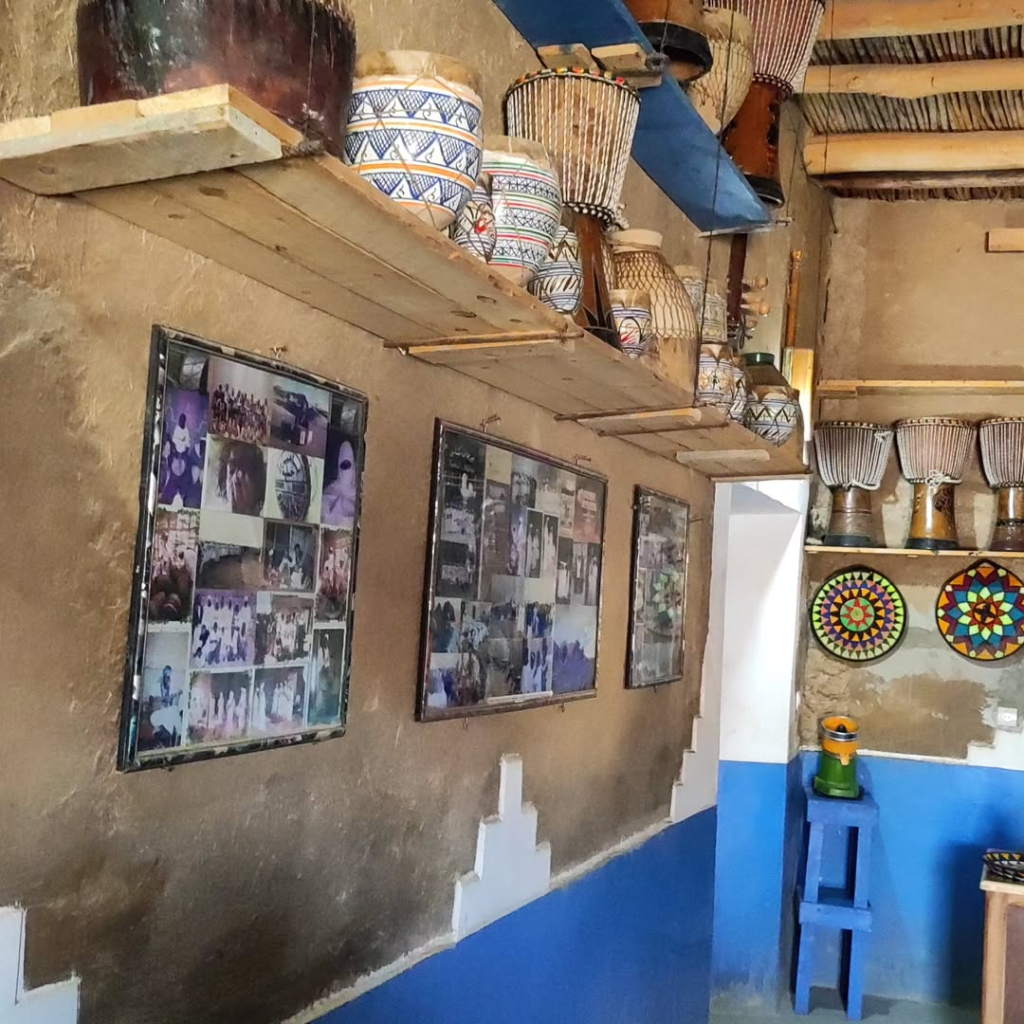
- Tbel drums (small hand drums) are less common but occasionally available. Ask specifically if you’re interested — some families make them to order.
Buying tip: If you attend a Gnawa music performance at one of the village’s small cultural spaces (more on this below), you can often buy instruments directly from the musicians who played them. This is infinitely more meaningful than buying from a roadside stall.
Berber Textiles and Handwoven Goods
The women of Khamlia and the surrounding Draa-Tafilalet region produce some of Morocco’s finest handwoven textiles, and the Sahara’s dry climate means colours hold brilliantly.
Look for:
Indigo-dyed cloth — Khamlia has a quiet tradition of natural indigo dyeing. Scarves, wraps, and small pouches dyed with local plant extracts carry a smoky, deep blue that synthetic dyes simply can’t replicate. A good indigo scarf costs 80–200 MAD.
Handira blankets — cream-coloured wedding blankets woven with metallic sequins. Originating from the Middle Atlas, they’ve become widely traded in the Saharan south. A genuine, hand-loomed piece runs 400–1,200 MAD depending on size and age. Vintage handiras are heavier and have irregular metallic placement — a machine-made copy is perfectly symmetrical.
Berber rugs (kilims) — flat-woven wool rugs in geometric patterns. Small decorative kilims (roughly 60×90 cm) range 200–500 MAD. Larger pieces can cost several thousand dirhams. Always unroll the rug fully in daylight and check for uneven weave, which is the hallmark of handmade work (not a flaw).
Jewellery and Amulets
The jewellery you find in Khamlia reflects its position at the crossroads of Berber, Arab, and sub-Saharan African cultures.
Khamsa (Hand of Fatima) pendants made from silver or white metal are everywhere in Morocco, but in Khamlia you’ll find pieces that incorporate sub-Saharan design motifs — heavier, bolder, and more unusual than the tourist-standard versions sold in Fes or Marrakech.
Tuareg-influenced jewellery — Khamlia’s proximity to trans-Saharan trade routes means you’ll encounter silver crosses, geometric pendants, and leather amulet pouches that reflect Tuareg craft traditions. A Tuareg silver cross pendant runs 150–400 MAD for a genuine piece.
Amber and resin beads — Sold in strands, these range from antique trade beads (which can be quite valuable and require expertise to authenticate) to modern resin copies. Ask the vendor directly: “Is this plastic?” A reputable seller will tell you the truth.
What to avoid: Bright blue “Tuareg” silver pieces that look freshly spray-painted are almost always mass-produced imitations. Real silver is heavier, slightly irregular, and develops a natural patina.
Spices, Argan Products, and Natural Remedies
Several small family-run stalls in and around Khamlia sell natural products sourced from the region:
Rose water from the Dades Valley nearby is sometimes available and makes a beautiful, affordable gift.
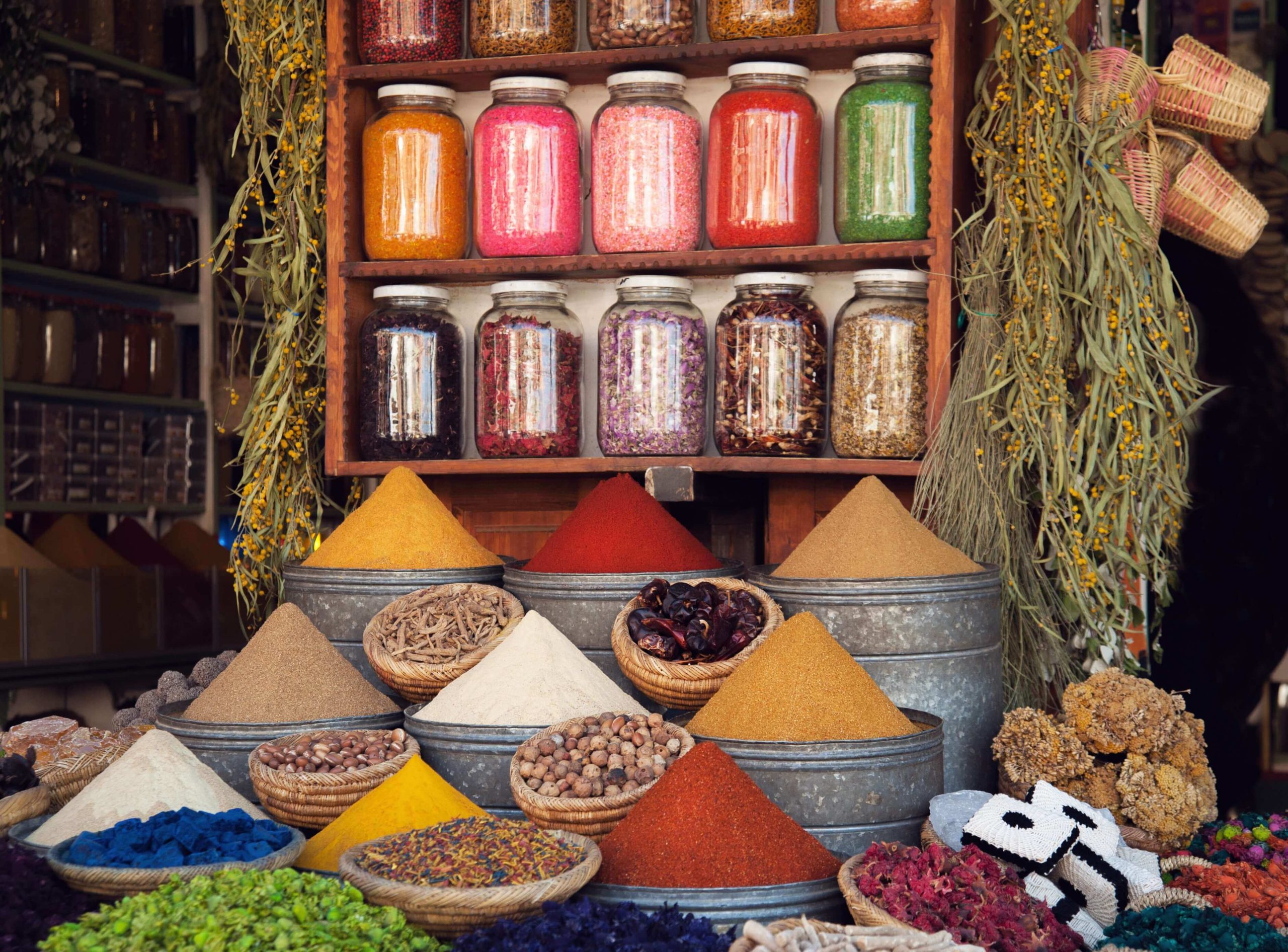
Ras el hanout spice blends — each family has their own recipe. A good-quality blend costs 20–60 MAD for a 100g bag.
Black seed (nigella sativa) oil — valued locally for its medicinal properties. A small bottle costs 30–80 MAD.
Pure argan oil — more commonly associated with the Souss region, but genuine cold-pressed argan oil is sold here too. For culinary-grade argan oil, expect to pay 60–120 MAD for 100ml. Be wary of anything suspiciously cheap — it’s likely diluted.
How to Negotiate in Khamlia Without Being Disrespectful
Negotiation is part of the culture in Moroccan markets — but Khamlia operates differently from the big-city souks.
In Marrakech’s Jemaa el-Fna, vendors expect and enjoy spirited haggling. In Khamlia, the pace is quieter, the community smaller, and the relationship between buyer and seller is more personal. Aggressive bargaining — offering 20% of the asking price, walking away dramatically, or pressuring a vendor — is seen as rude here, not clever.
A better approach:
- Start by genuinely engaging with the item. Ask about it. Where is it made? Who made it? This shows respect and often leads to the vendor offering you a fair price without a fight.
- If you want to negotiate, a counter-offer of 70–80% of the asking price is reasonable for most items. Meeting somewhere in the middle is the expected outcome.
- If a price feels too high, it’s perfectly acceptable to say, “That’s a little more than I expected — is there flexibility?” and see what happens.
- Never open a negotiation unless you genuinely intend to buy. Starting a bargaining exchange and then walking away is considered bad form.
- Always smile. Always use “shukran” (thank you) liberally. A warm tone will get you a better price than any tactical approach.
One practical note: Carry small denominations of Moroccan dirhams. Many Khamlia vendors cannot break large notes (200 MAD or 100 MAD), and paying the exact amount or close to it is appreciated.
When to Visit Khamlia for the Best Shopping Experience
Best time of day: Mid-morning (9 AM–12 PM) and late afternoon (4–6 PM) are when vendors are most present and relaxed. The midday heat (especially May–September) slows everything down — many stalls close between 1 PM and 3:30 PM.
Best season: October to April is the sweet spot for visiting the Merzouga–Khamlia area. Temperatures are comfortable (15–25°C), the light is golden, and vendors are at their most engaged. July and August bring extreme heat (40°C+), which affects both your comfort and the length of time you’ll want to spend browsing.
Avoid Friday mornings: Friday is Jumu’ah — the Islamic day of communal prayer. Many shopkeepers attend midday prayers, and the village is quieter and more subdued between roughly 11:30 AM and 2 PM. Not a bad time to visit if you want solitude and culture, but not ideal for shopping.
Avoid the peak Erg Chebbi rush (December–January): Paradoxically, while this is high season in Merzouga, Khamlia can feel slightly more commercial during these weeks as tour groups pass through. If you visit in early November or late February, you’ll find a more personal, unhurried atmosphere.
What Most Tourists Completely Miss
Here’s the local secret most visitors never discover: the best souvenir from Khamlia isn’t something you can carry in your bag.
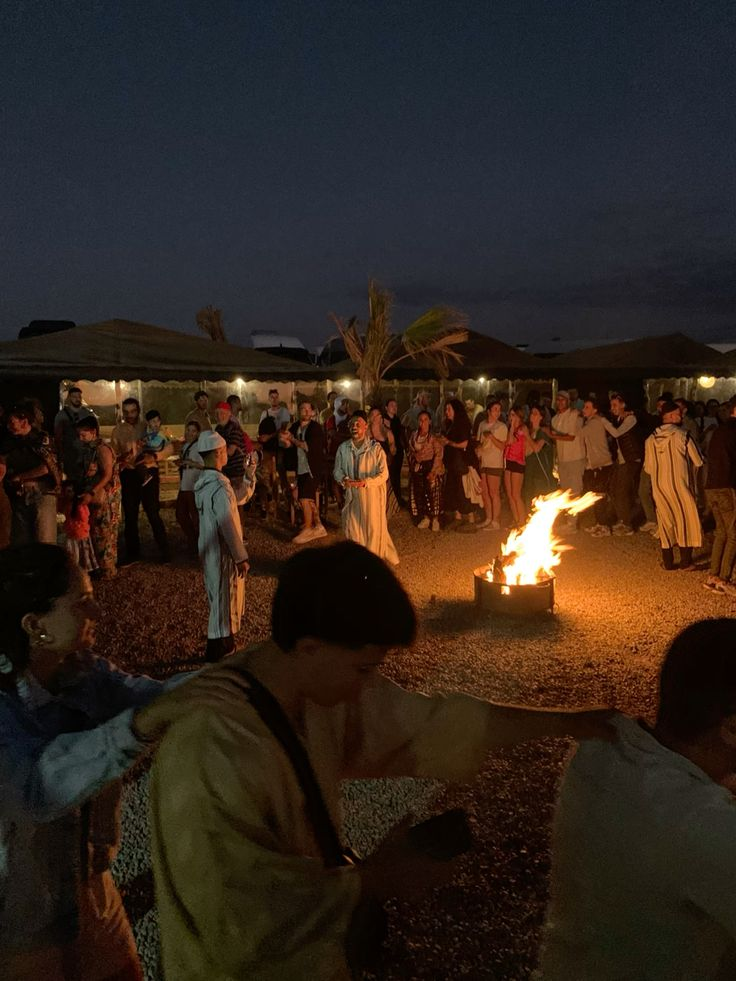
Several families in the village host small, informal Gnawa music sessions — not the staged shows found in Marrakech riads, but genuine family performances where three or four musicians play together in a low-lit room. Qraqeb (the iron castanets) ring, the guembri pulses, and voices rise in Gnawa devotional songs that are simultaneously ancient and alive.
The donation for these sessions is typically 50–100 MAD per person — sometimes more if you feel moved to give it, and no one will pressure you.
Why mention this in a shopping guide? Because after a Gnawa session, when you go back to the small stall outside and buy a pair of kerkeba or a woven scarf, the object transforms. It’s no longer a souvenir. It’s a memory with sound attached to it.
Ask your guide or accommodation host in Merzouga to arrange a visit to a Gnawa family in Khamlia. This is the single most authentic cultural experience available in the entire Saharan south of Morocco — and almost no package tour includes it.
If you’re unsure how to arrange this independently, our team at [Your Agency Name] organizes private Khamlia visits with curated Gnawa introductions as part of our Merzouga desert itineraries. It’s the kind of detail that makes a trip memorable rather than merely scenic.
Practical Tips Before You Go
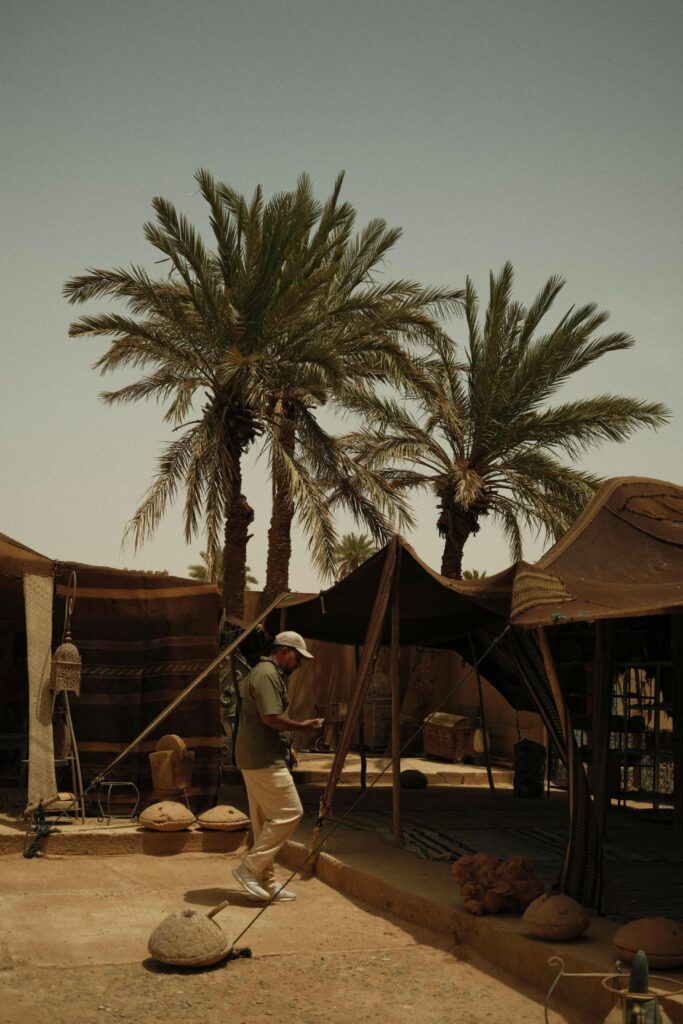
Getting to Khamlia: The village is about 8 km from Merzouga town centre. A petit taxi from Merzouga costs roughly 30–50 MAD each way. Many visitors combine a Khamlia stop with a sunrise or sunset camel trek from the nearby dunes — a logical pairing since you’re already in the area.
What to wear: Khamlia is a conservative Muslim village. Light, loose-fitting clothing that covers shoulders and knees is appropriate for both men and women. This isn’t strictly enforced, but dressing respectfully is noticed and appreciated — and will likely improve the quality of interactions you have.
Photography etiquette: Always ask before photographing people, especially women and children. “Mumkin sura?” (“May I take a photo?”) goes a long way. Offering to show someone the image on your screen afterwards often creates a lovely moment of connection.
Carrying water: There are no tourist cafés in Khamlia. Bring at least 1.5 litres of water per person, particularly if you’re visiting between April and October.
Tipping: If a local guide shows you around the village or introduces you to a family, a tip of 20–50 MAD is appropriate and genuinely appreciated. It’s not expected but it’s warmly received
A Note on Authentic vs. Tourist-Grade Souvenirs
One of the most common questions we hear from travellers returning from Morocco is: “How do I know if what I bought is real?”
Here’s a practical framework:
- Ask about provenance directly. A genuine craftsperson will tell you exactly where and how an item was made. A vendor selling mass-produced goods will give vague answers.
- Feel the weight. Handmade silver is heavier than alloy. Hand-loomed textiles have texture and slight irregularity. Machine-made items feel uniform and light.
- Smell it. Natural dyes (indigo, saffron, henna) have faint earthy or herbal scents. Synthetic dyes and chemical treatments sometimes have a faintly chemical or plasticky smell.
- If in doubt, buy small. A small, genuinely handmade item is infinitely more valuable than a large, machine-made piece.
The beauty of shopping in Khamlia specifically is that the village is small enough that most vendors are local producers — not middlemen. That connection to the source is what makes this one of the most honest shopping experiences in southern Morocco.
Why Work with a Local Agency for Your Khamlia Visit
While independent travel to Khamlia is possible, many visitors find that working with a reputable local Moroccan agency enhances the experience:
Vetted connections: We work with specific Khamlia families who provide quality experiences and fair treatment of visitors. You won’t waste time with subpar operators.
Context and preparation: Our guides explain cultural context before arrival, so you understand what you’re experiencing and can engage more meaningfully.
Fair compensation: We ensure tourism revenue reaches village families, not just Merzouga middlemen.
Integrated itineraries: We design multi-day Sahara experiences where Khamlia fits naturally into a broader journey—along with desert camps, dune exploration, and other villages—creating a comprehensive rather than rushed experience.
Cultural sensitivity: Our guides help you navigate customs, language barriers, and social norms so you can be respectful without stress.
Should You Visit Khamlia?
Yes—if you approach it correctly.
Khamlia Village is not a tourist trap in the predatory sense. It’s a real village with real cultural heritage that has adapted to tourism as an economic necessity. The experiences offered—particularly Gnawa music—are genuine, fairly priced, and culturally significant.
But it’s also not “undiscovered authentic Morocco.” It’s a community that has consciously commercialized its culture in tourism-friendly formats. That doesn’t make it fake—it makes it pragmatic.
Visit with realistic expectations, respectful behavior, and fair compensation, and you’ll likely have a meaningful experience that provides both cultural insight and economic support to a community working to preserve its heritage.
Skip it if you’re cynical about any commercialization of culture or if you only have time for a rushed 30-minute stop. But if you can spend quality time—especially overnight—Khamlia offers something increasingly rare: genuine cultural exchange between travelers and locals in a setting where both parties benefit.
Conclusion: Bring Home Something That Means Something
The Sahara is full of places that will try to sell you Morocco. Khamlia is one of the few places that will give you a piece of it.
A pair of iron kerkeba bought from a Gnawa musician, a hand-dyed indigo scarf selected from a woman who made it herself, a Tuareg pendant with actual weight to it — these aren’t trinkets. They’re small, portable pieces of a living culture that stretches from the Atlas Mountains to the edge of the great desert.
Take your time in Khamlia. Drink the mint tea you’ll almost certainly be offered. Ask questions. Listen to the music if you get the chance. Buy one or two things that genuinely speak to you — and pay a fair price for them.
If you’d like to experience Khamlia as part of a thoughtfully designed Sahara itinerary — one that goes beyond the standard camel-and-campfire package — we’d love to help you plan it. Our team knows the village well, has longstanding relationships with local families, and can arrange everything from Gnawa sessions to private shopping introductions with the artisans who actually make what you’ll find there.
Contact us today to start building your custom Morocco desert experience for 2026. We speak English, French, and Arabic — and we answer quickly.
Why Choose Morocco Service Tours
When planning your khamlia or Merzouga adventure, partnering with experienced operators makes all the difference.
Our Advantages:
- Local guides born in desert communities
- Flexible itineraries tailored to your interests
- Transparent pricing with no hidden fees
- Eco-friendly camps supporting local communities
- 24/7 support throughout your journey
We handle the complicated logistics, transportation, accommodation, permits, activities—so you focus on making memories. Whether you’re visiting Morocco for the first time or returning to explore deeper, we create journeys that exceed expectations.
Your Sahara Journey Awaits
Your decision between Khamlia village or Merzouga desert isn’t about right or wrong, it’s about matching method to your personality and priorities.
Ready to book? Contact our team for personalized recommendations matching your travel style, budget, and dates. We’ll help you design the perfect balance of independence and support for your unforgettable Sahara adventure.
Share your desert adventures with us on Pinterest or instagram and inspire fellow travelers!
Because the question isn’t really “Khamlia vs Merzouga”—it’s “How do I experience the Sahara in a way I’ll remember forever?” Let us show you.
Frequently Asked Questions About Khamlia Village
-
Is Khamlia Village safe to visit for solo travellers and families?
Yes. Khamlia is a small, welcoming village with very little tourist infrastructure, which means almost no hassle or pressure. Solo travellers and families report feeling comfortable and well-received. As with anywhere in Morocco, basic awareness of your surroundings is sensible, but Khamlia has no particular safety concerns.
-
How much should I budget for shopping in Khamlia?
You can have a genuinely satisfying shopping experience with a budget of 200–500 MAD (roughly £17–£43 or $20–$50). If you’re interested in larger textile pieces, jewellery, or a quality guembri, budget 1,000–3,000 MAD. There’s no pressure to spend heavily — many of the most meaningful purchases (a pair of kerkeba, an indigo scarf, a small amulet) cost very little.
-
Can I get to Khamlia without a guide?
Yes. A petit taxi from Merzouga is straightforward and inexpensive. However, visiting with a knowledgeable local guide — even informally — significantly enriches the experience. Guides can introduce you to specific artisan families, explain the cultural significance of what you’re seeing, and arrange Gnawa music sessions that are otherwise difficult to access as an independent traveller.
-
What’s the difference between buying souvenirs in Khamlia versus Merzouga town?
Merzouga has more shops and more choice, but also more tourist-grade goods and more pressure to buy. Khamlia has fewer vendors, but the items tend to be more locally produced, the atmosphere is calmer, and the cultural context is richer. For authentic Sahara souvenirs with real provenance, Khamlia consistently wins.
-
Is card payment accepted in Khamlia?
No. Khamlia is a cash-only village. The nearest ATMs are in Merzouga town. Withdraw enough cash before you visit, and carry small denominations (20 MAD and 50 MAD notes) to make transactions easy.
-
Can I book accommodation and desert camps when I arrive, or should I reserve in advance?
During high season (October-April, especially December-January), advance booking is essential—the best accommodations and camps fill up weeks ahead. In low season (May-September), you can find availability on arrival, but you’ll have limited choice and may not get your preferred options. For peace of mind and better rates, I recommend booking at least 2-4 weeks in advance, or working with a local agency who can secure quality options at fair pric
-
What’s the best time to visit Khamlia Village?
The best months to visit Khamlia are October through April, when daytime temperatures range from 20-28°C. March and October offer ideal conditions with fewer crowds. Summer (June-August) reaches 45°C+ and is extremely challenging, though some travelers appreciate the dramatic heat and solitude. Winter nights (December-February) can drop to 5°C, so bring warm layers. For time of day, visit mornings (9-11 AM) or late afternoons (4-6 PM) to avoid the midday tour bus rush and get more personal interactions with locals.