Last updated: April 2026 — Morocco Service Tours
Morocco Birding Tours in 2026: The Complete Guide to a Guided Birding Adventure
Is Morocco Worth It for Birders?
Yes — and it consistently surprises even seasoned world birders. Morocco sits at one of the most important avian crossroads on the planet, where European, African, and Saharan species overlap. In a single 7–10 day trip, you can tick off over 100 species across radically different ecosystems — without extreme logistics.
Here’s what makes Morocco birding exceptional in 2026:
- 480+ recorded species, including multiple North African endemics
- Best time to visit: February–May (spring migration peak); September–October (autumn migration)
- Price range: €800–€2,500 per person depending on duration and group size
- Top targets: Northern Bald Ibis, Desert Sparrow, Egyptian Nightjar, Pharaoh Eagle-Owl, Moussier’s Redstart
3-step action plan:
- Choose your season (spring for migration + breeding; autumn for desert specialties)
- Select your focus zones (Sahara, Atlas, or Coast — ideally all three)
- Book a private guided birding tour with local expertise for highest species count
Why Morocco Is One of the World’s Top Birding Destinations in 2026
Most travel articles describe Morocco as a cultural destination with some wildlife on the side. That misses the point entirely. Morocco is a tier-one birding country — recognized by BirdLife International, which has designated 49 Important Bird Areas (IBAs) across the country.
What makes Morocco unique is habitat compression. In a day’s drive from Marrakech, you pass snow-dusted High Atlas passes, pre-desert rocky plains, palm-fringed wadis, and the towering dunes of the Sahara. No other country in North Africa or the Western Palearctic packs this much habitat variety into such a reachable area.
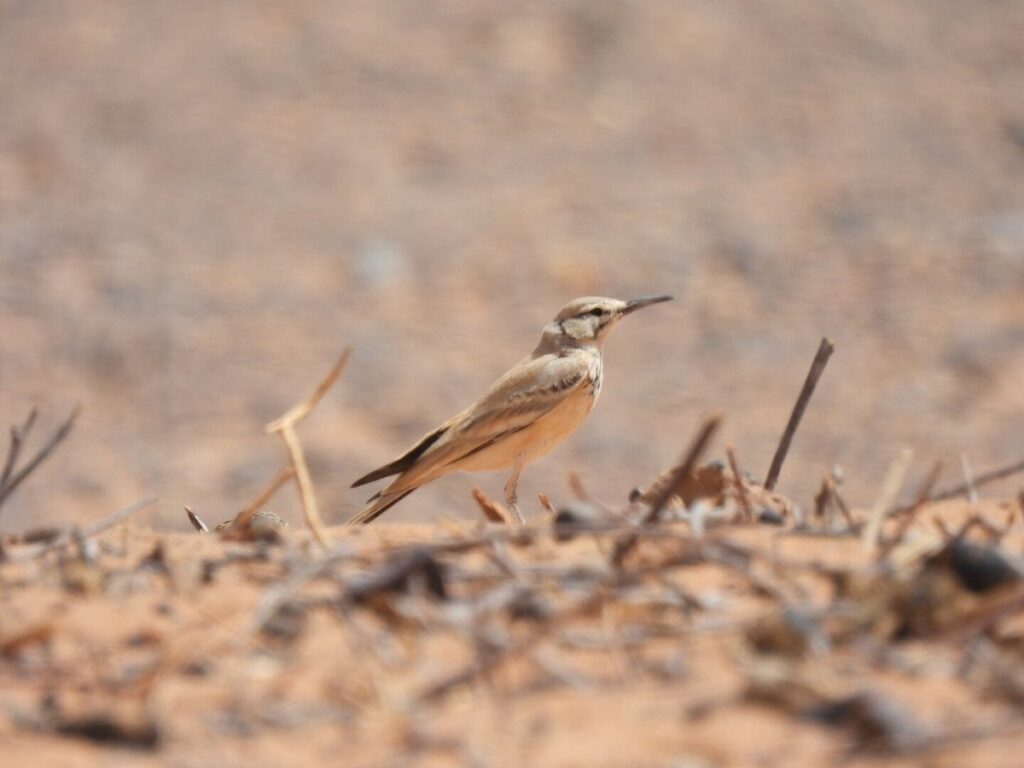
Morocco holds the richest avifauna in North Africa and includes all but one of the North African endemic species, making it one of the top birding tour destinations in the entire Western Palearctic.
For 2026 specifically, there are a few compelling reasons to go now: several recently taxonomically split species (Maghreb Lark, Atlas Horned Lark, Desert Grey Shrike) are creating fresh target lists for listers. New splits or likely splits include Atlas Horned Lark, Maghreb Lark, Maghreb Magpie, Moroccan Wagtail, Saharan Olivaceous Warbler, and Desert Grey Shrike Oriole Birding — species that didn’t exist on most birders’ target lists five years ago.
The 5 Key Birding Zones of Morocco (And What You’ll See)
1. The High Atlas Mountains — Endemics & Altitude Specialists
The Atlas range is where most Morocco birding itineraries begin. The High Atlas is home to the elusive African Crimson-winged Finch, a species that may be seen more easily here than anywhere else. Wingsbirds This alone justifies the altitude gain.
Key species:
- Moussier’s Redstart (North African endemic)
- Levaillant’s Green Woodpecker
- African Blue Tit & African Chaffinch
- Barbary Partridge
- Atlas (Seebohm’s) Wheatear
- Lammergeier (Bearded Vulture) — increasingly rare but possible
Most guides recommend early morning starts at Oukaïmeden (2,700m) for Crimson-winged Finch and Alpine Chough. The Ourika Valley cedar forests are the best habitat for Levaillant’s Woodpecker — a species many guides skip, but that rewards patience.
Related reading: Ways to Travel Around Morocco — important if you’re combining birding zones in one trip.
2. The Tagdilt Track — Morocco’s Most Famous Birding Site
Between Boumalne Dades and the Sahara lies a stretch of flat stony desert that has become legendary among European birders: the Tagdilt Track.
Some of the species that make this place famous include Cream-colored Courser, Thick-billed Lark, Greater Hoopoe Lark, Temminck’s Lark, Desert Lark, Bar-tailed Lark, Desert Wheatear, and Red-rumped Wheatear. Whitehawk Birding
Most generic travel blogs don’t mention that the Tagdilt is also one of the best spots in Morocco for Houbara Bustard — a large, spectacular, and increasingly threatened bird that many birders travel specifically to see. Dawn visits with 4WD access dramatically increase your chances.
3. Merzouga & Erg Chebbi — Sahara Birding at Its Best
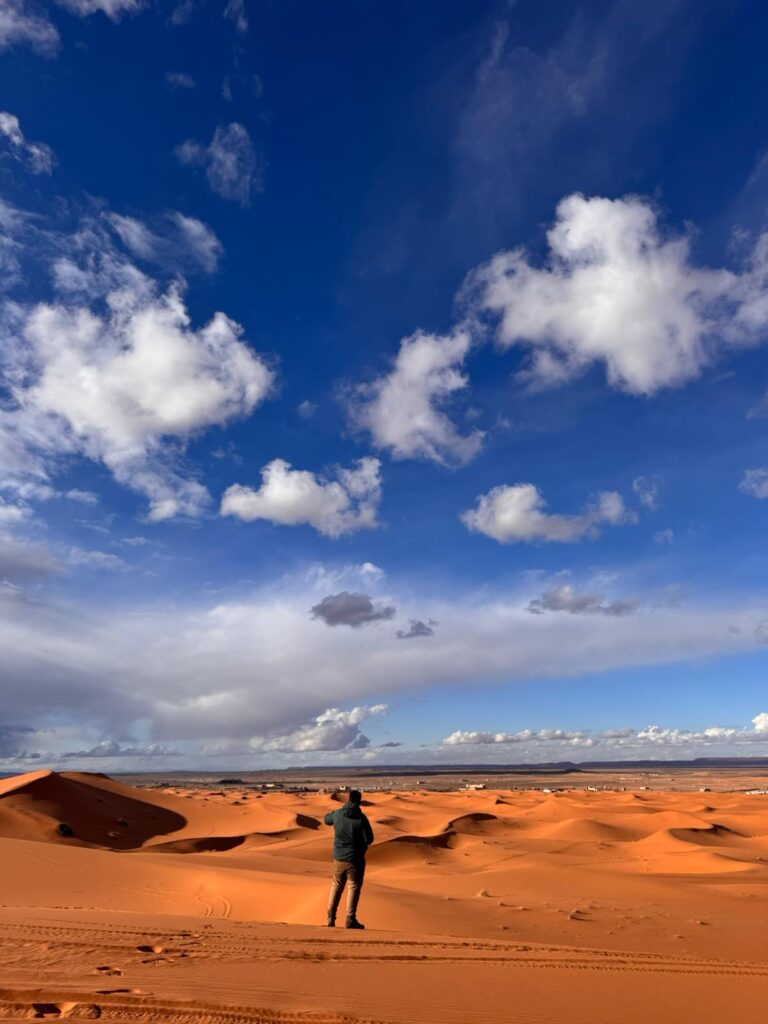
This is the crown jewel of any Sahara birding tour. The dunes of Erg Chebbi aren’t just photogenic — they host a suite of desert specialists found nowhere else in Western Europe’s reach.
A full day exploring the sandy dunes and nearby stony desert of Erg Chebbi by 4×4 can yield Brown-necked Raven, Hoopoe Lark, Desert Sparrow, African Desert Warbler, Desert Lark, Bar-tailed Lark, Fulvous Babbler, Spotted Sandgrouse, Crowned Sandgrouse, and Lanner Falcon.
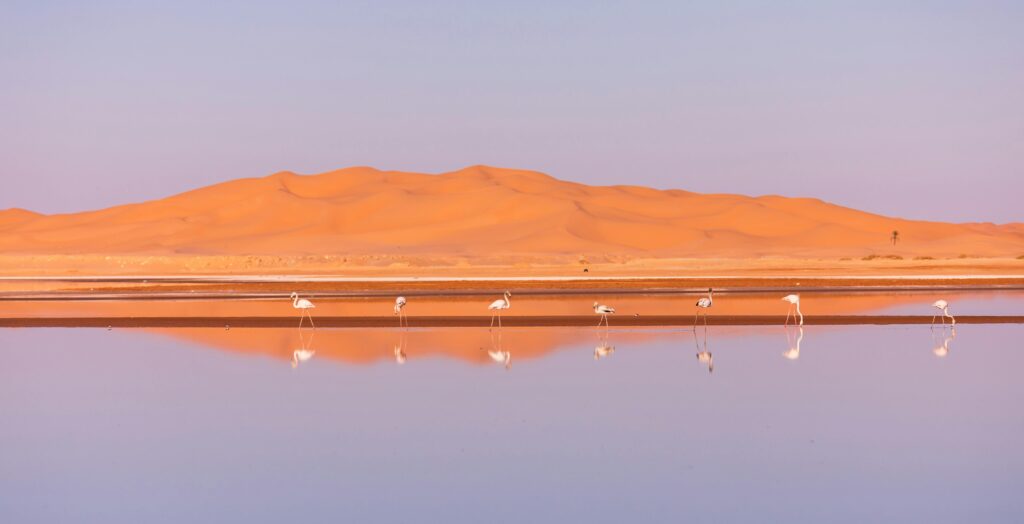
One thing competitors rarely explain: the seasonal lake near Merzouga. When rains have been plentiful, a seasonal lake near Merzouga can be very interesting, with ducks, waders and their attendant raptors, a completely different face of desert birding that surprises first-timers.
The Egyptian Nightjar is another highlight. This cryptic species roosts on open desert during the day, and local Berber guides who know the specific rocks and wadis where they rest are essential. No app or generic tour will reliably find you this bird. Local knowledge is everything.
Explore our Sahara Desert Tours and things to do in Morocco’s Sahara for context on combining birding with a broader desert experience.
4. Souss-Massa National Park — The Atlantic Coast’s Crown Jewel
One of the most important sites for the Northern Bald Ibis in Morocco is the Souss-Massa National Park, which includes the famous Oued Massa River. The national park is home to three of the four world’s known Northern Bald Ibis breeding colonies. Birding Ecotours
The Bald Ibis is critically endangered — with under 700 individuals surviving globally — and Souss-Massa is your best chance to see one reliably. Most birding tours prioritize this as a near-guaranteed highlight.
The park also delivers:
- Greater Flamingo
- Marbled Duck & Ferruginous Duck (threatened)
- Audouin’s Gull
- Eurasian Spoonbill, Glossy Ibis
- West African Crested Tern
The park is known as one of two reliable places in Morocco for the critically endangered Northern Bald Ibis, with just under 100 breeding pairs — roughly two-thirds of the world population — thought to breed in Souss-Massa.
5. Middle Atlas & Ifrane — Forests, Lakes & Unexpected Gems
Often left off itineraries by budget operators, the Middle Atlas adds cedar forests, mountain lakes, and a completely different bird community. Species like Levaillant’s Woodpecker, African Chaffinch, and Maghreb Magpie are more reliably found here than anywhere else. The Zaida plains nearby are also a known haunt for Cream-colored Courser and various larks.
Sample Sahara Birding Tour Itinerary (7 Days from Marrakech)
| Day | Location | Key Species |
|---|---|---|
| Day 1 | Marrakech arrival + city birding | Maghreb Magpie, Common Bulbul, Little Owl |
| Day 2 | High Atlas — Tizi-n-Tichka pass | Crimson-winged Finch, Moussier’s Redstart, Levaillant’s Woodpecker |
| Day 3 | Boumalne Dades + Tagdilt Track | Thick-billed Lark, Houbara Bustard, Cream-colored Courser |
| Day 4 | Erg Chebbi / Merzouga (Sahara) | Desert Sparrow, Egyptian Nightjar, Pharaoh Eagle-Owl |
| Day 5 | Merzouga + Seasonal Lake | Crowned Sandgrouse, Saharan species, raptors |
| Day 6 | Ouarzazate Reservoir + anti-Atlas | Marbled Duck, Southern Grey Shrike, Tristram’s Warbler |
| Day 7 | Souss-Massa / Agadir + return | Northern Bald Ibis, Audouin’s Gull, Flamingos |
Expected species count: 100–130+ species
Estimated cost (private tour, 2 pax): €1,200–€2,000 per person including transport, accommodation, and local guides
See our 7-day Morocco tour from Marrakech and 8-day Morocco itinerary for full route options that can be adapted for birding.
Best Time for Morocco Birding Tours: Month-by-Month Guide
Spring is, without a doubt, the best season to go birding in Morocco. This is the time when the desert is teeming with life, due to the arrival of the much-needed rains. Some of the most charismatic birds of the region will be breeding at this time, including the Greater Hoopoe Lark, the Desert Wheatear, and the Houbara Bustard. Whitehawk Birding
| Season | Months | Highlights | Crowds |
|---|---|---|---|
| Spring Best | Feb–May | Migration peak, breeding displays, all habitats active | Moderate |
| Autumn Great | Sep–Oct | Southbound migration, desert species, cooler temps | Low |
| Winter | Nov–Jan | Fewer migrants, excellent for resident endemics, quiet | Very low |
| Summer | Jun–Aug | Extreme desert heat, reduced activity, not recommended | Low |
Pro tip: Most recommend only spring. Autumn is equally rewarding for dedicated birders — and significantly less crowded. September in particular gives you Sahara specialists plus the first waves of European migrants passing through.
How to Book a Guided Birding Adventure in Morocco: Step-by-Step
Step 1 — Define your targets
Are you chasing specific species (Houbara Bustard, Pharaoh Eagle-Owl), building a life list, or combining birding with general Morocco travel? This determines your route.
Step 2 — Choose private vs. group tour
Private tours offer flexible pacing and custom routes. Group tours are more affordable but may rush desert sites. For dedicated birders, private always wins.
Step 3 — Verify your guide’s credentials
Ask directly: Have they found Egyptian Nightjar and Desert Sparrow recently? Can they describe the Tagdilt Track route and which seasons they prefer? Local Moroccan guides with specific Saharan knowledge are irreplaceable.
Step 4 — Plan transport
The Sahara birding requires a 4×4 birding trip in the desert. WILD ANDALUCIA Make sure your tour includes 4WD for Erg Chebbi and the Tagdilt Track — not just a regular minivan.
Step 5 — Arrange permits if needed
Souss-Massa National Park may require advance entry arrangements. A reputable local operator handles this automatically — it’s a detail many self-planners miss.
Step 6 — Pack your optics
Bring at minimum a 8×42 binocular and a spotting scope for Tagdilt Track larks. Many desert species require prolonged scope study to identify correctly.
Read our what to pack for Morocco guide for a practical packing list that covers birding-specific gear.
Top 10 Target Birds for a Morocco Birding Tour
| # | Species | Best Location | Difficulty |
|---|---|---|---|
| 1 | Northern Bald Ibis | Souss-Massa NP | Easy (with guide) |
| 2 | Desert Sparrow | Erg Chebbi area | Moderate |
| 3 | Egyptian Nightjar | Merzouga desert | Hard — local guide essential |
| 4 | Pharaoh Eagle-Owl | Pre-Sahara cliffs | Hard — dawn/dusk only |
| 5 | Moussier’s Redstart | High Atlas, Cedar forest | Easy |
| 6 | Houbara Bustard | Tagdilt Track | Moderate–Hard |
| 7 | Thick-billed Lark | Tagdilt Track | Moderate |
| 8 | Crimson-winged Finch | Oukaïmeden (Atlas) | Moderate |
| 9 | Levaillant’s Woodpecker | Ourika Valley, Middle Atlas | Easy with local guide |
| 10 | Greater Hoopoe-Lark | Merzouga / Tagdilt | Easy in spring |
Morocco Birding Tour Costs: What to Expect in 2026
Most articles list vague “starting from” prices. Here’s a realistic breakdown:
| Tour Type | Duration | Price Per Person | What’s Included |
|---|---|---|---|
| Day excursion (Marrakech base) | 1 day | €80–€150 | Guide, transport |
| Short birding break | 3–4 days | €450–€800 | Guide, hotels, 4WD |
| Classic Sahara birding tour | 7 days | €1,100–€1,800 | Full private guide, accommodation, 4WD |
| Grand Morocco birding circuit | 10–12 days | €1,800–€2,800 | All-in private tour, all zones |
| Premium small-group international | 10–14 days | €2,500–€4,500 | Expert guide, upscale lodging |
Custom and private tours from Morocco Service Tours can be tailored to your exact species targets, dates, and budget. Contact us here or browse our Morocco private tours.