Stargazing in Morocco 2026: The Complete Guide to Desert Night Skies
Yes — among the best in the world, and here’s why that’s not an exaggeration.
Morocco’s Sahara Desert produces some of the world’s best stargazing conditions across four measurable factors: low light pollution, dry desert air, open horizons, and over 300 clear nights per year. Kulfiy
Key facts at a glance:
- Sky darkness rating: Bortle Class 1–2 (the darkest classification possible)
- Clear nights per year: 300+
- Best locations: Merzouga (Erg Chebbi), Erg Chigaga, Agafay Desert, Draa Valley
- Best season: October–May for clarity; June–August for peak Milky Way core
- Cost range: €30–€150 per person for a guided stargazing experience; €0 for independent viewing from a desert camp
- Moon rule: Always plan around the new moon — this detail alone separates a good night from an extraordinary one
3-step action plan:
- Choose your base — Merzouga for iconic dunes + accessibility; Erg Chigaga for serious dark-sky isolation
- Check the lunar calendar — Book your desert night on or near the new moon
- Add a guided session — A Berber astronomy guide layers cultural storytelling onto the science, making the experience unforgettable
Why Morocco’s Night Sky Is Exceptional in 2026
Most articles tell you Morocco has “minimal light pollution.” Few explain why — or what that actually means standing in the desert at 10pm.
The Sahara’s arid air contains far less moisture than coastal or tropical environments, and the nearest major urban centers are hundreds of kilometers away. Marrakech sits approximately 560 kilometers northwest of Merzouga. The absence of city glow means the horizon remains genuinely dark in every direction.
That last point is what competitors consistently miss: it’s not just that the sky above is dark. The horizon in every direction is dark. This 360-degree darkness means you can watch stars rise from the eastern dune line and set below the western horizon — something impossible near any city or coast.
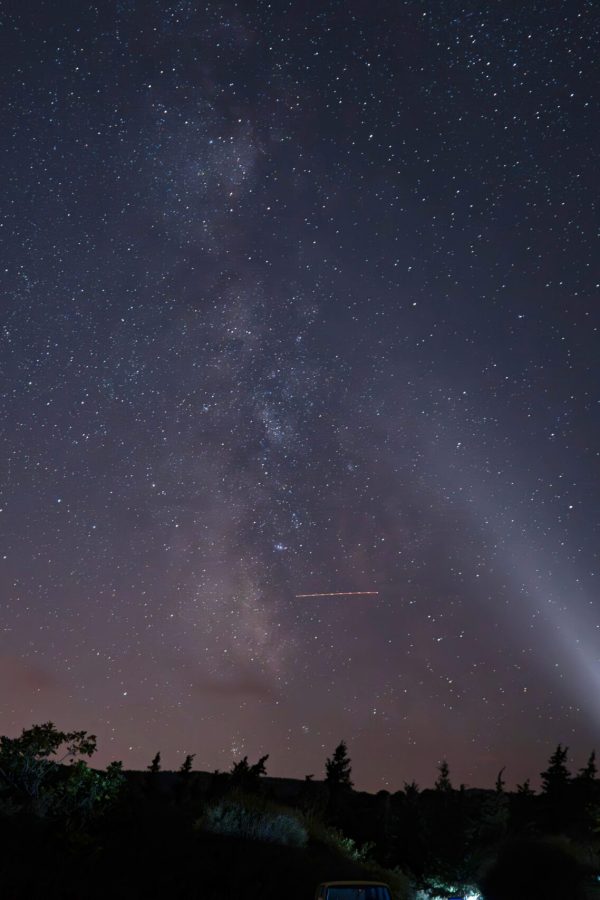
Flat, unobstructed horizons allow for viewing celestial objects from their rise to set. High elevation in certain areas reduces the amount of atmosphere through which starlight must travel. On clear nights in the Sahara, the Milky Way doesn’t merely appear as a faint smudge but as a brilliant, detailed band stretching across the entire sky, with dark dust lanes clearly visible to the naked eye.
There’s also the cultural dimension. The Berber people have navigated and farmed by the stars for millennia. A guided stargazing evening in Morocco isn’t just astronomy, it’s a living connection to one of the oldest relationships between humans and the cosmos.
The 5 Best Stargazing Locations in Morocco
1. Merzouga & Erg Chebbi — The Most Accessible Dark Sky in North Africa
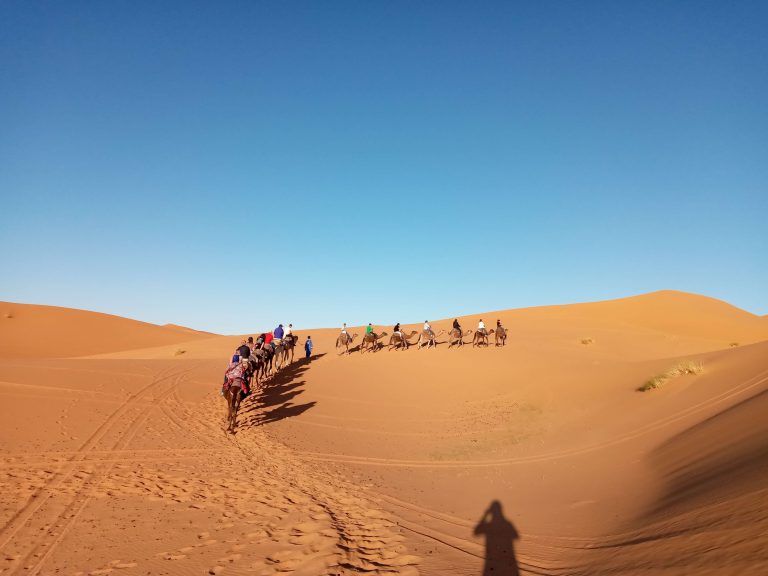
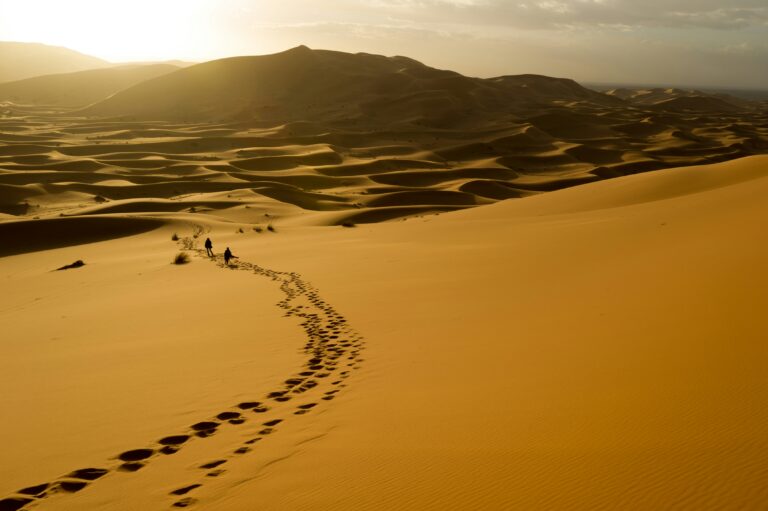
This is where most visitors experience Morocco stargazing for the first time — and it rarely disappoints. The towering dunes of Erg Chebbi (reaching over 150 meters) create a natural amphitheater that blocks the faint glow from the village of Merzouga itself.
The region around Merzouga and the Erg Chebbi dunes sits at a Bortle Scale Class 1–2 rating — the darkest classification on the international dark-sky measurement system — due to the near-complete absence of artificial light across hundreds of kilometers of open desert. Kulfiy
What you’ll see: Milky Way core (April–September), Andromeda Galaxy (naked eye in autumn), Orion Nebula, Pleiades, shooting stars, and on a clear winter night — Saturn’s rings through a telescope.
One thing most guides skip: Not all camps at Merzouga offer the same darkness. Desert camps positioned directly adjacent to village settlements accumulate ambient light from generator-powered facilities. Camps at least 3–5 kilometers from any permanent settlement produce the darkest skies. Kulfiy Always ask your camp’s exact distance from Hassilabiad or Merzouga village before booking.
Plan your journey with our 2-day desert tour from Marrakech or the 5-day desert tour from Marrakech for a full Sahara experience including stargazing.
2. Erg Chigaga — The Serious Stargazer’s Choice
Erg Chigaga sits deeper into the desert, approximately 60 kilometers west of M’Hamid and accessible only by 4×4 vehicle or camel. The extra distance from any road infrastructure makes its skies measurably darker than Erg Chebbi — ideal for serious astrophotographers.
Erg Chigaga is far less visited than Merzouga. If you want the Sahara without tour groups, and you want the absolute darkest sky Morocco offers — this is your destination. It requires more planning and a full day of travel from Marrakech, but the payoff is a sky that’s measurably, scientifically darker.
3. Agafay Desert — Stargazing Near Marrakech (No Long Journey Required)
The Agafay Desert sits just 40–50 minutes by car from Marrakech. It’s not the Sahara. But it is a genuine dark-sky escape — rocky moonscape terrain with surprisingly little light pollution.
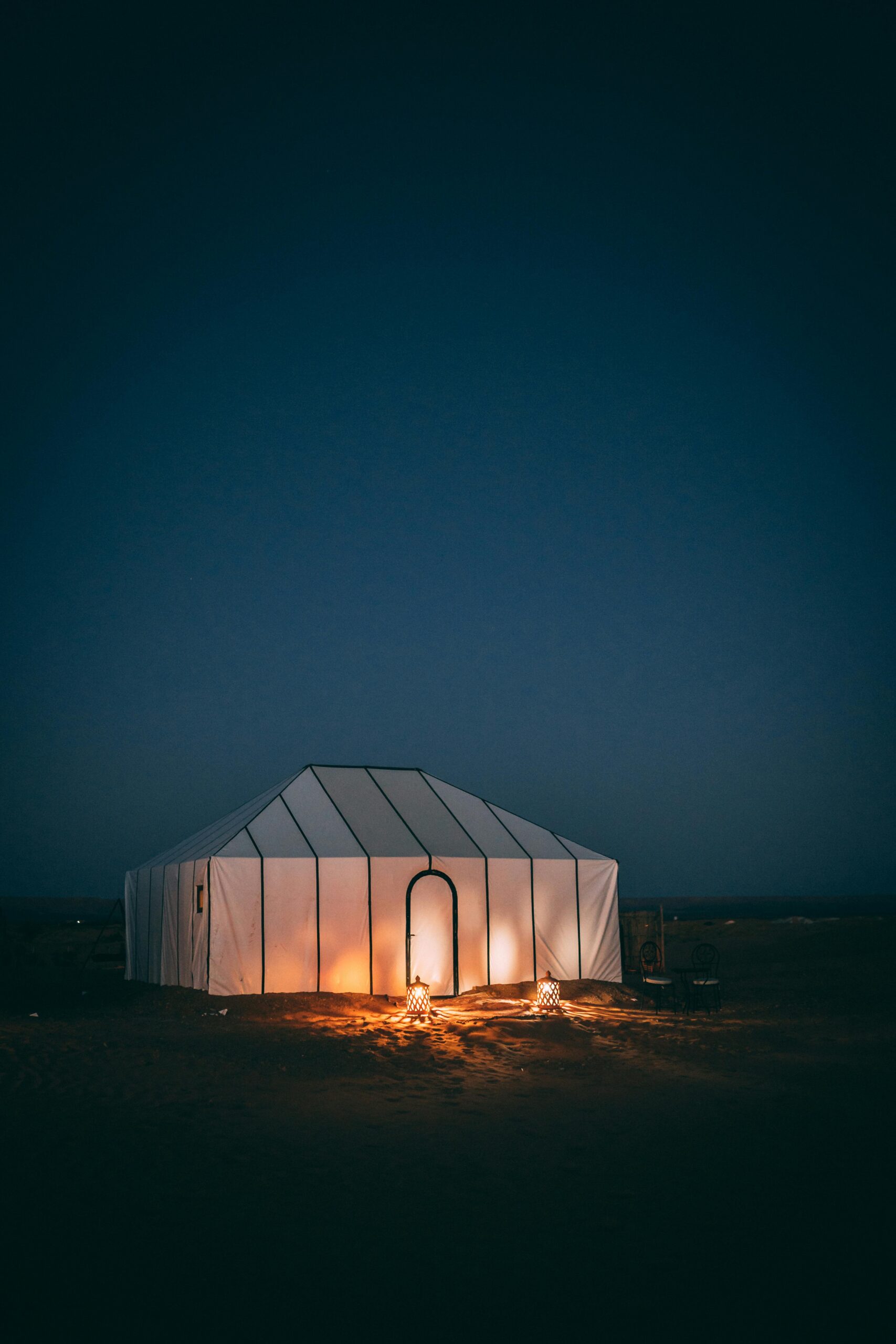
Luxury camps in Agafay provide telescopes and astronomy guides for visitors, and the Agafay Desert offers a stargazing experience for those who don’t want to venture far, with minimal light pollution and open horizons.
Best for: Couples on short trips, travelers who want premium comfort alongside their stargazing, or anyone adding a single desert night to a Marrakech itinerary without committing to a multi-day journey.
Competitor gap: Most travel blogs treat Agafay as just a “glamping spot.” In reality, several Agafay camps now offer proper guided astronomy sessions with telescopes — rivaling the setup you’d find in Merzouga, at a fraction of the travel time.
4. The Draa Valley & Zagora — Ancient Caravan Routes, Ancient Skies
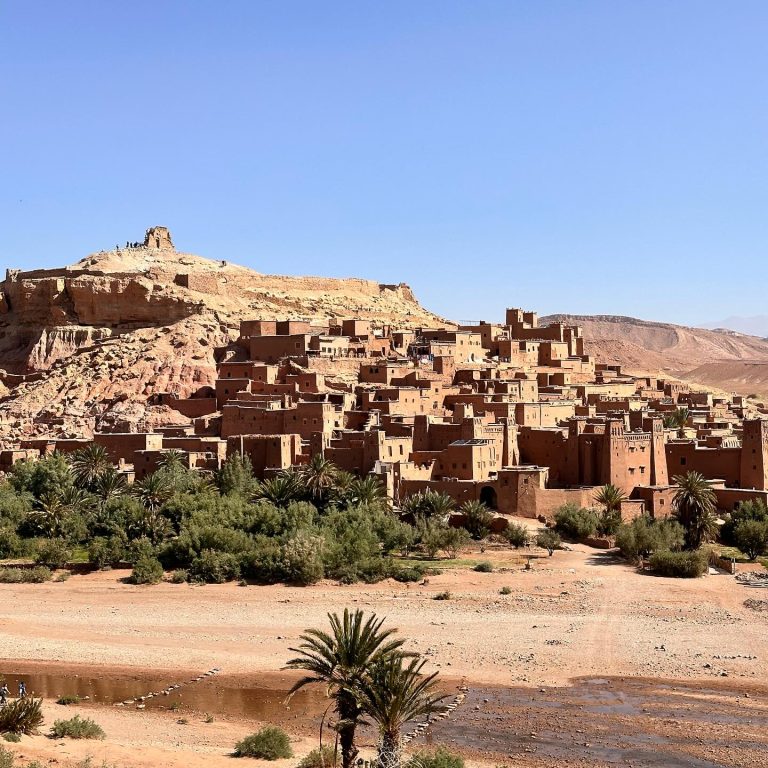
Nestled between the High Atlas Mountains and the Sahara, the Draa Valley is a serene, palm-lined oasis that offers stunning stargazing experiences. Its quiet villages and kasbahs are far from city lights, making the stars appear incredibly bright and close.
The Draa Valley has an astronomical significance most guides never mention: for centuries, Saharan caravan traders used the stars above this valley to navigate between Marrakech and Timbuktu. The star knowledge passed down here is among the oldest in the western world.
One dedicated stargazing hotel SaharaSky near Tamegroute — is worth noting. It is the first and currently only private astronomical observatory with hotel and restaurant in North Africa, installed atop a Kasbah-style building, home to Schmidt-Cassegrain and Ritchey Chretien telescopes with up to 400mm aperture, with a year average of 300 days of clear, cloudless skies. Saharasky A niche choice for dedicated astronomy travelers.
5. The High Atlas Mountains — Altitude Stargazing
The Oukaimeden Observatory, located in the High Atlas, is Morocco’s premier astronomical site. High altitudes and minimal light pollution make the Atlas Mountains perfect for stargazing, and Toubkal National Park, near Imlil, offers remarkable views of the night sky. Flying to Morocco
This option surprises people. The Atlas at 2,700m offers different conditions than the desert — cooler, clearer, and you’re above much of the atmospheric moisture that can soften desert skies in summer. It’s also the only place in Morocco where you can combine glacier views with a night sky full of stars.
Morocco Stargazing Location Comparison Table
| Location | Bortle Class | Travel from Marrakech | Best For | Crowd Level |
|---|---|---|---|---|
| Erg Chebbi (Merzouga) | 1–2 | ~6–7 hours drive | First-timers, all-rounders | Moderate |
| Erg Chigaga | 1 | ~8–9 hours drive | Astrophotographers, serious observers | Very low |
| Agafay Desert | 3–4 | 40–50 mins drive | Short trips, couples, luxury | Low–moderate |
| Draa Valley / Zagora | 2 | ~5 hours drive | Cultural + astronomy combo | Low |
| High Atlas (Oukaïmeden) | 2–3 | ~2 hours drive | Altitude enthusiasts, hikers | Low |
Stargazing in the Sahara: Month-by-Month Guide for 2026
Most articles recommend one or two seasons and stop there. Here’s the complete picture:
| Month | Milky Way Visibility | Temperature (Night) | Highlights |
|---|---|---|---|
| Jan–Feb | Low (pre-dawn only) | 0–8°C | Maximum clarity, winter constellations, Geminid tail |
| Mar–Apr | Rising | 8–15°C | Milky Way appears pre-dawn; zodiacal light visible |
| May | Good | 15–20°C | Milky Way rises earlier; comfortable nights |
| Jun–Aug | Peak | 18–25°C | Galactic core high in sky; Perseids (August 11–13) |
| Sep–Oct | Excellent | 12–20°C | Andromeda naked-eye; Milky Way still strong |
| Nov–Dec | Moderate | 5–12°C | Orion rises; Geminids (December 13–14) |
The detail other guides skip: Spring delivers mild evening temperatures, clear desert skies, and the appearance of zodiacal light just after sunset, while summer is peak Milky Way season with the galactic core rising after 10:00 PM and remaining visible until pre-dawn. For a balanced first visit, October delivers everything — Andromeda naked-eye, Milky Way still present, comfortable temperatures, and almost no crowds.
Key Meteor Showers Visible from Morocco in 2026
One of the biggest gaps in Morocco stargazing content — nobody talks about meteor showers. From the Sahara, they are extraordinary.
| Meteor Shower | Peak Date 2026 | Expected Rate | Best Viewing Time |
|---|---|---|---|
| Perseids | August 11–13 | 100+/hour | After midnight |
| Orionids | October 21–22 | 20–25/hour | Pre-dawn |
| Leonids | November 17–18 | 15–20/hour | After midnight |
| Geminids | December 13–14 | 120+/hour | All night |
| Sporadics | Year-round | 20–40/night | Any hour |
Travelers sleeping under the open desert sky at camps near Merzouga commonly report 20–40 visible meteors in a single evening outside of dedicated shower events. During the Geminids peak from the Sahara, with zero light pollution in every direction — conditions are among the best on Earth for observing the shower
What to Expect on a Guided Stargazing Adventure in Morocco
A typical guided stargazing evening unfolds like this — and it’s far more immersive than simply “looking at stars”:
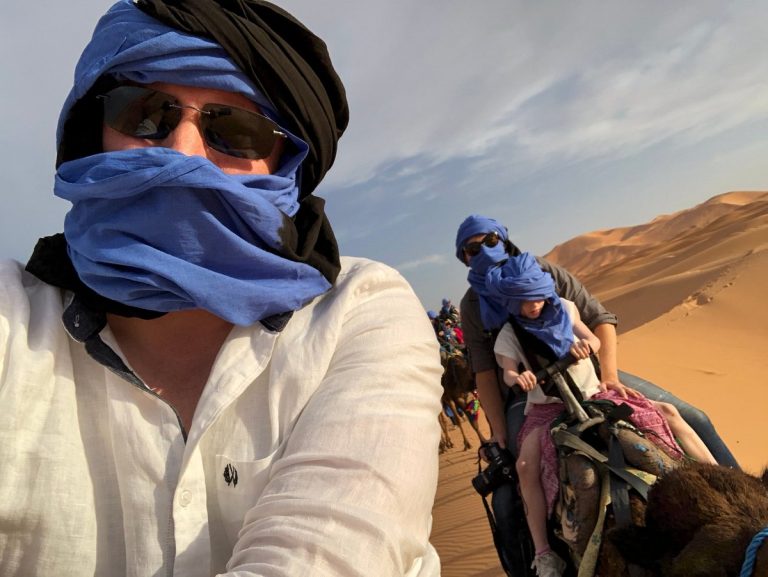
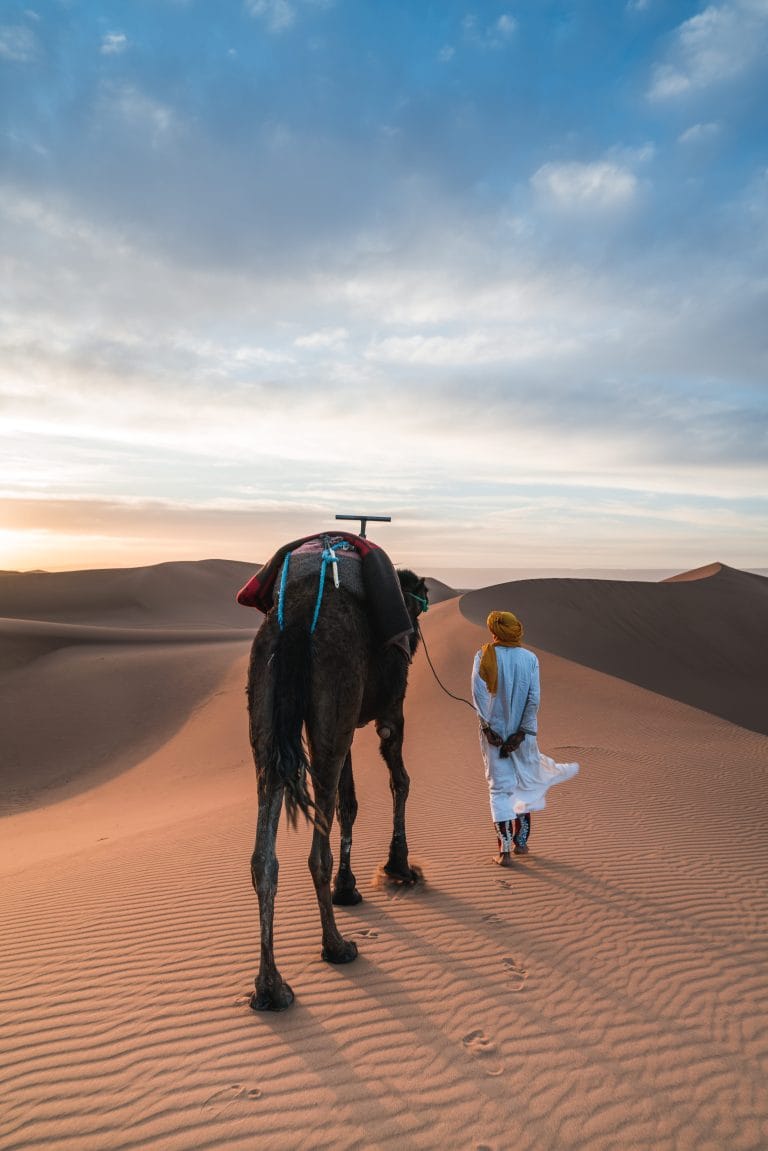
Hour 1 — Sunset & Arrival You reach the desert camp as the dunes shift from amber to deep rose. A camel ride or walk into the dunes. Mint tea. The temperature drops noticeably as the sun disappears.
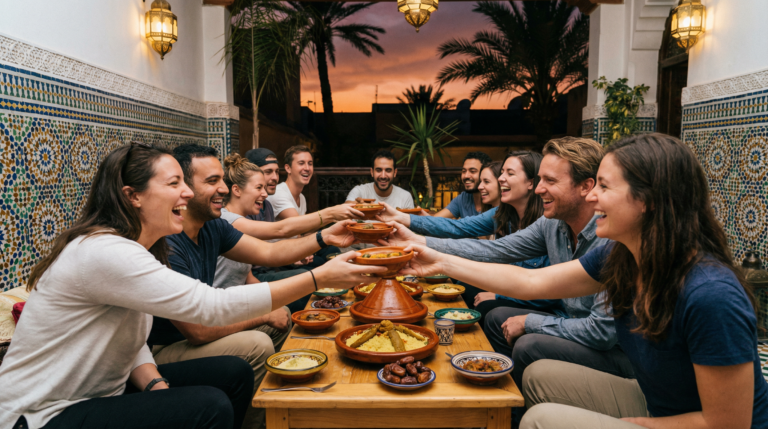
Hour 2 — Dinner & Cultural Introduction Traditional Moroccan tagine or couscous around the campfire. Your Berber guide begins sharing the astronomical knowledge of their ancestors — how caravans navigated by Canopus, how Scorpius marked the onset of summer heat, how the Pleiades signaled livestock migrations.
Hour 3 — Sky Lecture Exploration of circumpolar constellations, other visible constellations depending on season, open clusters, planets and the Milky Way, followed by observation of the moon if visible, planets, and open clusters.
Hour 4 — Telescope Observation Depending on your camp, a 150–200mm telescope brings Saturn’s rings, Jupiter’s moons, and the Orion Nebula into vivid detail. Many camps also provide binoculars for wide-field viewing of star clusters like the Pleiades and Hyades.
After midnight The campfire burns low. Most guests simply lie on Berber rugs and watch. Shooting stars appear on almost every clear night. In the Sahara silence, the experience becomes genuinely meditative.
Stargazing in Morocco: Step-by-Step Planning Guide
Step 1 — Lock in your dates around the lunar cycle This is the single most important planning step, and most first-timers miss it. A full moon washes out the Milky Way entirely. Use any free moon phase calendar to find new moon dates in your travel window and build your desert night around one of those.
Step 2 — Choose your location based on priorities Short on time → Agafay. Want the iconic dunes → Merzouga. Want the darkest possible sky → Erg Chigaga. Combining with a longer Morocco circuit → Draa Valley or Merzouga naturally fit most itineraries.
Step 3 — Download a sky app before you lose signal Essential astronomy apps for Morocco stargazing include Stellarium, which provides accurate sky mapping with cultural constellation interpretations; Sky Guide, which offers a simple, intuitive interface with offline functionality; and NASA’s Sky Watch for updates on special celestial events and ISS passes. Download all three before you leave city range — internet in the deep Sahara is unreliable by design.
Step 4 — Pack correctly for night desert conditions Desert nights in Morocco are colder than most visitors expect — even in summer. Temperatures drop 15–20°C after sundown. Essential items: a warm layer (fleece or down jacket), a headlamp with red-light mode (preserves night vision), a thin sleeping mat if planning to lie on the dunes.
Step 5 — Decide on equipment Naked-eye observers need no equipment beyond warm clothing and darkness. Binoculars (7×50 or 10×50 specifications are most effective for wide-field views) reveal star clusters like the Pleiades and Hyades in significant detail. A 150–200mm telescope, available at dedicated astro camps near Merzouga, brings Saturn’s rings, Jupiter’s cloud bands, and lunar surface detail into view.
Step 6 — Book a tour that combines experiences Stargazing works best when embedded in a broader desert experience — a camel trek at dusk, desert camp dinner, Gnawa music around the fire, then the night sky. Standalone stargazing excursions feel rushed. An overnight stay is always worth it.
Our desert stargazing locations guide and Sahara desert tours offer multiple options for building the perfect overnight desert experience.
Morocco Desert Stargazing: Frequently Asked Questions
-
Do I need any astronomy knowledge to enjoy stargazing in Morocco?
None whatsoever. The experience works at every level — from complete beginners who simply want to lie under the Milky Way, to advanced astrophotographers chasing dark-sky images. Berber guides at good camps calibrate their explanations to their audience naturally.
-
What's the difference between Merzouga and Erg Chigaga for stargazing?
Merzouga is more accessible, has more infrastructure, and suits most visitors perfectly. Erg Chigaga is measurably darker, requires a 4WD journey, has far fewer tourists, and is the better choice for serious astrophotographers or anyone who wants genuine wilderness isolation. Both deliver extraordinary skies. See our Merzouga vs Zagora comparison for a deeper breakdown.
-
Is it possible to stargaze from Marrakech?
Not meaningfully. City light pollution makes the Milky Way invisible from Marrakech itself. The Agafay Desert — 40 minutes away — is the closest proper dark-sky option and a genuine alternative for travelers on tight schedules.
-
What is the Bortle Scale and why does it matter?
The Bortle Scale rates sky darkness from 1 (perfectly dark) to 9 (inner-city sky). Most European cities sit at Bortle 8–9. Most countryside locations in Europe reach Bortle 4–5. The region around Merzouga and the Erg Chebbi dunes sits at a Bortle Scale Class 1–2 rating — the darkest classification on the international dark-sky measurement system. Kulfiy In practical terms: the Milky Way has visible dust lanes, the Andromeda Galaxy is naked-eye, and the zodiacal light is clearly visible.
-
Can I stargaze independently or do I need a guide?
You can absolutely stargaze independently from any desert camp. However, a guided session adds layered value that's hard to replicate alone — telescope access, constellation identification, Berber star lore, and the cultural context that transforms a beautiful sky into a meaningful experience.
-
How far in advance should I book a stargazing experience in Morocco?
For peak travel months (March–May, September–October), book your desert camp and any guided astronomy session at least 4–6 weeks in advance. New-moon dates are increasingly popular as travelers become savvier about lunar planning.
Book Your Morocco Stargazing Adventure
At Morocco Service Tours, we design desert experiences that go beyond the standard overnight dune camp. Our local guides understand the seasonal rhythms of the Sahara sky, know which camps sit farthest from village light pollution, and time your experience around lunar cycles for maximum impact.
Whether you’re planning a romantic evening under the Milky Way, a family overnight at Erg Chebbi, or a full multi-day Sahara circuit with stargazing as the centerpiece — we build the itinerary around what actually matters.
Start planning: → Browse our Sahara desert tours → Explore desert stargazing locations → See our complete Morocco travel guide → View our things to do in Morocco’s Sahara
Find us on Google Maps |
Read reviews on TripAdvisor
Last updated: April 2026 | Morocco Service Tours — Local Experts in Guided Morocco Travel