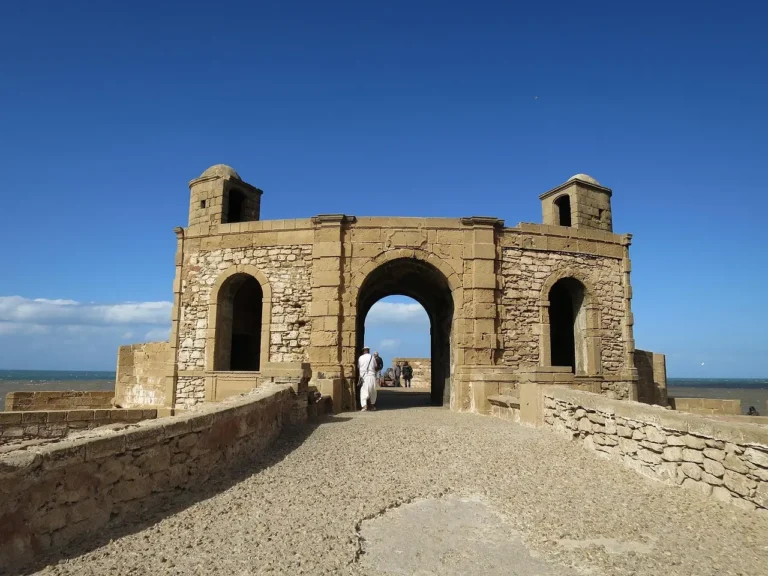
10-Day Morocco Itinerary 2026: The Route Locals Actually Recommend (With Real Costs)
10 Day Morocco Itinerary: Best Route for Marrakech, Sahara, Fes, and Chefchaouen.
Quick Answer
A 10-day Morocco itinerary running Casablanca → Rabat → Fes → Sahara Desert → Dades Valley → Marrakech costs €1,280–€3,700 per person depending on travel style, and covers everything the country does best — imperial cities, mountain passes, golden dunes, and ancient medinas — without a single wasted day. The most important call you’ll make planning 10 days in Morocco is how long you spend in the Sahara. One night is a highlight. Two nights is the experience that changes how you travel. At Morocco Service Tours, we run this exact Morocco road trip itinerary every week. Book your desert camp and Fes riad at least 6–8 weeks ahead — they are the first things to sell out, every season.
Table of Contents
ToggleAuthentic and Immersive Local Tours - Experience the Real Essence of Your Destination with Us
Embark on an authentic Vacation in morocco with a nomadic experience in the Sahara Desert.
Why 10 Days Is the Right Number
Seven days in Morocco leaves you rushing. Fourteen days gives you space to breathe into every city. But 10 days in Morocco is the number we recommend most — the sweet spot we’ve seen work across hundreds of groups.
It gives you two nights in the Sahara instead of one. It gives you a proper two days in Fes. It gets you into the High Atlas, the Dades Valley, and Marrakech without the sensation that you’ve spent your entire holiday in a moving vehicle.
The Morocco 10-day travel plan in this guide is the one our team uses every week with private groups. It’s been refined across years of on-the-ground experience. Every timing note, every riad recommendation, every practical warning — it comes from having done this route more times than we can count.
This is not a checklist. It’s a rhythm. Follow it and Morocco will give you everything it has.
Before You Start: Morocco Essentials for 2026
A few things worth knowing before the itinerary begins:
- Visa: Citizens of the US, UK, EU, Canada, and Australia enter visa-free for up to 90 days
- Currency: Moroccan Dirham (MAD). 1 EUR ≈ 10.8 MAD in 2026. Cash is king — souks, riads, and local restaurants rarely accept cards. Withdraw from ATMs at the airport on arrival
- Language: Darija (Moroccan Arabic) and French are the working languages. English is widely spoken in all tourist areas
- Best season for this route: March–May and September–November. July and August in the Sahara regularly hits 50°C — genuinely dangerous, not just uncomfortable
- Transport: North of Fes, trains are excellent. South of Fes — the desert, the gorges, the mountain passes — you need a private vehicle. A private driver with a 4×4 runs €60–€90/day and removes every logistical headache from the southern portion of this route
The Morocco Route 10 Days at a Glance
| Day | Location | Highlight |
|---|---|---|
| 1–2 | Casablanca + Rabat | Hassan II Mosque, Kasbah of the Udayas |
| 3–4 | Fes | Chouara Tanneries, Bou Inania Madrasa, Volubilis |
| 5 | Midelt + Ziz Valley | Atlas crossing, cedar forest, date palm gorge |
| 6–7 | Merzouga — Erg Chebbi | Camel trek, luxury desert camp, Sahara sunrise |
| 8 | Dades Gorge + Aït Benhaddou | Kasbahs, gorge viewpoints, UNESCO film location |
| 9–10 | Marrakech | Djemaa el-Fna, Jardin Majorelle, medina souks |
Day 1–2: Casablanca & Rabat
Most people land in Casablanca, spend an awkward afternoon, and immediately wish they’d moved on faster. We understand the instinct — but slow down for one afternoon. It earns you something.
The Hassan II Mosque is the reason. Built directly on the Atlantic coast, its minaret stands 210 metres tall and is visible from far out at sea. The interior — open to non-Muslim visitors at specific hours — is one of the most extraordinary spaces in North Africa. Visit late afternoon when the light shifts orange over the ocean. Photograph it from the Corniche promenade as the tide comes in below the foundations.
After that, you’ve genuinely seen what Casablanca has to offer. Take the 45-minute train north to Rabat.
Rabat is the most underrated city on this entire Morocco road trip itinerary. Morocco’s actual capital city gets a fraction of the tourism attention of Fes or Marrakech, which makes it a pleasure. The medina is navigable without a guide. The streets are calm. The architecture is quietly beautiful.
Head straight for the Kasbah of the Udayas — a 12th-century fortified quarter where the Bou Regreg River meets the Atlantic. Blue-and-white painted streets, an Andalusian garden built by the Saadian dynasty, a café terrace overlooking the ocean. It’s one of the most peaceful two hours on this entire route, and almost every traveler who passes through Rabat says it was the unexpected highlight of the trip’s opening.
Also worth a stop: the Hassan Tower and the adjacent Mausoleum of Mohammed V — an unfinished 12th-century mosque that became one of Morocco’s most iconic landmarks by virtue of remaining exactly as it was when construction stopped 800 years ago.
Where to stay in Rabat: Riad Kalaa in the medina — beautifully restored, calm, central. Expect 800–1,200 MAD / €75–€110 per night.
Getting there: Casablanca to Rabat by Al Boraq high-speed train. 45 minutes. Around 40 MAD / €4. Runs frequently throughout the day.
Day 3–4: Fes — The Soul of 10 Days in Morocco
If Morocco has a soul, it lives in Fes.
Fes el-Bali — the ancient walled medina — is the world’s largest car-free urban area. It has over 9,000 lanes. No street signs. No grid. Just centuries of organic growth layered on top of itself until the whole thing became something between a city and a living organism. The medina has been designated a UNESCO World Heritage Site, and walking into it for the first time is genuinely disorienting in a way that very few travel experiences still manage.
Two days here is the minimum to do it justice.
Day 3 — The Medina
Start before 9am. The Chouara Tanneries — the leather dyeing pits that have operated the same way since the 11th century — are best seen from the terraces of the surrounding shops. Workers dip animal hides into stone vats of natural pigments: poppy red, henna orange, indigo blue, saffron yellow. The smell is powerful. The sight from above is unlike anything else in Morocco.
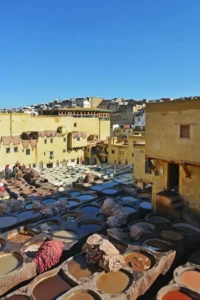
By 9:30am the terraces fill with tour groups. Before 8:30am, you’ll have them nearly to yourself.
After the tanneries: Bou Inania Madrasa (the finest example of Marinid architecture in Morocco, with carved cedar and zellij tilework covering every surface), Al-Qarawiyyin University (founded 859 AD — the oldest continuously operating university in the world), and the Nejjarine Fountain Square, where artisans still work in the surrounding workshops exactly as they have for generations.
Our route through Fes: We always take our guests through Bab Guissa — the northern gate into the medina that drops you into the artisan quarter rather than the main tourist entrance near Bab Boujloud. The first 20 minutes feel like stepping back five centuries before the souvenir shops begin. It’s a small thing that makes a significant difference.
Day 4 — Meknes & Volubilis Day Trip
A 45-minute drive brings you to Meknes — another imperial city that receives a fraction of the tourism attention it deserves. The Bab Mansour gate is one of the finest examples of Islamic architecture in North Africa: a towering double-horseshoe arch covered in geometric zellij and carved stucco. The surrounding imperial grounds and granaries give a real sense of how enormous and ambitious Moulay Ismail’s 17th-century capital was.
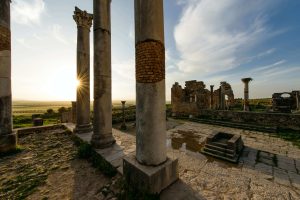
Thirty minutes further: Volubilis. The best-preserved Roman ruins in North Africa, set on an open plateau with the Atlas Mountains as a backdrop. Triumphal arches, complete mosaics still lying in situ, olive presses, bathhouses. The site dates to the 3rd century BC. Walking through it recalibrates your sense of how long this part of the world has been a crossroads of civilisations.
For families doing this Morocco 10-day travel plan, Volubilis works remarkably well with children — it’s open, spacious, and tangible in a way that museum exhibits rarely are. Our family travel guide to Morocco has specific tips on how to make the most of it with kids.
Where to stay in Fes: We recommend Riad Dar Anika in the heart of Fes el-Bali — a beautifully restored 17th-century house with a rooftop terrace and a central courtyard fountain that makes the medina noise disappear. Expect 900–1,500 MAD / €85–€140 per night.
⭐⭐⭐⭐⭐ “Two days in Fes with Morocco Service Tours was the part of the trip we talked about most when we got home. We’d never have found half of what we saw without a local guide.” — James & Rebecca T., London (via TripAdvisor)
Day 5: The Atlas Mountains Crossing — Midelt & the Ziz Valley
This is the pivot day of the Morocco road trip itinerary — the day the landscape changes completely.
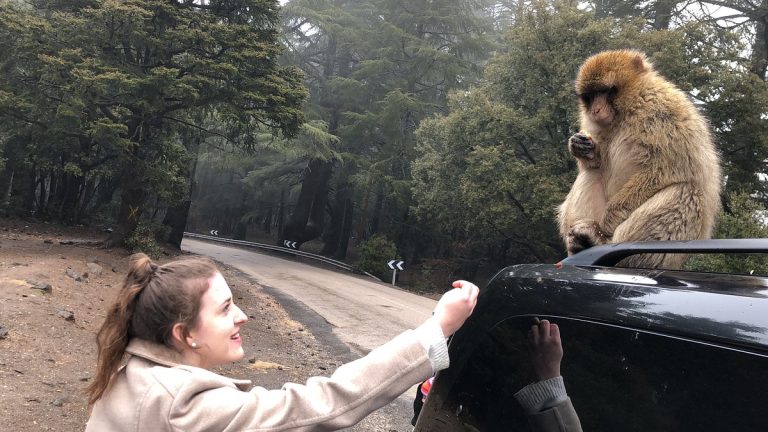
The drive south from Fes crosses the Middle Atlas Mountains through forests of cedar and holm oak where Barbary macaques — the only wild primates in Africa outside of sub-Saharan Africa — live in large roadside colonies. Stop for 20 minutes. They are genuinely entertaining and completely habituated to people.
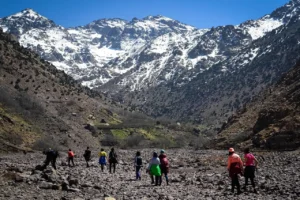
The road drops into Midelt — a quiet mountain town known as the apple capital of Morocco and a good lunch stop. Order a lamb tagine at any of the main street restaurants: 80–120 MAD / €7–€11 per person. Midelt has almost zero tourism, which makes it feel genuinely local in a way that’s refreshing after the medina cities.
From Midelt, the road descends into the Ziz Valley — a 60-kilometre ribbon of date palms running through a canyon of red and ochre rock. There are no major attractions here. No UNESCO plaques, no entry fees, no guided walks. Just a landscape of such improbable beauty that most people in the vehicle go quiet and stay that way until it ends.
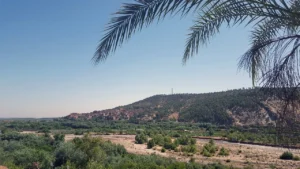
This is one of the sections of the Morocco route 10 days that rarely features in short itineraries, and it’s genuinely one of the best parts.
Overnight: Erfoud, or a small guesthouse in the Ziz Valley. This is a transitional night — keep it simple and save the accommodation budget for the desert camp ahead.
Day 5: The Atlas Mountains Crossing — Midelt & the Ziz Valley
This is the pivot day of the Morocco road trip itinerary — the day the landscape changes completely.
The drive south from Fes crosses the Middle Atlas Mountains through forests of cedar and holm oak where Barbary macaques — the only wild primates in Africa outside of sub-Saharan Africa — live in large roadside colonies. Stop for 20 minutes. They are genuinely entertaining and completely habituated to people.
The road drops into Midelt — a quiet mountain town known as the apple capital of Morocco and a good lunch stop. Order a lamb tagine at any of the main street restaurants: 80–120 MAD / €7–€11 per person. Midelt has almost zero tourism, which makes it feel genuinely local in a way that’s refreshing after the medina cities.
From Midelt, the road descends into the Ziz Valley — a 60-kilometre ribbon of date palms running through a canyon of red and ochre rock. There are no major attractions here. No UNESCO plaques, no entry fees, no guided walks. Just a landscape of such improbable beauty that most people in the vehicle go quiet and stay that way until it ends.
This is one of the sections of the Morocco route 10 days that rarely features in short itineraries, and it’s genuinely one of the best parts.
Overnight: Erfoud, or a small guesthouse in the Ziz Valley. This is a transitional night — keep it simple and save the accommodation budget for the desert camp ahead.
Day 6–7: Merzouga & the Sahara Desert — The Core of This Journey
This is the moment the trip becomes something people describe for years.
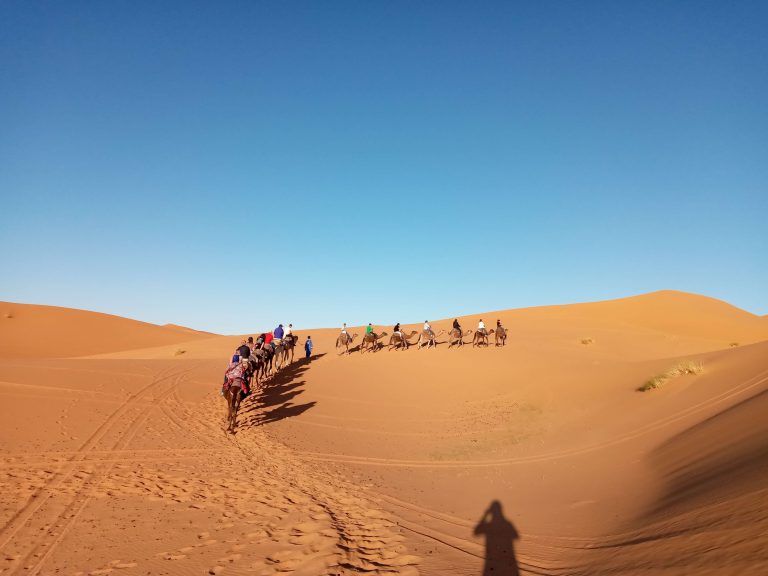
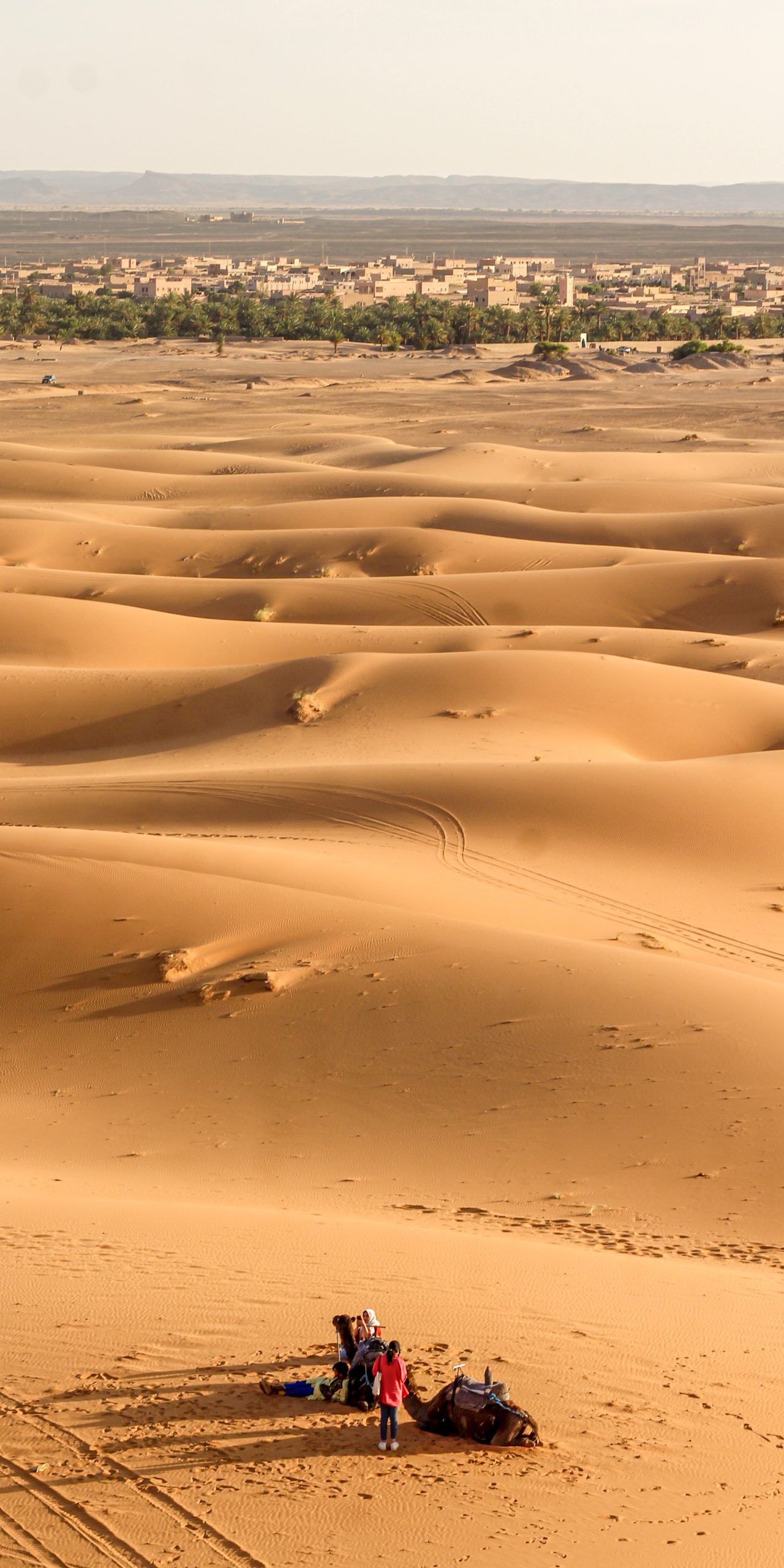
Merzouga sits at the edge of Erg Chebbi — a field of orange dunes rising to 150 metres that appear suddenly after a flat scrubby plain with no warning. You round a gentle corner, the road straightens, and there they are. Enormous. Impossible. Glowing in whatever light the sky is offering.
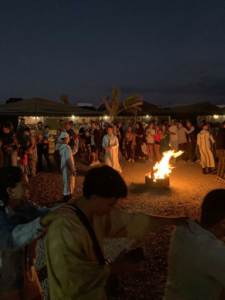
Every single guest we’ve brought here has gone quiet at this moment.
Why two nights matters: A single night in the Sahara means a camel trek at sunset, dinner, sleep, brief sunrise, and departure. It’s a beautiful tick-box. Two nights means everything above, plus a full free day to explore the surrounding area — the nomadic families on the dune edge, the Gnawa musicians in the village, the silence of the afternoon when everyone else has gone. The second day in the Sahara is when it stops being a tourist experience and starts being a place.
Afternoon of Day 6 — Arrival & First Walk
Arrive before 3pm. Drop bags at the camp. Walk into the dunes before the organised camel groups depart — find your own space, your own dune, your own silence. The light between 3pm and 5pm in autumn is amber. In spring it’s white and clean. Either way, it’s extraordinary for photography. Our guide to the best photography spots in Morocco covers exactly where to position yourself for the best compositions.
Sunset — Camel Trek to Camp
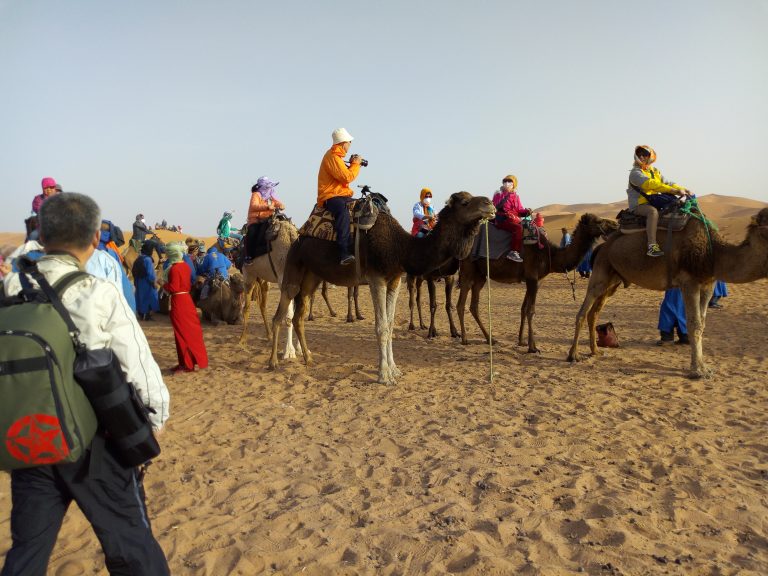
Camel treks depart at 5:00 PM — set two alarms. The trek crosses 45–60 minutes of dunes. The camp appears on the far side of a ridge just as the sky turns deep orange and the shadows stretch long across the sand.
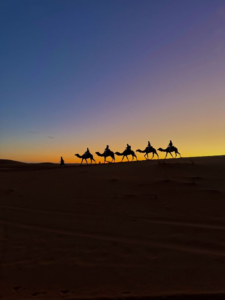
Our guests stay at a luxury Berber camp in the Erg Chebbi dunes near Merzouga — genuine traditional tents with proper beds, en-suite bathrooms, electricity for charging, and a communal dining tent serving a full traditional dinner of harira, kefta, tagine, and Moroccan pastilla. This is not roughing it. It is, by any measure, the most memorable night of the trip. Expect 1,200–2,000 MAD / €110–€185 per person per night, full board.
Night — Stargazing Over the Sahara
The Erg Chebbi dunes sit far from any significant settlement. On a clear night — which is most nights in this part of Morocco — the Milky Way is visible with the naked eye from horizon to horizon. After dinner, our guides set up a telescope and spend an hour walking guests through the southern sky. Saturn’s rings. Jupiter’s moons. Star clusters that look like handfuls of scattered salt.
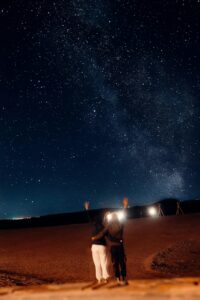
For dedicated stargazers, our desert stargazing guide covers the best months, optimal moon phases, and what to look for from the Merzouga site specifically.
Dawn of Day 7 — Sunrise on the Dunes
Wake at 5:30 AM. Walk 15 minutes up the nearest high dune. Watch the sun come up from behind the Algerian border. The dunes turn from grey to pink to orange to gold in about eight minutes. The silence is absolute.
This is the moment people describe for years. Plan accordingly.
Day 7 — The World Around Merzouga
The afternoon of Day 7 is the part most 10-day Morocco itineraries skip entirely, and it’s genuinely one of the richest parts of the trip.
The village of Merzouga itself holds a living musical tradition that almost no visitors engage with. Gnawa music — trance rhythms played on guembri bass lutes and iron castanets, originally brought to Morocco by sub-Saharan enslaved peoples — has been practiced here for centuries. It was designated UNESCO Intangible Cultural Heritage in 2019. Our guides arrange visits to local Gnawa musicians’ homes where you can hear it performed in its natural context, not as a tourist show. Background on Gnawa music in Morocco is worth reading before you go — it makes the encounter significantly richer.
Also available on Day 7: sandboarding down the dune faces, quad bike trips to the edge of the erg, and visits to the nomadic Berber families who still live seasonally on the dune edge and welcome visitors for tea. These are genuine encounters, not staged ones. They happen because our team has maintained long-standing relationships in this community for years.
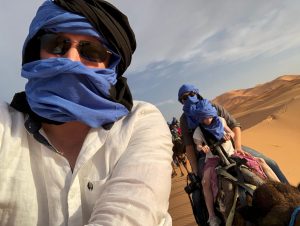
For families: The Sahara section of this 10-day Morocco itinerary works exceptionally well with children. The camel trek, the campfire, the stars, the morning dune climb — these are the travel memories children carry for decades. See our Sahara with kids guide for what to pack and what to prepare for.
Day 8: Dades Gorge & Aït Benhaddou — The Road of a Thousand Kasbahs
The drive west from Merzouga is one of the great road journeys in North Africa. This is where the Morocco road trip itinerary earns that name.
You cross the Draa Valley — Morocco’s longest river valley, lined with oasis settlements and mudbrick ksar (fortified villages) — then enter the Todra Gorge, a slot canyon where 300-metre walls of rose-coloured limestone rise on both sides of a narrow river. Walk 30 minutes into the gorge. The scale is breathtaking. In the late morning, the sun hits the canyon walls and the rock turns the colour of fire.
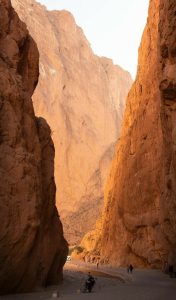
The Dades Gorge comes next — a series of dramatic switchback roads carved into red rock above the valley floor. Stop at the upper viewpoint: the panorama across the valley, with its fields and mudbrick villages and the High Atlas rising behind, is one of the compositions Morocco does better than almost anywhere on Earth.
Aït Benhaddou is the day’s anchor stop: a UNESCO World Heritage Site that has served as a film location for Gladiator, Game of Thrones, Lawrence of Arabia, and Babel, among many others. Climb to the top of the ksar — the fortified earthen village — for a view of the Draa Valley spreading south toward the Sahara. The architecture is extraordinary: seven-storey mudbrick towers with decorative geometric crenellations, unchanged for centuries.
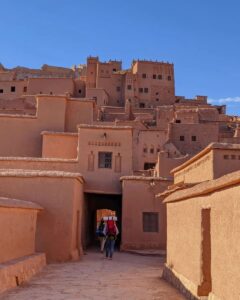
The practical detail that matters: The lower sections of Aït Benhaddou are tourist-heavy by 10am. Arriving before 9am gives you the upper sections almost entirely alone, with only the sound of the Ounila River below.
Where to stay: A kasbah guesthouse in the Dades Valley or near Ouarzazate. Kasbah Ait Ben Moro in Skoura has a pool, a palm grove, and one of the better kitchens in the region — around 1,000–1,400 MAD / €90–€130 per night.
Day 9–10: Marrakech — End on a High
The drive from Ouarzazate to Marrakech crosses the Tizi n’Tichka pass — the highest paved road in North Africa at 2,260 metres. In spring, the slopes are covered in wildflowers. In autumn, the light is amber and the villages glow against the stone. Pull over at the summit. The view in both directions — south toward the Sahara, north toward the Atlantic plains — is one you’ll want a photograph of.
Arrive in Marrakech by early afternoon on Day 9.
Day 9 — Settling In & Djemaa el-Fna at Dusk
Don’t try to do too much on arrival. Drop your bags, have lunch on a medina rooftop, and walk to Djemaa el-Fna around 5pm. The square transitions from daytime market to evening carnival over about 90 minutes and the transformation is something to watch rather than rush past. Snake charmers, storytellers, acrobats, 50 food stalls opening simultaneously, live musicians playing Gnawa and Chaabi. Stay until dark.
This is one of the great public squares in the world. Sit with a glass of freshly squeezed orange juice (3–4 MAD from any cart) and let it happen around you.
Where to stay in Marrakech: We recommend Riad Be Marrakech in the northern medina — rooftop pool, calm courtyard, 10 minutes on foot from Djemaa el-Fna. Expect 1,400–2,500 MAD / €130–€230 per night depending on season and room.
Day 10 — Marrakech’s Finest
This is your last full day of 10 days in Morocco, and Marrakech rewards every hour. Here’s the sequence we recommend:
8:00 AM — Jardin Majorelle. Arrive at opening. The cobalt blue buildings, bamboo groves, and exotic cactus garden are genuinely beautiful, and before 9:30am the paths are quiet enough to actually absorb the place. Inside: the Berber Museum, which puts everything you’ve experienced over the past 10 days into cultural context.
10:30 AM — Bahia Palace. One of the great 19th-century Moroccan palaces, with 8 hectares of painted ceilings, tiled courtyards, and orange-shaded gardens. Allow 45 minutes.
12:00 PM — Lunch in the souks. The small restaurants off Rue Mouassine serve better food at half the price of the main square. Order pastilla (the sweet-savoury pigeon pie that is one of Morocco’s great culinary achievements) if it’s on the menu.
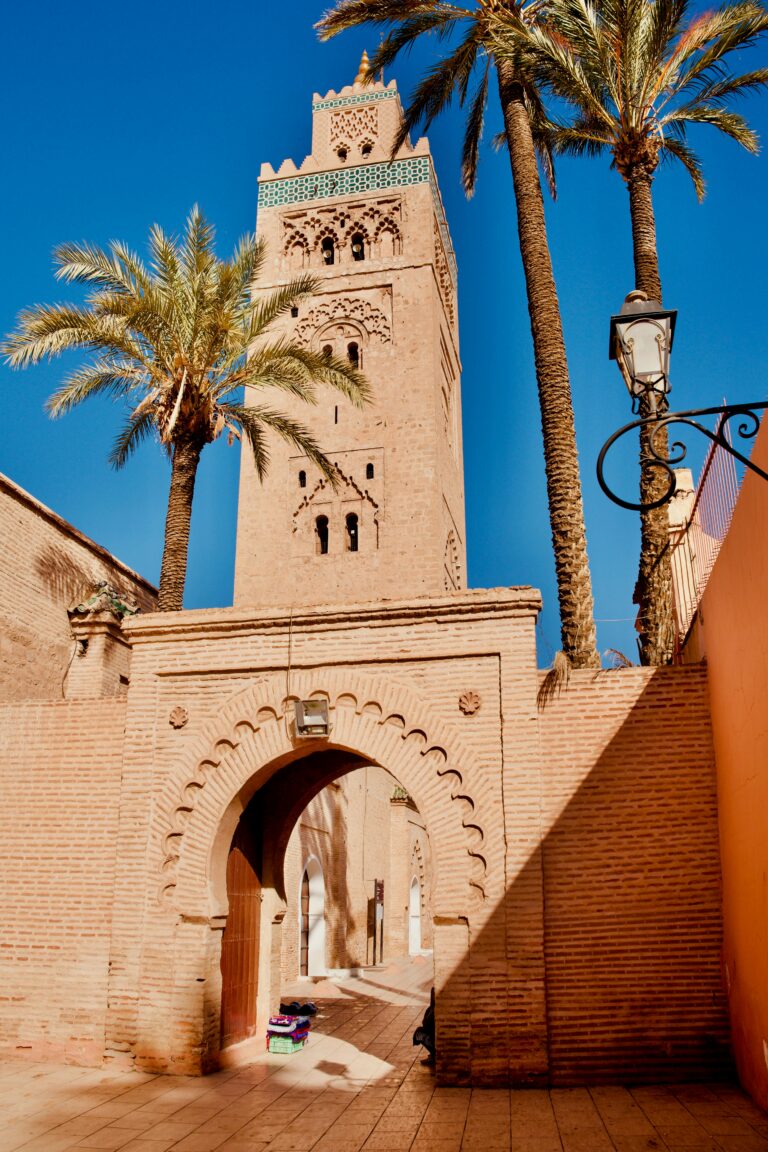
2:00 PM — Ben Youssef Madrasa. A 14th-century Islamic school with the finest carved plasterwork and cedar woodwork in Marrakech. The central courtyard, with its marble pool and tiled walls, is one of the most photographed interiors in Morocco. Worth every minute.
4:00 PM — Souk shopping. Leather goods, argan oil, hand-beaten copper lanterns, saffron, spices, Berber rugs. Prices are negotiable. Start at 40–50% of the first offer and go from there. Our Morocco shopping guide covers what’s genuinely worth buying and what to avoid.
7:00 PM — Final dinner. Le Jardin, set in a garden courtyard in the medina, serves excellent Moroccan food in a beautiful setting. Book ahead. Or climb to any rooftop terrace overlooking the medina for a last view of the city at night.
For a full breakdown of everything Marrakech has to offer, see our guide to top things to do in Marrakech.
What This Morocco 10-Day Travel Plan Actually Costs
Here is an honest, complete breakdown — not vague ranges, but real numbers based on what our guests spend in 2026:
| Category | Budget | Mid-Range | Luxury |
|---|---|---|---|
| Accommodation — 10 nights | €350 | €700 | €1,500+ |
| Private driver + 4×4 — 10 days | €500 | €700 | €900+ |
| Food & drinks — all meals | €150 | €250 | €500+ |
| Guided activities & entry fees | €100 | €180 | €300+ |
| Desert camp — 2 nights full board | €180 | €300 | €500+ |
| Total per person | €1,280 | €2,130 | €3,700+ |
Based on double occupancy. Solo travelers add 20–30% for single supplements.
The one place not to cut costs: The desert camp. A genuine luxury camp — proper beds, en-suite facilities, quality food — costs roughly €60–€80 more per night than a basic tent. The difference in experience is not marginal. It is the difference between a good memory and an unforgettable one.
The one place you can save without sacrificing quality: Food. Street food and local medina restaurants serve extraordinary meals at €3–€6 per person. Morocco’s food culture rewards people who eat where locals eat, not where tourists sit.
How to Get Around on This Morocco Road Trip Itinerary
Casablanca → Rabat: Al Boraq high-speed train. 45 minutes. ~40 MAD / €4.
Rabat → Fes: ONCF train. 2.5 hours. ~100 MAD / €9. Clean, comfortable, and scenic through the Middle Atlas foothills.
Fes → Merzouga → Dades → Marrakech: Private vehicle is the only practical option. Public transport exists but requires multiple changes and long waits, and the scenery on these roads is itself part of the experience. A private driver with 4×4 handles all the logistics, knows the stop timings, and adjusts to your pace. This is the segment where a guided tour pays for itself most clearly.
Our guide to ways to travel around Morocco covers all transport options in detail, including cost comparisons between private, shared, and public options.
Step-by-Step: How to Book This Trip
1. Choose your travel window — March–May or September–November for this full route
2. Book flights — fly into Casablanca (CMN), out of Marrakech (RAK). One-way route, zero backtracking
3. Reserve your desert camp first — luxury Erg Chebbi camps sell out 8–12 weeks ahead in peak season
4. Book riads in Fes and Marrakech — good ones fill fast. Budget properties are almost always available last-minute, but the best mid-range and luxury riads are not
5. Arrange your private driver for the southern leg (Fes to Marrakech via the Sahara) — or book a full guided tour that includes everything
6. Pack light — one carry-on plus one personal bag works perfectly for this route. Over-packing makes the camel trek genuinely uncomfortable
📥 Need a personalised day-by-day plan built around your specific dates and group? Our local team puts it together free of charge, no obligation — tell us your travel dates here.
Frequently Asked Questions
Is 10 days enough to see Morocco properly? Yes — if the route is well-planned. Ten days covers the imperial cities, the Sahara, the mountain gorges, and Marrakech without feeling rushed. The key discipline is resisting the urge to add more cities. More destinations means less time in each one. Morocco rewards depth over breadth.
Do I need a guide for Fes? We strongly recommend one for at least the first day. Fes el-Bali has over 9,000 lanes and no street signage. A good local guide doesn’t just navigate — they open workshops, family homes, and artisan spaces that you’d walk past a hundred times without knowing they existed. The medina reveals itself to people who are shown it.
Is Morocco safe for solo travelers? Morocco is generally very safe. Petty scams exist in tourist areas, as they do in any major travel destination, but violent crime against tourists is rare. See our Morocco safety guide for a full picture. For women traveling independently, our solo travel in Morocco guide covers everything practical.
Merzouga or Zagora for the Sahara? Merzouga for almost everyone. The Erg Chebbi dunes are significantly taller, more photogenic, and more experientially complete than Zagora’s Erg Chegaga. Zagora is closer to Marrakech, which makes it the better choice only when time is genuinely tight. Full comparison: Merzouga vs Zagora.
Should I do this as a road trip or join a guided tour? Both work. Self-driving gives flexibility and is perfectly manageable on Moroccan roads outside cities. The advantage of a guided private tour is that logistics, timing, accommodation, and local knowledge are handled — leaving you free to actually experience the places rather than manage the route. For the southern section of this itinerary particularly, a private driver adds enormous value.
What should I pack for 10 days in Morocco? Layers are essential — desert nights in spring and autumn drop to 5–10°C even when days are warm. Comfortable walking shoes for the medinas. Modest clothing for conservative areas and mosques. A headtorch for the desert camp. Full list: what to pack for Morocco.
Can families with children do this itinerary? This is one of our most-requested family routes. The Sahara camp, the Roman ruins at Volubilis, the Atlas Mountains crossing, the camel trek — children engage deeply with all of it. See our Morocco family travel guide for age-specific advice.
Book Your 10-Day Morocco Trip
We’ve run this route with hundreds of private groups — families, couples, solo travelers, and small groups from the UK, US, Germany, Australia, and beyond. Every trip is different. The route is the same.
If you want the 10-day Morocco itinerary above without any of the planning complexity, our team handles every element: private driver and 4×4, all accommodation, desert camp reservation, local guides in Fes and Marrakech, and all transfers between cities.
You arrive. We take care of the rest.
✅ Browse our 2026 tour packages and check available dates: Morocco Vacation Packages 2025–2026
🐪 Want a fully private experience for your group? Morocco Private Tours
🗺️ Want us to build a custom itinerary around your dates and budget? Custom Morocco Tours — Plan Free, No Obligation
Rated 5 stars on TripAdvisor by travelers from the US, UK, Germany, and Australia.