Visiting Morocco in Spring 2026: Weather, and What to Expect
Key Takeaways
- Spring (March–May) is widely considered the best time to visit Morocco — comfortable temperatures, green landscapes, and a full calendar of festivals
- April and May are the sweet spot months — warm without being hot, and the countryside is at its most photogenic
- Ramadan 2026 ran from approximately February 17 to March 19 — meaning early March visitors experienced the tail end of Ramadan, and late March arrivals caught Eid al-Fitr celebrations
- The Rose Festival in Kelaat M’Gouna (May) is one of the most spectacular and underrated cultural events in all of North Africa
- Book accommodation at least 2–3 months in advance for spring — riads and desert camps fill up fast, especially April through May
- Temperatures range from 18°C to 28°C across most of Morocco in spring — ideal for cities, desert, and mountains alike
- Spring crowds are real but manageable — nothing like peak European summer
Introduction: Why Spring Makes Morocco Feel Like a Different Country
In January, Morocco is bare and brown. The desert is cold at night and the mountains can be heavy with snow. Beautiful — but stripped back. Then spring arrives, and the country transforms in a way that is genuinely difficult to prepare for.
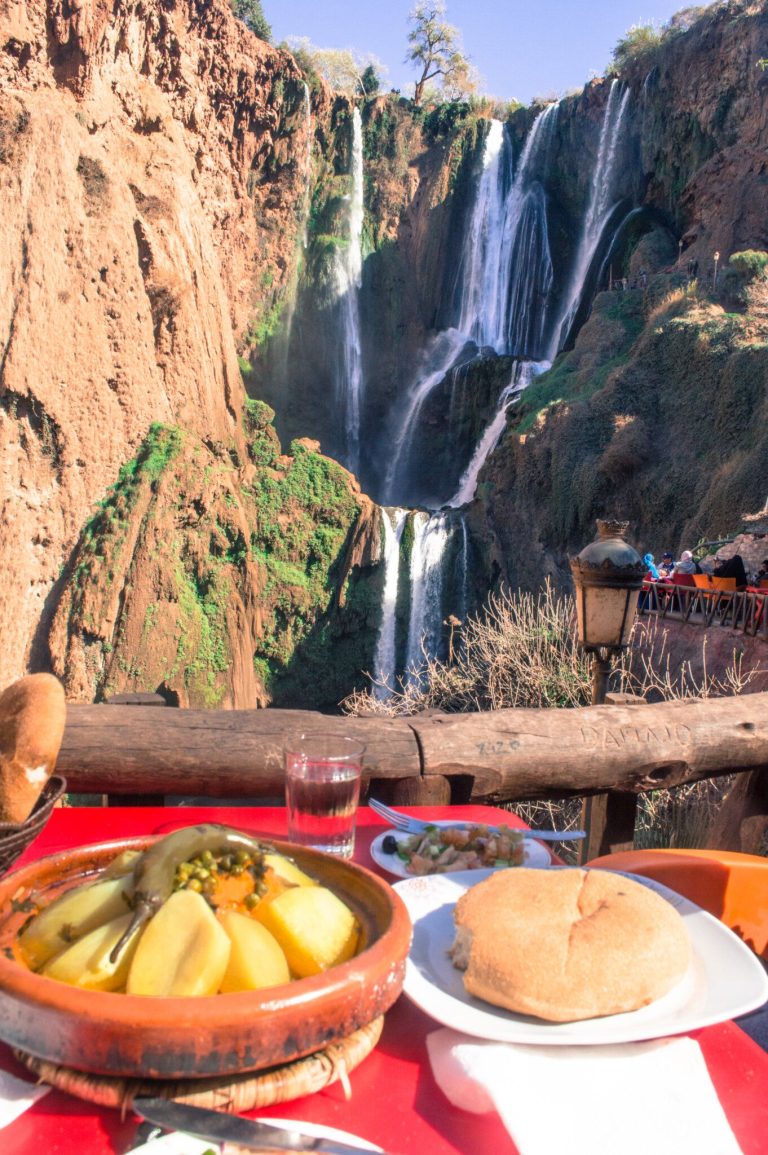
The Ourika Valley, just an hour from Marrakech, turns a shade of green that seems impossible given the aridity of the landscape surrounding it. The almond trees in the Anti-Atlas put out blossoms in February that make the red granite boulders look even more dramatic by contrast. The Dades Gorge fills with pink roses. The Atlas Mountain passes clear, opening the road to the Sahara. The temperature in Marrakech climbs to a comfortable 24°C and the souks smell of fresh mint and orange blossom rather than the damp wool of winter.
Spring in Morocco is not just good weather. It is the country opening up.
This guide covers everything you need to know about visiting Morocco in spring 2026 — the weather city by city, what the crowds actually look like, how Ramadan shaped early spring this year, which festivals are worth building a trip around, and the practical details that most travel guides skip entirely.
Spring Weather in Morocco 2026: City by City
Morocco is not one climate — it is at least four. The weather you experience in Marrakech in April is entirely different from what you find in Chefchaouen, Essaouira, or Merzouga on the same day. Here is the honest breakdown.
Marrakech in Spring
Spring in Marrakech brings average daytime temperatures of 20–28°C, sunny days, blooming wildflowers in the countryside, and minimal rain after March. It is ideal for hiking, desert tours, and city exploration — the sweet spot before the brutal summer heat that regularly pushes Marrakech above 40°C in July and August.
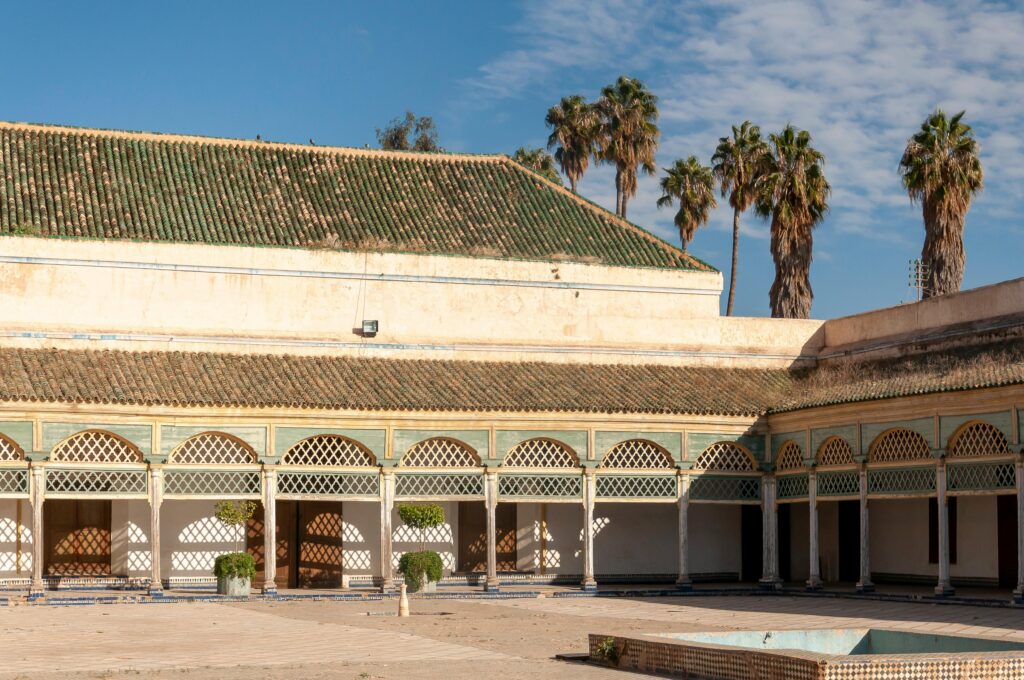
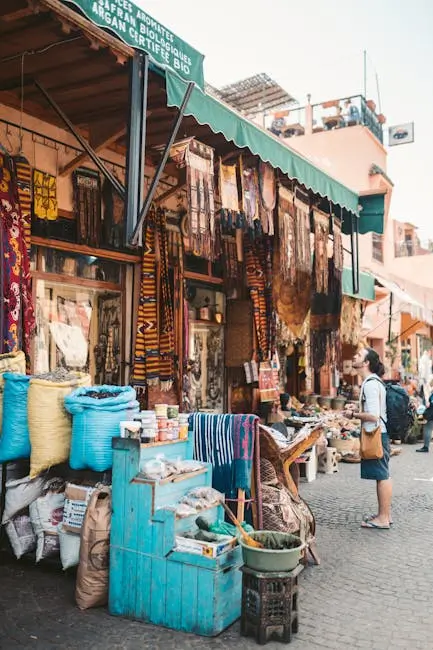
March in Marrakech is warm rather than hot — temperatures reach around 24°C, making it a comfortable temperature to wander during the day as well as in the evening. By May, the city is noticeably busier and the mercury is pushing 30°C by midday. The advice: explore the medina before 10am, retreat to your riad courtyard for the midday heat, and come alive again from 5pm when the light turns golden and the evening crowds fill Jemaa el-Fna.
Fes in Spring
Temperatures in Fes become warm in spring, making it a good time to visit Morocco’s most famous imperial city. Fes has significant cultural and religious importance — the medina comprises approximately 4,900 alleys, home to pottery and copper workshops, leather production, cloth dyeing shops, and local food stalls.
Spring is the single best time to explore the Fes medina on foot. The heat is comfortable, the light is extraordinary for photography in the late afternoon, and the crowds — while building — haven’t yet reached the overwhelming levels of peak summer.
The Sahara Desert in Spring
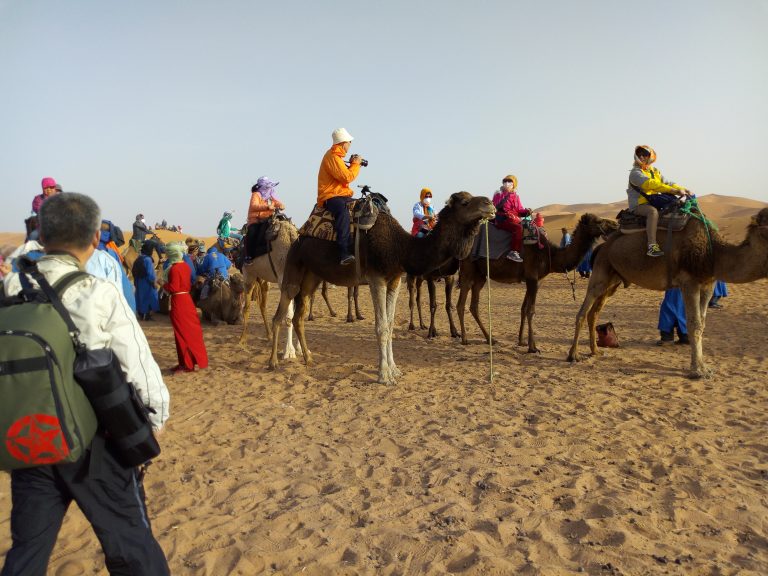
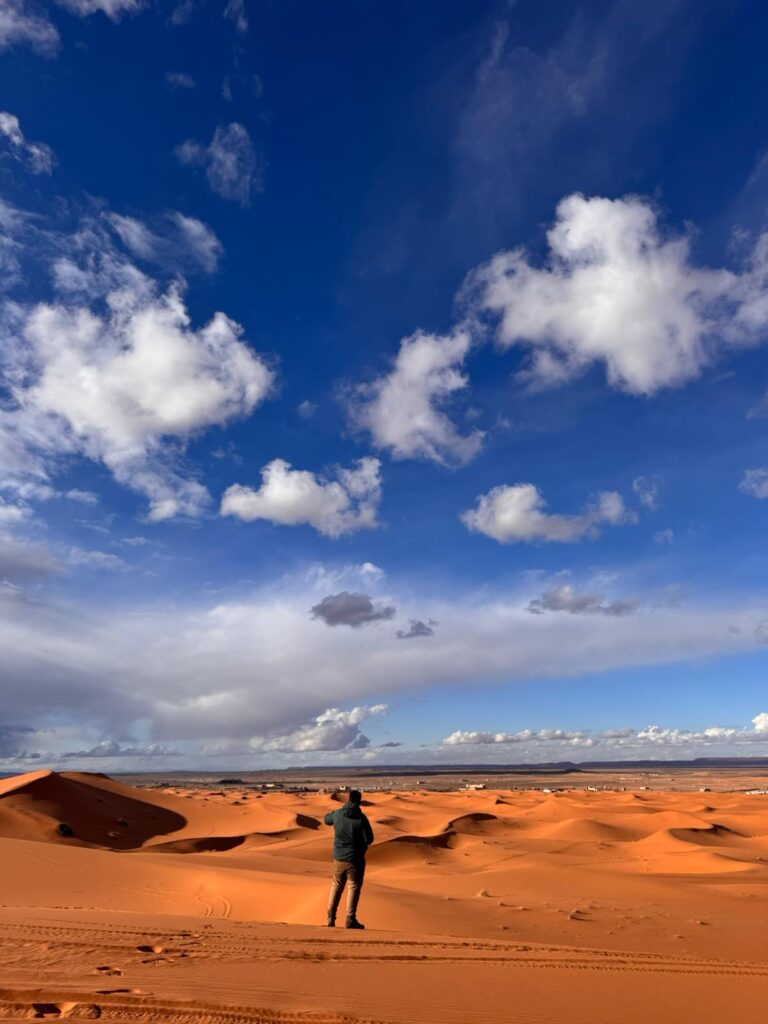
The Sahara region around Merzouga and Zagora is at its best from March through May — comfortable temperatures for camel treks and stargazing, without the crushing heat of summer when desert temperatures can exceed 45°C.
Spring desert nights are cool but not cold — typically 10–15°C after sunset. A light layer is all you need around the campfire. The dunes are at their most photogenic in spring light, and the absence of summer’s dusty haze means the Milky Way on a clear May night is extraordinary.
The Atlantic Coast (Essaouira, Agadir, Casablanca) in Spring
Morocco’s Atlantic coast — including Agadir, Essaouira, and Casablanca — is lush and green from mid-March to May, when temperatures average around 24°C. The coast stays mild and the sea breeze keeps things fresh even on warmer spring days.
Essaouira in spring is one of the most pleasant travel experiences in Morocco. The wind that makes it a world-class kite surfing destination keeps temperatures comfortable, the rampart walls glow in spring light, and the seafood restaurants are at their freshest. The temperature in Essaouira doesn’t fluctuate much — in spring you can expect a comfortable high around 19–22°C. The arts and crafts workshops in the medina are worth exploring, and if you’re up for it, kitesurfing and windsurfing gear is available to rent directly from shops in town.
Chefchaouen in Spring
Around the Rif mountain destinations of Chefchaouen and Tetouan, spring brings clear skies and pleasant temperatures — the blue city is arguably at its most beautiful between April and June, when the surrounding hills are green and the light on the blue-painted medina walls is at its most flattering.
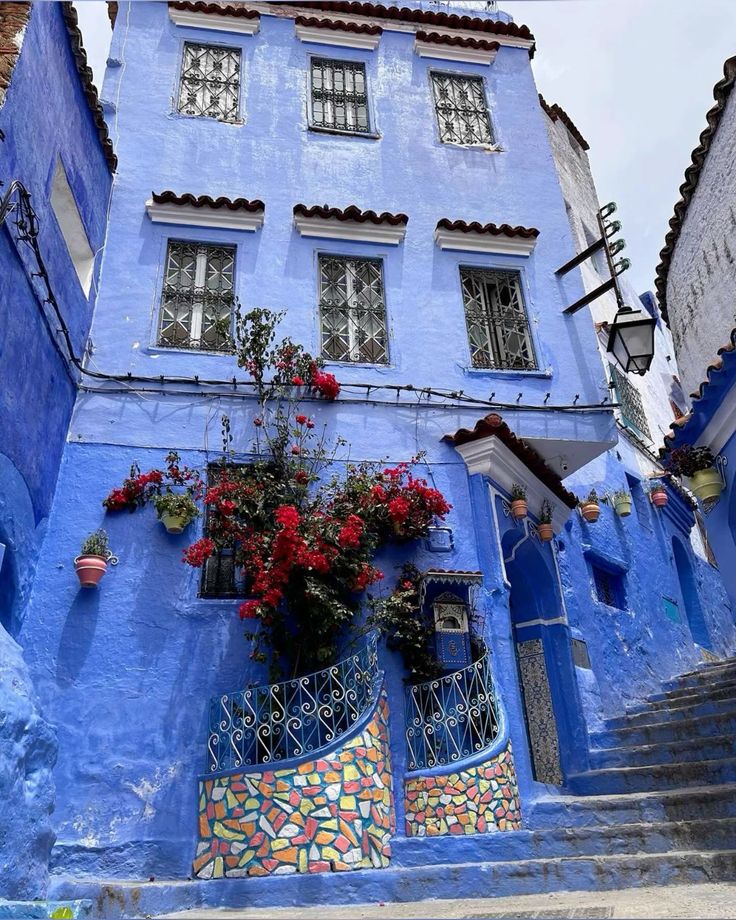
The crowds in Chefchaouen are real and growing year on year. Spring weekdays are significantly calmer than weekends. If you can arrive on a Tuesday or Wednesday, the medina feels like a genuinely quiet mountain town rather than an Instagram set.
Spring Temperature Guide by Month
| Month | Marrakech | Fes | Essaouira | Sahara (Merzouga) |
|---|---|---|---|---|
| March | 22–24°C | 18–22°C | 18–20°C | 20–25°C |
| April | 24–27°C | 22–26°C | 19–22°C | 25–30°C |
| May | 28–32°C | 26–30°C | 20–24°C | 30–36°C |
Evening temperatures drop significantly in the Sahara and Atlas Mountains — bring a layer regardless of daytime heat.
The Ramadan Factor: What Early Spring 2026 Actually Looked Like
This is the most important thing to understand about spring 2026 specifically, and competitors’ articles have largely glossed over it.
Ramadan 2026 ran from the evening of February 17 to approximately March 19, with Eid al-Fitr on March 20. This means that travellers who visited Morocco in the first three weeks of March 2026 experienced the country in full Ramadan mode — which is not the same Morocco you read about in standard travel guides.
During Ramadan, the daily rhythm changes completely. Many restaurants reduce hours or close during the day. Local cafés may not serve food until iftar — the meal that breaks the fast at sunset. The pace of the medinas slows during daylight hours and then accelerates dramatically from sunset, when Jemaa el-Fna becomes the most energetically joyful version of itself as families break the fast together.
The practical takeaway for future spring planning: In 2027, Ramadan runs from approximately February 7 to March 8. If you are planning a spring Morocco trip for 2027, late March onwards puts you well clear of Ramadan’s main impact — and into the best weather of the year.
Spring Crowds in Morocco: The Honest Picture
Spring is Morocco’s most popular season. Hotels book up fast. Prices go up. The medinas are busier than at any other time of year except peak summer. That is the honest summary.
The nuanced version: spring crowds in Morocco are nothing like the summer tourist surges of popular European destinations. The medinas are genuinely busy, but they are always genuinely busy — that is part of their character. What spring crowds do affect, practically, is accommodation availability and pricing.
Early planning in spring is not “nice to have” — it is the difference between building your ideal itinerary and negotiating with whatever availability remains. If you have flexibility, shoulder seasons can be a sweet spot. You still get great energy in cities, but you often get more options for lodging and pacing.
Crowd levels by month:
- March: Moderate, especially early in the month during Ramadan when tourist numbers are traditionally lower
- April: Busy — the most popular single month for first-time Morocco visitors from the UK and Europe
- May: Busy in cities, but the Rose Festival in the south draws crowds away from Marrakech and creates a more dispersed travel pattern
Where crowds are thinnest in spring:
- The Draa Valley and southern routes between Ouarzazate and the Sahara
- Chefchaouen on weekdays (weekends are now very busy)
- The Mellah and Kasbah neighbourhoods of Marrakech, as opposed to the central souk area
- The Atlantic coast — Essaouira and Asilah remain far less crowded than Marrakech or Fes in spring
Spring Festivals in Morocco 2026: What to Plan Around
This is where spring earns its reputation. The festival calendar between March and May is the richest of any season in Morocco.
The Rose Festival, Kelaat M’Gouna (May)
The festival typically takes place during the second or third week of May, usually spanning three to four days. The exact dates vary each year depending on the rose harvest timing, which is influenced by weather conditions and bloom cycles.
What nobody tells you: the rose harvest actually begins weeks before the festival itself — arriving a few days early means you can visit the distilleries while they are processing the flowers. The actual rose harvest begins in late April. At the distillery, the air is heavy with an intoxicatingly sweet scent and you can witness first-hand how the precious Rosa Damascena petals are transformed into rose water and essential oil — it takes tonnes of petals to produce just a few litres of the precious oil.
📍 Insider tip: Dress in layers — spring mornings in the valley can be cool at 1,400 metres elevation. Go early (before 10am) to avoid crowds and enjoy the freshest rose scent. Bring cash — many artisans don’t accept cards. Look for clear rose water, not pink-tinted, to ensure authenticity. Stay at least one night in the valley — when the crowds depart in the evening, the fields return to absolute peace.
The Rose Festival is most naturally combined with a wider southern Morocco circuit — the Dades Gorge, Todra Gorge, and a Sahara desert camp at Merzouga are all within easy reach. Our Sahara desert tours and 10-day desert tour from Marrakech both pass directly through the Valley of Roses and can be timed around the festival.
Eid al-Fitr (Late March 2026)
As covered above, Eid al-Fitr in late March 2026 was one of the most compelling reasons to time a spring visit around the end of Ramadan. The combination of family celebrations, extraordinary food, and genuine local festivity is something no tour operator can manufacture. It simply happens — and travellers who were in the medinas of Marrakech and Fes for Eid described the experience as among the most memorable of their Morocco trip.
The Nomads Festival, M’Hamid (Late March/April)
At the edge of the Sahara, the town of M’Hamid hosts the Festival International des Nomades, usually in late March or April. The festival celebrates Saharan nomadic culture: camel races, traditional music from across the Sahara (Gnawa, Hassani, Amazigh), poetry, and craft demonstrations. It remains genuinely local — not yet overrun by tour groups — and is one of the most authentic festival experiences available to travellers in spring Morocco.
Mawazine World Music Festival, Rabat (May/June)
The Mawazine World Music Festival in Rabat usually falls in May or June. One of the largest music festivals in Africa, it draws international headliners alongside some of the finest Moroccan and African artists. For travellers who want to combine culture, music, and the Atlantic coast, timing a Rabat visit around Mawazine is a genuinely excellent itinerary anchor.
Hidden Gem: The Almond Blossom Season, Tafraoute (February–March)
Around the town of Tafraoute, in the Ameln Valley south of Agadir, thousands of almond trees erupt in white and pale pink in late February and early March. The landscape they sit in makes this more striking than any European blossom season: massive red granite boulders stacked in impossible formations, dry riverbeds, and Amazigh villages built into the hillsides. The blossoms are delicate against a backdrop that is anything but.
The Almond Blossom Festival in Tafraoute typically takes place in the second half of February and runs into early March — right at the start of what most travellers would call spring. The festival is small and local. That is its value. You will not find tour buses. The bloom window is short. Amazigh music, local crafts, and tastings of amlou — a thick paste of almonds, argan oil, and honey that exists in this form nowhere else — are the highlights.
If you are travelling to Morocco in late February or early March 2027, adding two nights in Tafraoute to a wider southern Morocco itinerary costs very little in time and delivers one of the most photogenic and unhurried experiences in the country.
What to Pack for Morocco in Spring
Spring packing is where most first-time visitors make predictable mistakes. Here is what you actually need.
The biggest mistake travellers make in spring is packing only for summer. Morocco is on the Atlantic — the weather flips fast. You need a light down jacket for evenings. Rooftop dinners are chilly, and the desert at night is surprisingly cold. Modest clothing is important — long linen trousers and flowy maxi dresses are perfect for spring — they keep you cool during the day and are respectful in medinas and smaller towns. Solid shoes are essential: the medinas are paved with uneven stones that will destroy thin-soled sandals within a day.
Spring packing list:
- Light layers — a linen shirt or light cotton top for the day, a mid-layer (fleece or light down jacket) for evenings and desert nights
- Modest clothing — shoulders and knees covered for souks, religious sites, and smaller towns
- Comfortable walking shoes — not sandals for medina exploration
- Sun protection — SPF 30+ minimum; the spring UV index in Morocco is higher than most northern Europeans expect
- Small daypack — for medina exploration without carrying your full bag
- A light scarf — doubles as sun protection, modest cover, and desert dust protection
For a complete packing breakdown, our what to pack for your trip to Morocco guide covers every season and every region in detail.
Spring vs Autumn in Morocco: Which Is Better?
This is the question every experienced Morocco traveller eventually asks — and the honest answer is nuanced.
| Spring (March–May) | Autumn (Sept–Nov) | |
|---|---|---|
| Weather | Warm, 18–28°C, occasional early rain | Warm, 22–30°C, very dry |
| Crowds | Moderate to busy | Moderate — slightly less than spring |
| Festivals | Rose Festival, Eid, Mawazine | Date Festival (Erfoud), Fantasia events |
| Landscapes | Green, flowers, snow on peaks | Dry, golden, harvest colours |
| Desert | Comfortable nights, ideal for camping | Excellent — warm days, cool nights |
| Prices | Rising through May | Generally lower than spring peak |
| Ramadan impact | Possible in March (varies by year) | No Ramadan impact |
The local verdict: spring edges it for first-time visitors because the landscapes are more dramatic and the festival calendar is richer. Autumn is the choice of repeat visitors who want slightly fewer crowds and marginally lower prices. Both are genuinely excellent. Neither is wrong.
Spring Travel Tips: What the Guidebooks Don’t Tell You

Book the Rose Festival early. Accommodation in and around Kelaat M’Gouna sells out weeks in advance once the festival dates are confirmed. Since dates depend on the rose harvest and are often announced only a few weeks ahead, the strategy is to book a flexible or cancellable option in the area for the second or third week of May, then adjust when the official dates are announced.
April is the busiest month for riads. If you are visiting Marrakech in April, booking accommodation 2–3 months ahead is not excessive — it is necessary. The best riads at the mid-range level are fully booked by February for April dates.
Spring rain is real, especially in March. Morocco is not a dry country in spring — particularly in the north and in the Atlas foothills. Pack a lightweight packable rain jacket. It will be useful in Chefchaouen, Fes, and the Atlas Mountains even if Marrakech stays dry.
The Atlas Mountain passes open in spring. The Tizi n’Tichka pass (the main road between Marrakech and Ouarzazate) can be closed by snow in winter. By April, it is reliably open. Spring is the first chance of the year to drive the full Marrakech–Sahara circuit without snow risk on the high passes. For an 8-day Morocco itinerary or a 5-day desert tour from Marrakech, spring is the ideal season.
Berber wildflowers in the Ourika Valley are at their peak in April. If you are based in Marrakech, a half-day trip up the Ourika Valley in April costs almost nothing and delivers the kind of landscape photography that requires no effort — the valley simply looks extraordinary. Combine it with lunch at a riverside café and a visit to a local argan oil cooperative.
Planning a Spring Morocco Trip: Suggested Itineraries
For 7 days in spring: Fly into Marrakech, spend two nights exploring the medina and day-tripping to the Ourika Valley, then drive south through the Dades Gorge to the Sahara for two nights at a desert camp, and return via Aït Benhaddou. Our 7-day Morocco itinerary is built around exactly this circuit.
For 10 days in spring with the Rose Festival: Add the Valley of Roses to the above circuit, timed around the early May festival dates. Combine the Sahara, the Rose Valley, and a final night in Marrakech. Our 10-day desert Morocco travel itinerary includes this route.
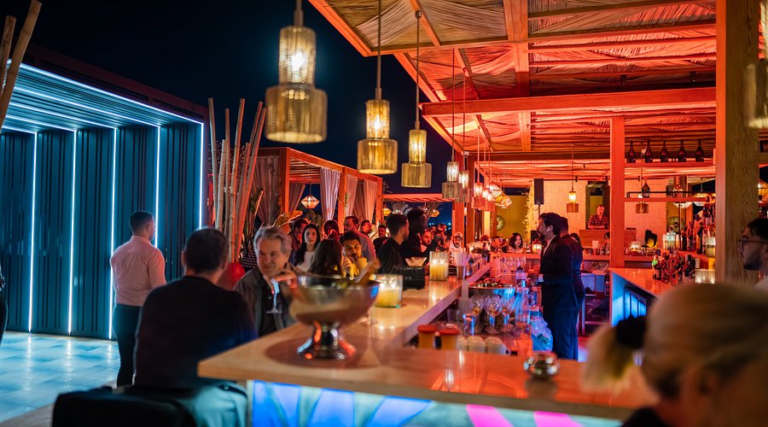
For couples in spring: The combination of a luxury riad in Marrakech, a private desert camp under the stars, and dinner at a rooftop restaurant during golden hour is one of the most romantic travel experiences in the world. Our Morocco itinerary for honeymooners is specifically designed around spring timing and the best private camps.
For families in spring: April is excellent for families — warm enough for outdoor exploration, cool enough that children don’t overheat in medinas. Our family travel packages to Morocco include spring-specific options with accommodation confirmed to accept young children.
Conclusion: Spring Is When Morocco Opens Up
There is a reason that the majority of first-time visitors to Morocco time their trip for spring. The weather is as close to perfect as a North African country gets. The landscapes are briefly, dramatically green before the summer turns them gold and brown. The festival calendar is at its richest. The desert is warm enough to sleep under the stars without shivering, and the Atlas passes are open for the great southern road trip that defines so many Morocco memories.
The key is planning ahead. Spring is popular because it deserves to be — and the best riads, desert camps, and private tours fill up months in advance.
Our team builds spring Morocco itineraries around your timing, your group, and the experiences that matter most to you — including festival timing, Sahara nights, and the Rose Valley in bloom. If you are planning a spring 2027 trip, now is the right time to start.
check our Pinterest.
👉 Browse our Morocco vacation packages for 2026 or contact us for a custom spring itinerary — and we will make sure you arrive at exactly the right moment.
Last updated: April 2026 — Morocco Service Tours
Frequently Asked Questions About Morocco in Spring
-
Is spring the best time to visit Morocco?
For most first-time visitors, yes. Spring (March–May) offers the best combination of comfortable temperatures, green landscapes, and a rich festival calendar. April is the single most consistently excellent month — warm but not hot, with the countryside at its most photogenic and the full range of activities (desert tours, Atlas hikes, city exploration) all possible. Autumn (September–November) is a close alternative with slightly lower prices and fewer crowds.
-
Does it rain in Morocco in spring?
Yes, particularly in March and in the north. Chefchaouen, Fes, and the Atlas Mountains can see significant rainfall in early spring. Marrakech and the Sahara are drier, but not rain-free. Always pack a lightweight packable rain jacket for spring travel in Morocco, regardless of the forecast.
-
How does Ramadan affect spring travel in Morocco?
Ramadan dates shift each year. In 2026, Ramadan ran approximately February 17 to March 19 — meaning early March travellers experienced Ramadan conditions (some restaurants closed during the day, quieter medinas, extraordinary evening atmospheres). In 2027, Ramadan runs approximately February 7 to March 8. If you want to avoid Ramadan entirely, plan your spring visit for April or May. If you are open to experiencing it, late March (Eid) is one of the most rewarding times of year to be in Morocco.
-
What should I wear in Morocco in spring?
Light layers are essential. Days can be warm (22–28°C in Marrakech and Fes), but evenings drop significantly — especially in the Sahara and Atlas Mountains. Dress modestly in medinas and smaller towns — covered shoulders and knees are expected and respectful. Comfortable walking shoes with solid soles are non-negotiable for medina exploration. For a full packing list, see our what to pack for Morocco guide.
-
When is the Rose Festival in Morocco in 2026?
The Rose Festival in Kelaat M’Gouna typically takes place in the second or third week of May, spanning three to four days. Exact dates depend on the rose harvest and are usually announced a few weeks before the event. For 2026, early to mid-May is the most likely window. Book accommodation in the area early — it sells out once dates are confirmed.
-
How far in advance should I book a Morocco spring trip?

For April travel, book accommodation and tours at least 2–3 months in advance. The best riads at the mid-range level are fully booked by February for April dates. For May and the Rose Festival period, book as soon as you have confirmed travel dates — festival accommodation sells out particularly fast once official dates are announced.
-
What’s the best time to visit Khamlia Village?
The best months to visit Khamlia are October through April, when daytime temperatures range from 20-28°C. March and October offer ideal conditions with fewer crowds. Summer (June-August) reaches 45°C+ and is extremely challenging, though some travelers appreciate the dramatic heat and solitude. Winter nights (December-February) can drop to 5°C, so bring warm layers. For time of day, visit mornings (9-11 AM) or late afternoons (4-6 PM) to avoid the midday tour bus rush and get more personal interactions with locals.