Last updated: April 2026 — Morocco Service Tours
2 Day Sahara Tour from Marrakech: Your Ultimate 2026 Adventure Guide
A 2 day Sahara tour from Marrakech isn’t just a Morocco trip, it’s the highlight that visitors rave about for years afterward.
This guide cuts through the noise with real insights from our decade of running Marrakech to Sahara 2-day tours.
Quick Overview: What You’ll Experience
A 2 day Sahara tour from Marrakech typically includes:
- Scenic journey through the High Atlas Mountains via the spectacular Tizi n’Tichka Pass (2,260m elevation)
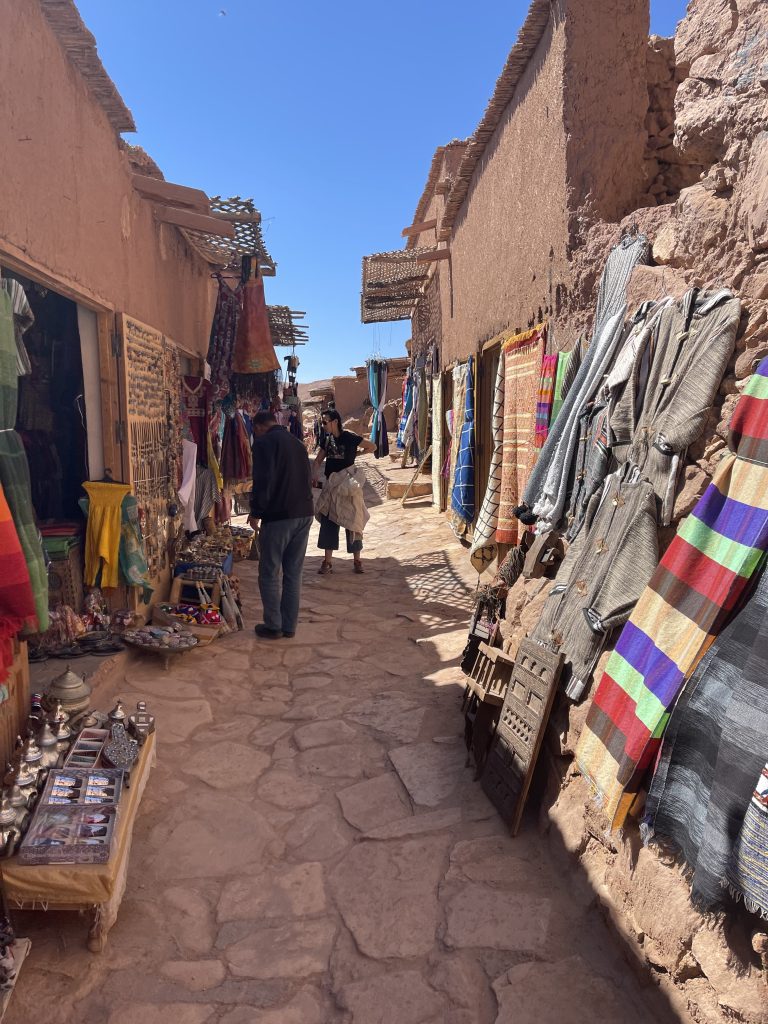
- Visit to UNESCO World Heritage Site Ait Ben Haddou, Morocco’s most famous kasbah
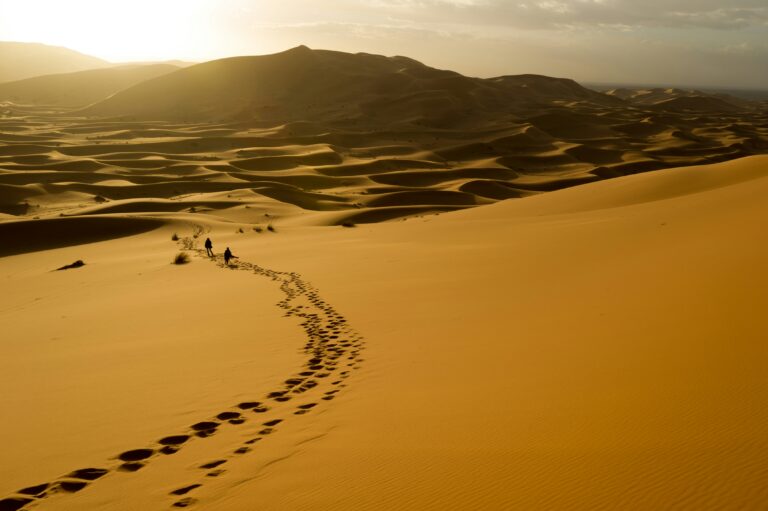
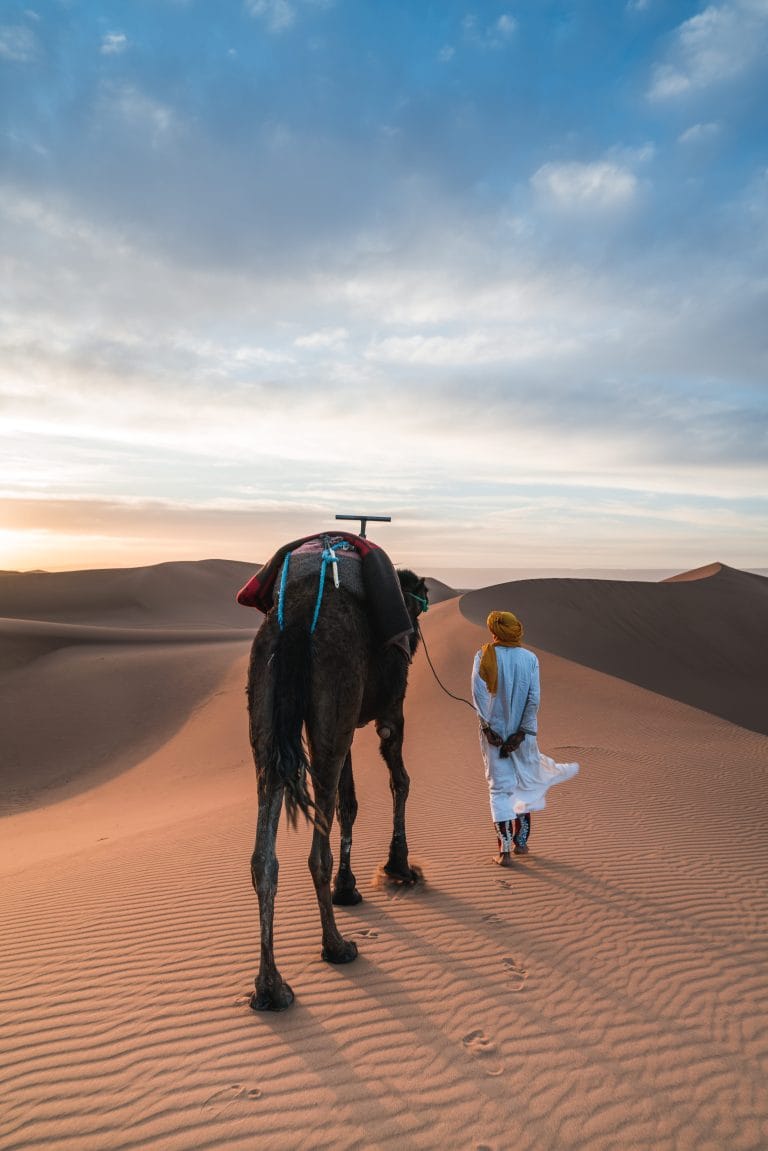
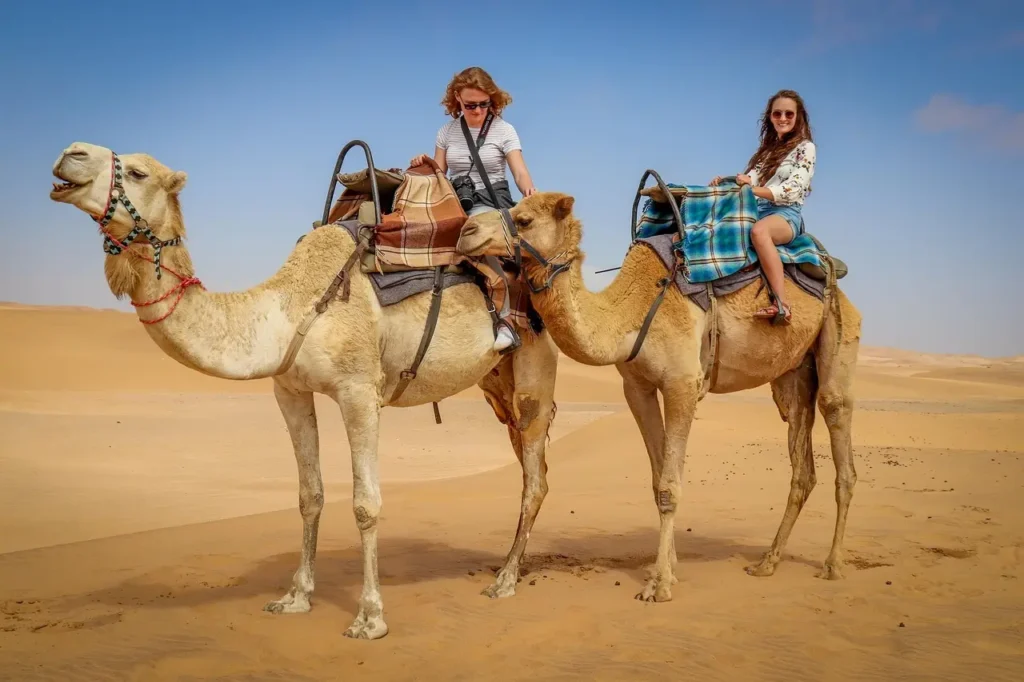
- Camel trek into the Sahara Desert at sunset (Erg Chebbi or Erg Chigaga dunes)
- Overnight in a traditional Berber camp with dinner, music, and stargazing
- Sunrise over the dunes followed by breakfast and return journey
- Total distance: Approximately 1,100km roundtrip
- Investment: €75-€250 per person depending on accommodation level
Real Talk: Is 2 Days Enough for the Sahara?
Short answer? Yes, if you know what you’re getting. but longer Marrakech tours are recommended because of the distance between Marrakech and Merzouga.
A 2-day Marrakech desert trip maximizes impact while minimizing time away from Morocco’s other wonders.
That said, you’ll spend roughly 18-20 hours total in transit. If you’re not comfortable with long drives, consider our 4-day Morocco itinerary from Marrakech for a more relaxed pace.
When 2 days works perfectly:
- You have limited time but refuse to skip the Sahara
- You’re combining it with other destinations (check our 9-day Morocco itinerary for inspiration)
- You want intensity over leisure—this is adventure travel, not a resort vacation
Consider 3-4 days if:
- You want more time exploring kasbahs and gorges
- Road trips stress you out
- You’re traveling with young children
Not sure? Our guide on how many days you need in Marrakech helps plan your entire Morocco adventure.
What’s Actually Included (And What Costs Extra)
Standard Package Includes:
✅ Transportation: Air-conditioned 4WD Land Cruiser or similar
✅ Accommodation: 1 night in Merzouga hotel + 1 night in desert camp
✅ Meals: 2 breakfasts, 2 dinners (lunch typically not included)
✅ Camel trek: 1-1.5 hours each way to/from camp
✅ English-speaking driver/guide
✅ Desert camp experience: Private tent, Berber music, stargazing
What You’ll Pay Extra For:
❌ Lunch stops (budget 80-120 MAD / €8-12 per meal)
❌ Site entrance fees (Ait Benhaddou: 30 MAD / €3)
❌ Drinks with meals
❌ Tips for driver and camp staff (100-150 MAD / €10-15 per day is standard)
❌ Optional activities (quad biking, sandboarding)
Pricing reality check: Expect to pay €220-350 per person for shared tours (groups of 4-6), or €450-650 for private tours. Anything significantly cheaper often means older vehicles, overcrowded camps, or hidden fees.
Curious about costs? Our complete breakdown in How Much Does a Sahara Desert Tour from Marrakech Really Cost? reveals exactly where your money goes.
Shared vs. Private Tours: Which Fits You?
Shared Group Tours (€220-350/person)
Best for: Budget travelers, solo adventurers, social butterflies
You’ll join 4-6 other travelers in a spacious 4WD. We’ve seen lifelong friendships form over tagine dinners and campfire stories. The vibe is casual, photo stops are democratic (expect multiple bathroom breaks), and you’ll hear different perspectives on Morocco.
The catch: Pickup times are fixed, you can’t customize the itinerary, and you might share a tent at the desert camp (though most operators provide private tents within shared camps).
Private Morocco Tours (€450-650 total for 2 people, €150-200 per additional person)
Best for: Couples, families, anyone who values flexibility
Your own vehicle, your own schedule. Want to spend an extra 30 minutes at Ait Benhaddou? Done. Need to skip a stop because someone’s exhausted? No problem.
Private also means better photo opportunities without a crowd, and you can request vegetarian meals, extra stops, or specific camp upgrades.
Our honest recommendation: First-time Morocco visitors often love shared tours for the camaraderie. Returning guests or those celebrating special occasions spring for private.
The Desert Camp Experience: Luxury vs. Basic
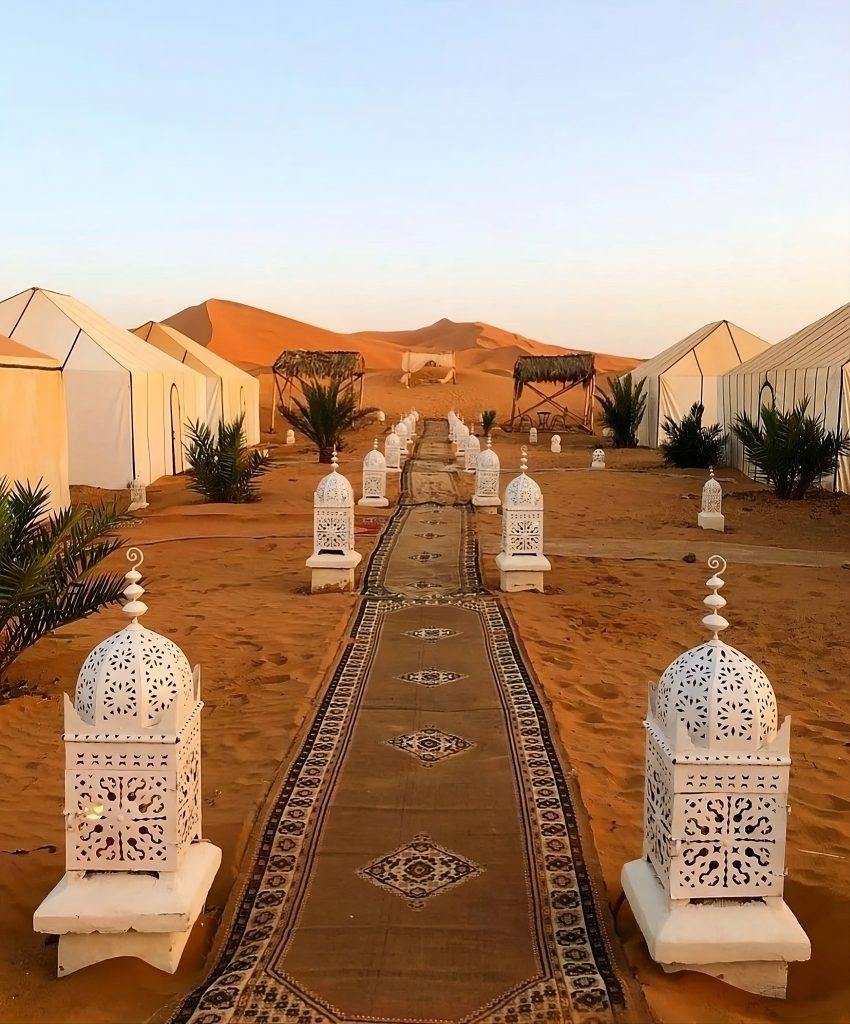
Standard Desert Camps (Included in most our tours)
- Private canvas tents with real beds and linens
- Shared bathroom facilities with squat toilets and cold-water sinks
- Communal dinner under the stars
- Berber music and bonfire
- Solar-powered lighting
Upgraded Luxury Camps (+€50-100/person)
- En-suite bathrooms with hot showers
- Flushing toilets
- More spacious tents with sitting areas
- Better bedding and furnishings
- Sometimes includes WiFi (though we’d argue disconnecting is part of the magic)
Real talk: Even “basic” camps have improved dramatically. Our partners use proper mattresses, clean linens, and provide hot water bottles on cold nights. check guided tours in morocco for more infos.
Best Time for Your 2-Day Desert Tour from Marrakech
Peak Season: October-April (15-25°C days, 5-15°C nights)
Pros:
- Comfortable daytime temperatures for exploring
- Clear blue skies perfect for photography
- Desert flowers bloom in March-April
- Pleasant camel rides
Cons:
- Higher prices (20-30% premium)
- More crowded camps and kasbahs
- Book 2-3 months in advance
Pro tip: Late October or early April gives you peak weather with fewer crowds than December-February.
Shoulder Season: May & September (25-35°C days, 15-20°C nights)
The sweet spot for many travelers. You’ll save 15-20% on tours, enjoy emptier sites, and still have manageable temperatures. Mornings and evenings are glorious; midday requires shade breaks.
Off-Season: June-August (35-45°C days, 25-30°C nights)
Only consider summer if you’re a heat warrior. We’ve run July tours where guests loved having Erg Chebbi nearly to themselves, but you’ll spend noon-4pm hiding indoors. Prices drop 30-40%, and night skies are spectacular, but the daytime heat is genuinely punishing.
Bottom line: October-April is peak for good reason. If you can swing late October or March-April, you’ll get the best of both worlds.
6 Insider Tips From 200+ Morocco Desert Tours
1. Weather
Desert temperatures swing 20°C between day and night. Your packing list:
- Breathable long sleeves for sun protection
- Warm fleece or jacket for evenings
- Scarf (doubles as sand protection and cultural respect)
- Closed-toe shoes (sandals = sandy disaster)
- Sunglasses and 50+ SPF sunscreen
Local hack: Buy an affordable djellaba (traditional robe) in Marrakech for 100-150 MAD. Perfect for souvenir, sun protection, and unforgettable photos.
The mountain passes are curvy. Really curvy. Take motion sickness medication 30 minutes before departure, request a front seat, and download audiobooks or podcasts instead of reading.
Game-changer: Ginger candy (find it in Marrakech pharmacies) works wonders for many travelers.
2. Embrace the Berber Tea Ceremony
When offered mint tea (and you will be, repeatedly), accept it. The three-pour tradition, “First glass is gentle like life, second is strong like love, third is bitter like death” ,is Morocco’s social currency.
Sipping slowly while chatting opens doors that rushed tourism never finds.
Bonus: experience morocco like a local and Learn to say “Shukran bezaf” (thank you very much) and watch faces light up 🙂
4. Photography Strategy for Epic Dune Shots
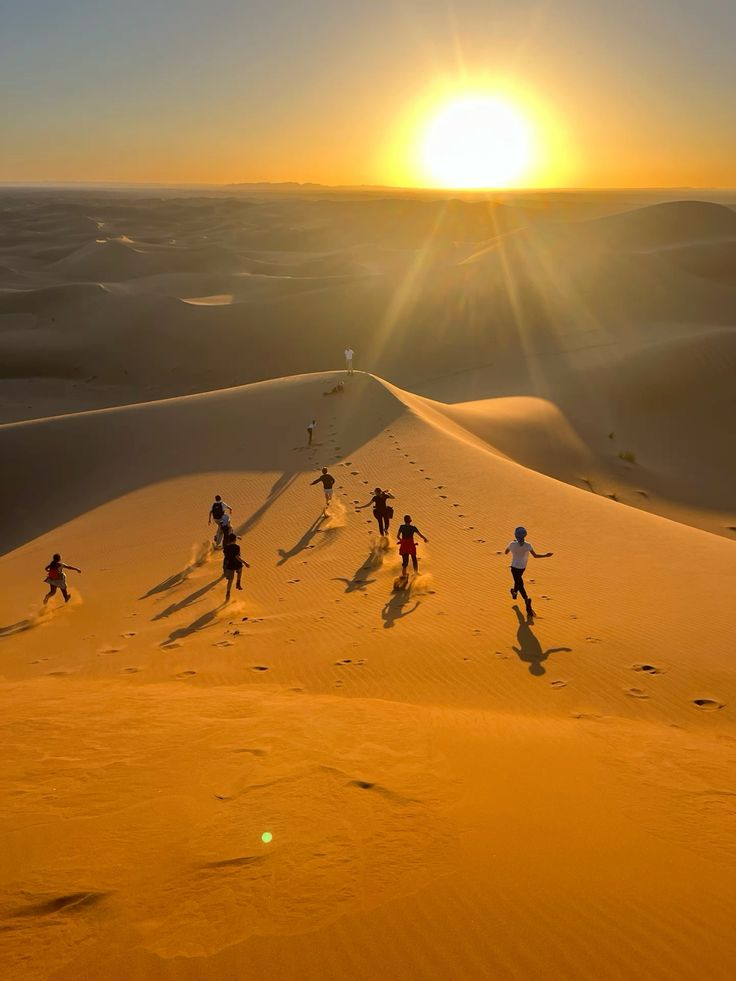
The Sahara’s light is magical but unforgiving:
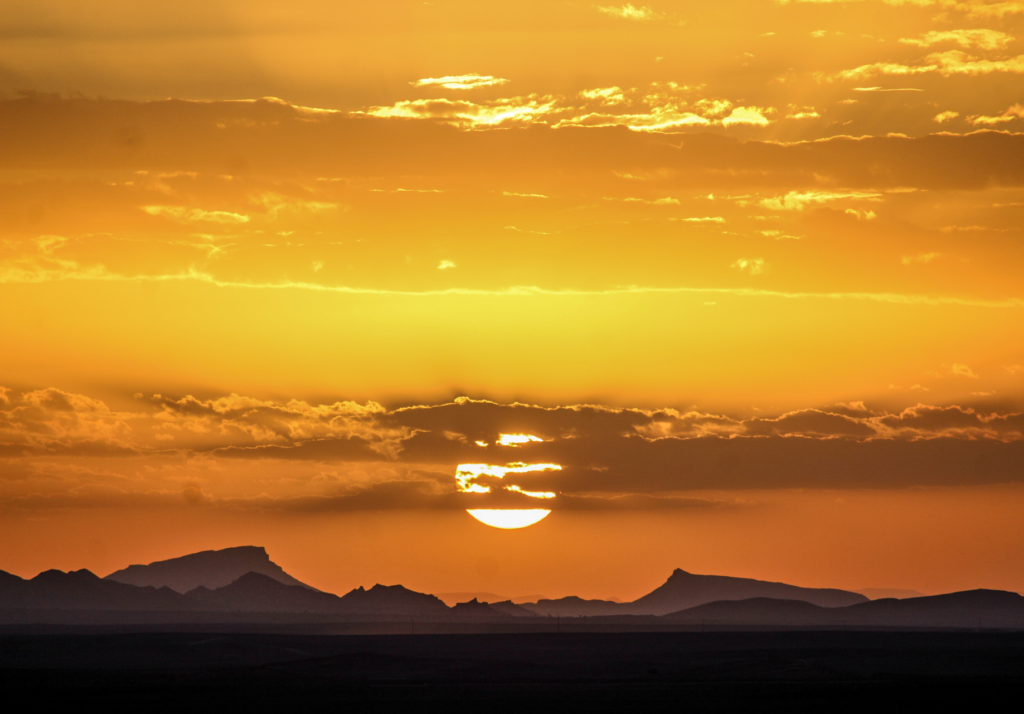
- Golden hour is everything: Sunrise (6:30-7:30 AM) and sunset (5:30-6:30 PM) transform ordinary dunes into Instagram gold
Pro move: Ask your guide to take you slightly off the main camp path for sunrise or you can do a camel trek.
5. Respect Local Culture (And Be Welcomed Like Family)
Morocco is Muslim-majority and culturally conservative:
- Cover shoulders and knees outside the dunes
- Ask permission before photographing people (especially women)
- Remove shoes when entering tents or homes
- Use your right hand for eating and handshakes
What happens when you respect these norms: Genuine smiles, invitations to tea, and connections that make your trip memorable beyond the scenery.
6. Tipping Etiquette Explained
Tipping is usually expected and often comprises significant income:
- Driver/guide: 100-150 MAD (€10-15) per day per group
- Camp staff: 50-100 MAD per group
- Camel handlers: 20-50 MAD
Method: Collect cash from your group and tip discreetly at tour’s end. Never tip one staff member publicly—it causes awkwardness with others.
Common Mistakes That Ruin Desert Tours (And How to Avoid Them)
Mistake #1: Booking the Cheapest Tour You Can Find
That €150 tour sounds amazing until your vehicle breaks down in the Atlas Mountains with no AC, or you arrive at a “luxury camp” that’s actually a pile of thin mattresses on the sand.
Fix: Read recent reviews, verify operator credentials, and remember that quality desert experiences cost €220+ per person minimum. Our 2-day desert tour from Marrakech transparently shows what quality costs.
Mistake #2: Forgetting It’s Still Winter at Night
Tourists arrive in January wearing shorts because it’s “the desert.” Then spend a miserable night shivering in a tent.
Fix: Pack warm layers October-April. Camps provide blankets, but your own fleece makes a huge difference.
Mistake #3: Overpacking for the Desert
pack light ,You don’t need seven outfit changes for two days. Every extra kilo makes camel loading harder and your bag a burden.
Fix: One small backpack with essentials. Leave your main luggage at your Marrakech hotel (most offer free storage).
Beyond the Basics: What Else Can You Do in the Sahara?
Your 2-day Marrakech desert trip focuses on the classics, but here’s some other things to do in sahara Desert:
Sandboarding: Slide down massive dunes on a board (like snowboarding but sandier). Most camps offer this free or for 50-100 MAD.
Quad Biking: Zoom across the desert on ATVs (€40-60 for 1-2 hours). Thrilling but loud, book separately if interested.
Fossil Hunting: The Erfoud region is rich with ancient marine fossils. Your guide can show you spots to find (and keep) small specimens.
Nomad Visits: Some cultural tours include tea with actual nomadic Berber families still living traditional lifestyles. Ask when booking.
4×4 Dune Bashing: If camels aren’t your thing, some operators offer jeep rides into the dunes. Less romantic, more adrenaline.
Want to explore deeper? Our guide on things to do in Morocco’s Sahara Desert reveals hidden gems beyond the standard tour.
Sustainable Desert Travel: How to Visit Responsibly
The Sahara’s fragility surprises many tourists. Here’s how to minimize your impact:
Water Conservation
- Refill your bottle at camps rather than buying plastic
- Take short showers (luxury camps only)
- Use provided bathrooms rather than wandering into dunes
Respect the Ecosystem
- Stay on established paths—dune vegetation is precious
- Don’t remove rocks, fossils, or sand (yes, people do this)
- Never litter—even biodegradable waste takes years to decompose in the desert
Support Local Communities
- Buy handicrafts directly from artisans in villages
- Choose operators who employ local Berber guides
- Eat at family-run restaurants, not just tourist stops
Modern Camp Standards
Morocco Service Tours partners only with camps using:
- Solar panels for electricity
- Composting toilets in newer facilities
- Local staff from nearby villages
- Waste removal systems (not desert burial)
The reality: Desert tourism impacts the environment. Choose operators committed to minimizing damage and supporting local communities. Your choice matters.
Dietary Needs on Your Desert Adventure
Standard Meals Include:
- Dinner: Tagine (slow-cooked stew) with chicken, lamb, or vegetables; couscous; fresh bread; olives; Moroccan salad
- Breakfast: Fresh bread, jam, butter, cheese, eggs, mint tea, orange juice
- Tea: Unlimited mint tea at camps
Family-Friendly or Adults Only?
Kids on Desert Tours
Ages 8+: Usually love the adventure. Camels, dunes, stars—what’s not to like?
Ages 4-7: Can struggle with long drives and rustic bathrooms. Private tours work better so you can make pit stops.
Family tips:
- Book private tours for flexibility
- Request extra stops for bathroom breaks
- Bring familiar snacks for picky eaters
- Consider skip-the-camel options (some kids find them scary)
- Pack entertainment for drive time
Seniors on Desert Tours
Age itself isn’t the issue, mobility and comfort are. Questions to ask yourself:
- Can you handle 9-10 hours in a vehicle?
- Can you mount/dismount a camel (or walk 20 minutes instead)?
Solutions:
- Upgrade to luxury camps with proper bathrooms
- Request front seats in vehicles
- Ask about alternative dune access (4×4 rides)
- Book private tours for your own pace
We’ve guided fit 70-year-olds who thrived and uncomfortable 30-year-olds who struggled. Know your limits and choose accordingly.
Practical Logistics: Visas, Money & Safety
Visa Requirements (2025)
- 90-day visa-free entry: USA, Canada, UK, EU, Australia, New Zealand, Japan, and most developed nations
- Passport validity: 6+ months beyond entry date
- Vaccinations: None required; Hepatitis A and Typhoid recommended
Money Matters
- Currency: Moroccan Dirham (MAD). €1 ≈ 10.8 MAD
- Cash is king: Bring 2,000-3,000 MAD for tips, entrance fees, and lunch
- ATMs: Readily available in Marrakech, limited in Merzouga
- Cards: Accepted by tour operators but not small restaurants
Why Choose Morocco Service Tours?
As a locally-owned Morocco travel agency, we’ve refined our Marrakech to Merzouga 2-day trip through 200+ successful tours and a decade of guest feedback. Here’s what sets us apart:
Local Berber Guides: Our drivers are from desert communities, they know hidden viewpoints, family-run restaurants, and stories beyond guidebooks.
Modern Fleet: All vehicles under 5 years old, meticulously maintained, full AC and comfort features.
Transparent Pricing: No hidden fees, no surprise charges. What we quote is what you pay.
Flexible Customization: Vegetarian? Need extra photo stops? Want to skip a site? Just ask.
24/7 Support: WhatsApp us in English anytime before, during, or after your trip.
Sustainable Practices: We partner with eco-conscious camps, employ local staff, and minimize single-use plastics.
Direct Booking Benefits: Book through our website for free packing lists, 5% discount, and personalized trip planning.
Explore our complete 2-day desert tour from Marrakech or alternative 2-day Marrakech to Merzouga route options.
See what travelers say: Check our authentic reviews on TripAdvisor where we maintain 4.9/5 stars across 500+ reviews.
Final Thoughts: Is a 2-Day Sahara Tour Worth It?
Let’s be honest: 18+ hours of driving in 48 hours isn’t relaxing. Your butt will hurt, you’ll be dusty, and luxury camp still means rustic by Western standards. that’s why are more days recommended, because the rush get in the Way of truly enjoying your sahara Tour from Marrakech.
But here’s what you’ll gain:
The evening you sit around a campfire with travelers from different continents, passing mint tea and sharing stories under more stars than you knew existed.
The sunrise when you’re the only soul atop a dune, watching the desert wake in silence so profound you hear your own heartbeat.
These moments don’t exist anywhere else on Earth.
Ready to trade comfort for awe? The dunes are calling.
Ready to experience the Sahara? Book your 2-day desert adventure with Morocco Service Tours today and join thousands of travelers who call this their trip highlight.
Follow our adventures on Pinterest for desert inspiration and travel tips.
Contact us today to start planning your 2026 family Sahara desert camp adventure. Your children’s favorite story starts here.
FAQs about 2 day Sahara tour from Marrakech
-
How much does a 2-day desert tour from Marrakech actually cost?
Shared group tours: €220-350 per person
Private tours: €450-650 total for 2 people (€150-200 per additional person) -
Is 2 days enough time to experience the Sahara Desert properly?
Yes, absolutely. 3-4 day tours reach more remote dune systems (Erg Chigaga vs. Erg Chebbi), include additional stops like Dades Valley or Todra Gorge at leisurely pace, and allow a second night in different locations. But 94% wish they could stay longer.
-
What’s the best time of year for a 2-day Sahara tour from Marrakech?
Optimal months: March-April and October-November.
-
Can children do the 2-day desert tour safely?
Yes, with appropriate planning and realistic expectations.
-
How long should we stay in the desert?
Most families love 2-3 days in the Sahara combined with time in Marrakech and other cities. This gives you the full experience without overwhelming young children. We can help you plan the perfect timing.